Friday, 26 July 2024

FOR A WRITTEN CONSTITUTION

20 November 2023


Do the 1st and 2nd generation immigrants in Edinburgh feel they "belong", or is there growing ethnic conflict in Edinburgh? How do native Edinburghers feel about immigration to their city?

START WITH A SURVEY

We could begin to collect some data on this question by conducting a social survey. Here roughly are some questions to kick off with.

1. Are some neighbourhoods ghettoised?

2. Is there a recent history of gang violence in Edinburgh? Is this down to immigrants?

3. Is there a pb of inequality in Edinburgh? 

4. Are the welfare services working effectively to integrate arrivals into the language and culture? 

5. If there's trouble, do police and social services have advance information? 

6. Is there a pb with resources for meeting immigrants' special needs? 

7. Has privatisation or cutbacks slowed any efforts to integrate these new arrivals?

8. Do you feel safe and free, like before mass immigration began? (Need to work on this question... )

CONCLUSIONS

Let's start at the end.

I think the authorities considered immigration a good way to increase their share of the vote and increase the power of the country (= population x wealth) and thus their ascent and their personal power; they considered helping refugees a humane act; they believed - still do - in the innate goodness of mankind and the power of the Liberal melting pot to convert and integrate all people from all over, irrespective of culture, with added value for the nation as a result.

Well that's the positives.

Soon, we'll be seeing these well organised minority groups infiltrating into the tentacles of government itself .. well they already have done in Edinburgh's Labour party....to pursue and impose their minority beliefs.

HOW DID THIS HAPPEN?

I understand the demographic arguments for the decisions of successive govt.s, but they didn't understand the limits of toleration nor the costs nor the risks of their social engineering experiments. They didn't act in the real whole interests of their existing electorates, instead they saw only economic benefits, and not just for "society at large" (ie for themselves). 

How did this happen? That's easy to answer. There is no mechanism to make politicians accountable for longer-term costs or risks that materialise. 

No thought need be given to Edinburgh's future as a people-with-a-past, and a certain integrity, and coherence, and homogeneity. Instead, authorities seem to make efforts to wipe the past clean or manipulate us by distracting attention with trivial issues. With the result that native peoples have no benchmark and become disorientated. 

No thought is given to the ability of native populations to absorb change. No pedal for braking or dosing or buffering change, no chance to take account of the unpredictable side effects of change, manage the risks, the potential spinoffs and downsides.... it's the usual story I'm afraid of unaccountable elites who don't have to live in the buildings they design.

There are no constitutional legal levers on policy. No founding-father brakes. No controls. Nothing to contain or limit excess. This looks like wild hubris leading to our nemesis as a civilisation.

AN EXAMPLE OF A CONSTITUTIONAL BRAKE

The EU, as an example of what a brake looks like, has the 60-3 rule. This rule stops gov.t spending from exceeding tax income by more than 3%. The shortfall comes from borrowing. Public debt is limited by this rule to 60% of GDP. 60-3 - well it's true it is remembered to be forgotten. 

Those numbers are not just arbitrary, they are the results of extensive detailed studies by historians and economists. Beyond 60% the excess money borrowed and injected into the economy does not return the investment in full. Go beyond those limits and you are in trouble, benefits will be dwarfed by costs, interest costs may crowd out running expenses in the competition for tax money. We are in trouble today as a result of "profligacy", but cannot take austerity. 

Point being that uncontrolled immigration is a destabiliser just as is uncontrolled spending.

ROOT CAUSES

It is always necessary to get beyond the rhetoric, to understanding the underlying deep-down ground-in root causes. 

Just like there is no fiscal control brake on politicians spending, so there is no cultural brake on immigration policy. There are simply no brakes on the half-baked ideas and ambitions of these mediocre and self-interested politicians. No brakes means nothing to control lunatic policy. 

Even the very idea of a brake doesn't exist in the UK, still less a mechanism to control the behaviour of elected officials outside the urns. 

The UK doesn't have a Constution or any way to enact controls on the policies of future govt.s, other than through the ballot box. Instead we have cutbacks and deregulation at home, leaving - in the case of unmanaged immigration - the way open for gangs and networks to take over and to recruit a membership from the very institutions like schools and welfare that are supposed to deliver care to the community. 

And we have a focus on foreign wars that divert our resources and our attention from private-sector to public-sector projects. Public-sector projects that, other than infrastructure, bring no benefit, instead that stifle common sense and private initiative.

RESULTS

So in short we believe in innate goodness and democracy (the powet of the people) and we use these tools to control people who work against our interests by using threats and violence and money. 

Under-resourced, the authorities cannot keep up with the pace of change and are left running an ambulance service of police action and legal punishment, rather than taking hold of the problem with policy controls and preventive measures. Measures especially for getting the children of 1st and 2nd gen immigrants through to finishing their sixth-form in schools and going on to quality universities, of which Edinburgh once had many.

DESIRED OUTCOMES

To continue the survey...The main thing is do you feel safe, happy and free and are you confident in Edinburgh's future? 

We would like immigrant communities to contribute to the economy and welfare of native residents of Edinburgh. After all, mmigrant groups might bring diverse skills, traditions, and an ability to empathise with and care for local communities, fostering a rich and supportive environment for all, including those residents with a memory of how things were. (Frankly speaking, this forlorn hope is an oblique way of saying we, as a civilisation, are f'ed.)

PERSPECTIVE

We seek to keep a perspective on this problem and not feel intimidated by all the foreign faces in the local cafe! 


Because immigration is only one of the problems facing the country, alas: internal unrest from excessive immigration and unrest between the cultures is one problem. There are also threats of extinction of our civilization from outside ie from foreign wars. And there is also the paralysis of our whole system and the risk of economic collapse from the debt mountain. 

(I'll have to rewrite the end of this article on note of encouragement.)

WHY THE DONBAS BELONGS TO RUSSIA

26 July 2024

     We regret the loss of Byzantium

26 July 2024

The Legacy of Byzantium and Russia’s Claim to the Donbas

The fall of Byzantium in 1453 to the Ottomans was a significant historical event, marking the end of the Eastern Roman Empire, which had survived the collapse of Rome by a thousand years. This collapse was largely due to the Ottomans' use of advanced artillery, including an enormous cannon that breached the city’s formidable walls. The fall of Constantinople signified the loss of a major Christian stronghold to Islamic rule and had profound repercussions for the balance of power in Europe and the Middle East.

When the Ottoman Empire itself collapsed after World War I, there was an opportunity for the West to reclaim Byzantium, but the decision was made to appease Turkey, using it as a bulwark against Russian expansion. This decision is now seen by many as a strategic error.

Understanding Russia’s Historical Roots and Claims

To comprehend why Russia is so invested in the Donbas region today, it's essential to understand the origins of Russia, the spread of Orthodox Christianity, the rise of the Ottomans, and the numerous Russo-Turkish wars that shaped the region’s history.

Origins of Russia and Orthodox Christianity:

- The roots of Russia trace back to the Kievan Rus, a federation of Slavic tribes under the rule of the Varangians (Vikings "Rus" is a Nordic word for "rod" or "oar") in the 9th century. The Varangians established trade routes connecting the Baltic Sea to the Black Sea and beyond, facilitating economic and cultural exchanges.

- The Kievan Rus converted to Orthodox Christianity in 988 AD under Prince Vladimir, aligning itself with the Byzantine Empire and establishing deep cultural and religious ties that persist to this day.

The Rise of the Ottomans and the Loss of Byzantium:

- The Ottoman Empire, which emerged in the late 13th century, gradually expanded its territory, eventually capturing Constantinople in 1453. This marked the end of the Byzantine Empire and the consolidation of Ottoman power.

- The Ottomans' control of the Black Sea and their influence in Eastern Europe were significant factors in the numerous conflicts with Russia.

Russo-Turkish Wars (1676-1918):

- There were 11 Russo-Turkish wars, reflecting the ongoing struggle between Russia and the Ottoman Empire for dominance in Eastern Europe and control of strategic territories, including the Black Sea and the Balkans.

Catherine the Great’s Expansion:

- Catherine the Great (reigned 1762-1796) expanded Russian territory southward, establishing Novorossiya (New Russia) in regions including the Donbas. This expansion aimed to secure Russia’s borders, gain access to warm-water ports, and project power into Europe and Asia.

Modern Geopolitical Context:

Industrial and Strategic Importance of the Donbas:

- The Donbas region, rich in industrial, mineral, and agricultural resources, is crucial for economic and military reasons. Its flat lands and lack of natural defenses make it strategically significant for controlling the broader region.

- The fight over the Donbas today reflects these enduring strategic interests. Russia views control over the Donbas as vital for its national security and economic stability.

Trade Routes and Economic Influence:

- The historical trade routes established by the Varangians (Vikings) between the Baltic, Black Sea, and the Middle East facilitated economic prosperity and cultural exchange. These routes allowed the Kievan Rus to exert considerable political and economic influence, although it was a trade route and not a state with a government.

- Modern sanctions and economic measures against Russia aim to disrupt these long-standing trade networks, but their effectiveness is debatable given the deep historical roots of trade in the region.

Conclusion:

- The historical ties, economic significance, and strategic importance of the Donbas region to Russia ryn deep. The legacy of the Kievan Rus, the spread of Orthodox Christianity, and the geopolitical dynamics of the Russo-Turkish wars all contribute to Russia’s claims and actions in the region.

- Understanding these historical contexts helps to appreciate the complexities of the current conflict and the challenges in resolving it.

Saturday, 20 July 2024

SIGNIFICANCE OF THE NUMBERS 5 AND 12

20 July 2024

Significance of the Numbers 5 and 12

     Are you one of the 144,000? (See below)

Are there really "hidden sacred numbers"?
https://youtu.be/R7oyZGW99os?si=C11yjjgDJL-hMByr

All the mathematical relationships that are so well described in this most interesting video are based on one simple connecting feature of our species.

Stretch your hands out and make your left hand into a fist and your right hand face palm upwards.

Now with your right thumb, tap each of the phalanges on each of your four fingers once and when you have completed these 12 taps, extend a digit on your other, left, hand.

You can do this 60 times at the end of which all the digits on your left hand are extended.

The number 12 is highly composite, meaning it has many divisors (1, 2, 3, 4, 6, 12). This makes it convenient for practical divisions into halves, thirds, quarters, and so on. For example, a dozen (12) eggs can be split or sold evenly among 2, 3, 4, or 6 people.

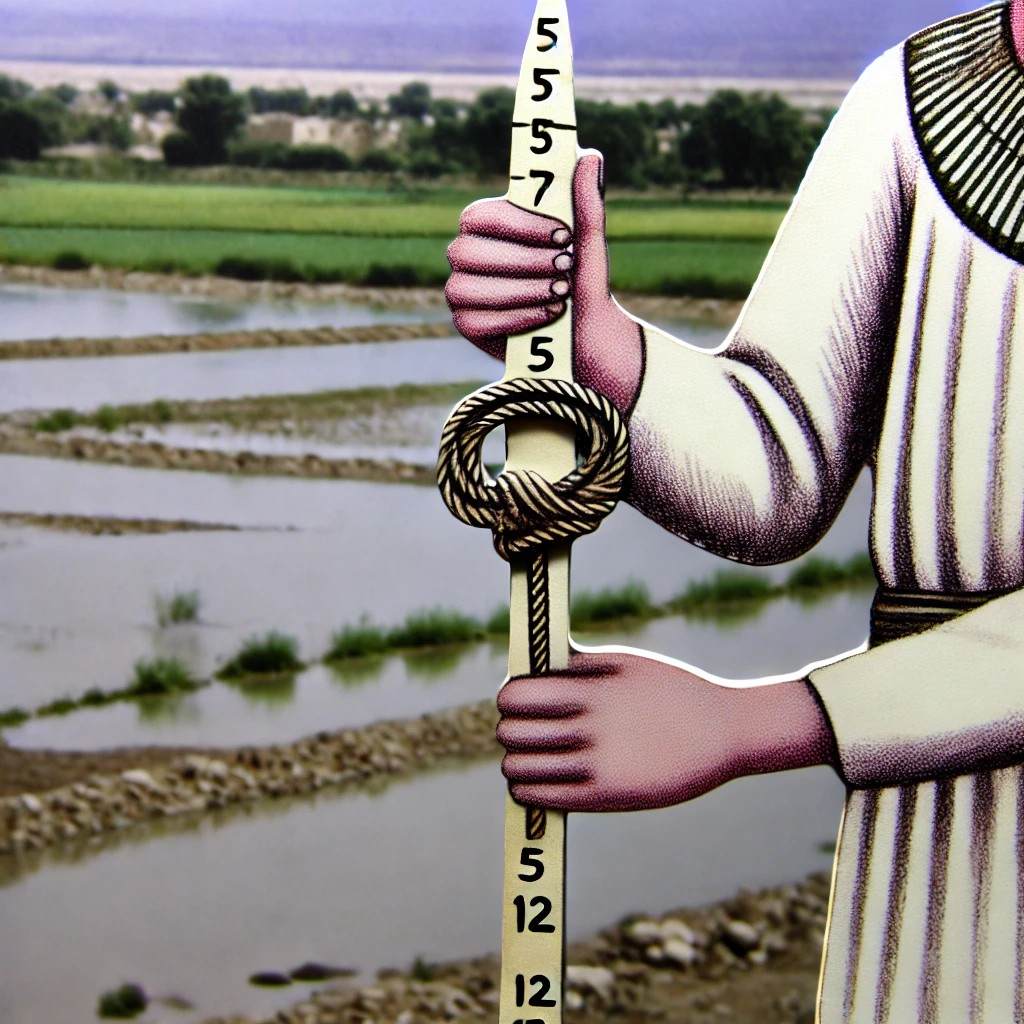
This was a convenient and practical way the Ancients used to count before the invention of the Abacus. Indeed, one step further, mathematics (trigonometry and algebra, an Arabic word) emerged out of Mesopotamia because the private fields of farmers would get flooded every year and it was necessary to redraw the boundaries.

Evolution of measures

I don't think the ancient Sumerians and Babylonians - the first civilization to live in cities, maybe as long as 10,000 years ago? - knew the size of the planet, but with a system based on five and 12, or base 60, it is self-justifying that the Giza pyramid, for example, should scale up to the size of the Earth, since the system of meridians and longitudes, used for location and distance, is based on five and 12, 60 and 360.

And using the sexagesimal system, there will be unsuprising and non-coincidental resonance with other numbers, for example measures of length: the pace, the foot, the yard, the furlong, the mile. 

And same for the calendar: 60 seconds, 60 minutes, a lunar month of 30 for the moon to reappear in its first phase, 12 lunar months for the Earth to orbit the sun.... and then the Greeks use of decade and century for political terms of office and historical chronological events on base 10 i.e two hands, simpler. Although counting in base 60 didn't really begin to decline until the Renaissance which adapted and extended classical Greek and Roman texts, philosophies and law. 7 bright objects in the sky - the sun the moon Mercury Venus Saturn the North Star - that "turn round the earth" as we turn round the kaabla.

Currency, trade calculations: pence, shillings, pound. 

Angle, rotation, navigation, architectural 3D design shapes polyhedron: seconds minutes, degrees.

Weight, agriculture, tax tributes: the talent, mina and shekel (also currency, based on a silver standard).

Religion the 30 days of ramadam, the 12 disciples of Jesus and unlucky 13, pilgrims must walk around the Kaaba seven times in a counterclockwise direction.

Imperial system of Measures

The Imperial system is not entirely based on 12 but it does use 12 and multiples thereof. This system codified all the units mentioned above and by the 19th century was used throughout the British Empire.

Length: 1 foot = 12 inches

Volume: 1 pint = 16 fluid ounces (not base-12 but a similar concept of divisible units)

Weight: 1 pound = 16 ounces (again, not base-12, but still is convenient for division so for trade.

Religion

According to the Book of Revelation (Revelation 7:4 and Revelation 14:1-5), 144,000 is the number of people who will be sealed and protected during "the great tribulation", being a group of individuals chosen from the twelve tribes of Israel, 12,000 from each tribe.

Another cabalistic mystery

Here's another cabalistic mystery unraveled or debunked from mystical associations.

Why is the small gauge railway that width? And the answer is that the railways followed the Roman roads and the Roman roads were scored by the wheels of the Roman chariots and the width of a Roman chariot was determined by the width of the horse that draws it.

1. Mathematical and Historical Context

- Counting Systems: The numbers 5 and 12 are significant in historical counting systems. The method you described of using the phalanges (each finger having 3 segments except the thumb) for counting up to 12 on one hand while using the other hand to keep track of multiples is a rudimentary yet effective counting system. This system is likely a precursor to the more sophisticated abacus.

- Base-60 System (sexagesimal): Mesopotamian mathematics, which significantly influenced later civilizations, used a base-60 (sexagesimal) system. This is evident in our timekeeping (60 seconds in a minute, 60 minutes in an hour) and in the division of a circle into 360 degrees. The sexagesimal system might have evolved from a combination of base-10 and base-12 counting systems.

2. Cultural and Symbolic Significance

- Number 5:
  - Human Anatomy: Five is often seen as a number symbolizing humanity due to the five fingers on each hand and five toes on each foot.
  - Pentagon and Pentagram: In geometry, the number 5 is associated with the pentagon and pentagram, which have historical significance in various cultures, often representing completeness and balance.

- Number 12:
  - Calendar Systems: The number 12 is significant in many calendar systems. There are 12 months in a year, and this division of the year likely originates from lunar cycles.
  - Zodiac and Time: The 12 zodiac signs and the division of the day into two 12-hour periods (AM and PM) also highlight the importance of 12 in timekeeping and astrology.

3. Geometrical and Astronomical Significance

- Circles and Cycles: The division of circles into 360 degrees is a direct consequence of the sexagesimal system, which itself is rooted in base-12 counting. The number 12 fits well into many systems of division (e.g., 12 divides evenly into 2, 3, 4, 6).

- Giza Pyramid: While there is much speculation about the numerical and geometrical significance of the Giza pyramids, the idea that they might scale up to the Earth's size using a system based on 5 and 12 ties back into the sexagesimal system and ancient understandings of geometry and measurement.

Evaluation and Expansion

1. Ancient Numerical Systems:
   - The use of the phalanges for counting is a practical method that naturally lends itself to base-12 counting. This system is intuitive and efficient, explaining its widespread use.

2. Development of Mathematics:
   - The necessity of redrawing field boundaries due to annual floods in Mesopotamia is a key driver for the development of geometry and algebra. The systems developed were practical solutions to real-world problems.

3. Astronomical Measurements:
   - The ancient Sumerians and Babylonians had a sophisticated understanding of astronomy and geometry, allowing them to develop accurate calendars and timekeeping systems based on the numbers 5, 12, 60, and 360.

Conclusion

The numbers 5 and 12 have deep roots in human history and culture, reflecting both practical counting methods and symbolic meanings. Their significance extends beyond simple numerics into the realms of geometry, astronomy, and the development of early mathematics. The base-12 system, combined with base-5, forms a robust foundation for the sexagesimal system that influenced many aspects of ancient and modern life. 

Understanding these connections explains many mysterious resonances and magic numbers and enriches our appreciation of the ingenuity and practicality of ancient civilizations.


Friday, 19 July 2024

SIGNIFICANT TECH OUTAGE AFFECTING SYSTEMS

19 July 2024

1. Introduction

Recently, there has been a significant tech outage affecting systems, particularly those operating on Microsoft Windows.


 Here's a summary of what we know:

2. Causes and Details of the Outage

- Microsoft 365 Outage: A major outage recently hit Microsoft 365, affecting popular services like Teams, Outlook, OneDrive for Business, Exchange Online, and SharePoint. Initial findings pointed to a wide-area networking (WAN) routing change as the culprit. A command to update an IP address on a WAN router led to all routers in the WAN recomputing their adjacency and forwarding tables, causing packet forwarding issues:
 
https://www.techradar.com/news/this-is-what-caused-the-recent-huge-microsoft-365-and-teams-outage

https://www.bleepingcomputer.com/news/microsoft/microsoft-reveals-cause-behind-this-week-s-microsoft-365-outage/

- Infrastructure Power Outage: Another incident was attributed to an infrastructure power outage, which necessitated failing over traffic management services for Microsoft 365 users, primarily in Western Europe. This action failed to complete properly, leading to significant delays and access failures:

https://www.bleepingcomputer.com/news/microsoft/microsoft-reveals-cause-behind-this-week-s-microsoft-365-outage/

- Microsoft Teams Issues: Microsoft Teams experienced multiple outages over a few days, with users across North and South America reporting connectivity problems, delays in message delivery, and app crashes. These outages were linked to database infrastructure issues and networking problems:

https://www.bleepingcomputer.com/news/microsoft/microsoft-teams-hit-by-second-outage-in-three-days/

- Outlook Problems: Microsoft Outlook users faced issues with sending, receiving, and searching emails due to an infrastructure change. This problem affected users in North America and other regions due to the interconnected nature of the infrastructure:

https://www.bleepingcomputer.com/news/microsoft/microsoft-outlook-outage-prevents-users-from-sending-receiving-emails/).

3. Response and Mitigation Efforts

- Command Execution Blocking: Microsoft has implemented measures to block highly impactful commands from being executed on its devices to prevent similar issues in the future. The company is also enforcing new guidelines for safe command execution on its networking equipment:

https://www.techradar.com/news/this-is-what-caused-the-recent-huge-microsoft-365-and-teams-outage

- Infrastructure Restart Operations: Targeted restarts and infrastructure checks have been performed to restore service availability. Microsoft reported that most affected services had been restored and were under extended monitoring to ensure stability:

https://www.bleepingcomputer.com/news/microsoft/microsoft-reveals-cause-behind-this-week-s-microsoft-365-outage/ 

https://www.bleepingcomputer.com/news/microsoft/microsoft-outlook-outage-prevents-users-from-sending-receiving-emails/

4. Conclusion

These outages highlight the complexities of managing large-scale IT infrastructures and the cascading effects that can occur from seemingly minor changes. Microsoft's proactive measures aim to prevent similar incidents in the future, but the incidents underscore the need for robust change management and thorough testing procedures.

For more detailed updates and ongoing reports, you can visit:


Tuesday, 16 July 2024

THE MESS WE'RE IN - IS THERE A WAY OUT

16 July 2024

1. Introduction


The growing crises in our societies have led to increasing reliance on family, friends, and close-knit communities for support. This shift is fueled by a breakdown in trust in our institutions, rules and leaders. This article explores the root causes of these problems and considers potential ways out of the current societal mess.

2. Breakdown of Trust

2.1 Increasing Reliance on Close Communities

- Support Networks: As tensions and crises increase, people increasingly depend on their immediate social circles for reassurance and support.
- Distrust of Institutions: There is a growing distrust of entities outside these circles, leading to a more insular and tribal society.

2.2 Diagnosis of the Problems

- Crushing Debt: Overwhelming national debt burdens.
- Declining Public Services: Deterioration in the quality of public services and infrastructure.
- Military Overcommitment: Excessive military engagements and commitments, including counterintuitive and highly expensive positions taken in Ukraine and Palestine.
- Economic Inequality: Widening gap between the elite and the general populace, government policies that work to enrich the one and impoverish the other.
- Immigration and Multiculturalism: Challenges of immigration into an unprepared society with resultant cultural conflict and strains on resources, the perceived failures of multicultural integration, the poor social capital in terms of the education attainment and health of the people.
- Tolerance for Violence: Increasing acceptance of violence as a norm, widespread and growing street protest movements.
- Breakup of Euro-Atlantic Alliance: the rules-based international American order embodied in all the institutions created after the war and after the Soviet breakup seems to be now breaking down. The loyalty and trust of the people to their governments and ultimately to American leadership is evaporating as America pursues its own interests at the expense of Europe. The people feel betrayed: they cannot understand why their governments defer to Washington instead of taking care of national interests.
- Poor Leadership: Inadequate leadership to address these mounting issues and in particular the disregard for financial prudence and the promotion of war, in disregard of the national interest.

3. Societal Impact

3.1 Fragmentation and Isolation

- Tribalism: Society is splitting into smaller, isolated groups based on mutual trust and similarity.
- Disconnection: Increasing feelings of isolation and disconnection from the broader society and from governance.

3.2 Coping with Hardship

- Endurance: People can endure hardships but struggle with feelings of aloneness, separatuon and disconnection.
- Community Support: The importance of community and social support in maintaining resilience, identity and culture.

4. Identifying the Mess

4.1 Components of the Mess

- Debt and Economic Strain: The crushing burden of national debt and the failure to balance the commercial external account.
- Violence and Conflict: Wars, killings, and increasing violence and protest, both domestically and internationally between superpowers and the emergence of a multipolar world that America does not appear to accept.
- Migration: straining the physical fabric, destroying the social, loss of identity and culture, weakens the attachment of people to the nation.
- Leadership Failures: Inferior and ineffective leadership, failure to listen understand and grapple with "reality", with large corporations and foreign lobbies undermining democratic husbandry of the national interest. It has to be said that these are signs of a senile system that has lost its grip on reality.

4.2 Responsibility and Causes

- Voter Responsibility: The notion that people get what they vote for.
- Elite Influence: The power and unthinking will to dominate, to power, of elites and their prioritisation of short-term financial gain or electoral success over national interests.
- Corporate Power: The influence of big corporations, their lobbies, foreign lobbies - I am thinking here of AIPAC.

5. Potential Solutions

5.1 Generational Hope

- Youth Leadership: The possibility that the younger generation, including millennials and the Next Generation, might seize the initiative and lead us out of the current mess. A leader that turns his back on the establishment and appeals to a multi ethnic youth.
- Community-driven Change: The idea that solutions may emerge from within communities as people come together.
- New leadership in Congress: It must be possible for elected representatives to change the direction of the administration.

6. Conclusion

The current societal challenges are deeply rooted in systemic issues and a breakdown of trust in institutions. 

Trump's response to the attempt to assassinate him was to switch from his normal conflictual rhetoric to a sudden newfound commitment, almost a Damascian conversion, to bringing the people together - I think this is very significant. 

As is his likely choice of running, someone who combines elements of populism and rejection of establishment consensus with an appeal to the youth and who could qualify as Trump's successor.

The resilience found in close-knit communities and the potential leadership from younger generations offer a glimmer of hope for navigating and resolving these crises.


There now follows a party political forecast in favour of the Blah Blah party

7. Pathways to Overcoming the Crisis: Leading Out of the Fourth Turning

7.1 Understanding the Fourth Turning

- Concept Overview: The Fourth Turning, a concept developed by Neil Howe and William Strauss, describes a recurring generational cycle in American history that includes periods of crisis followed by renewal. The current Fourth Turning is characterised by significant societal upheaval and transformation.

7.2 Acknowledging the Current Crisis

- Crisis Components: The present crisis includes overwhelming national debt, declining public services, military overcommitments, economic inequality, unplanned immigration, the result of fundamentally ineffective leadership. 

These elements contribute to a breakdown in trust in institutions, increased societal fragmentation, a feeding of "us and them" or the rise of Populism.

7.3 Rebuilding Trust and Social Cohesion

- Transparent Leadership: Leaders must be left with no alternative but to prioritise transparency and accountability. This includes clear communication of policy decisions and their impacts, fostering trust among citizens; failures should result in loss of the benefits of leadership positions.
- Community Empowerment: Strengthening local governance and encouraging direct community participation in decision-making processes can rebuild social cohesion and a sense of belonging.

7.4 Economic and Political Reforms

- Debt Management and Economic Policies: Implementing comprehensive strategies to manage and reduce national debt, such as progressive taxation and prudent spending cuts, is essential. Economic policies should aim to promote "social justice": reduce inequality and promote fair wealth distribution.
It is important to understand that economics follows politics and if so, only the politicians and parliament can resolve these under pressure from the street.
- Electoral Reform: Considering changes to the electoral system, such as proportional representation and direct democracy or regular referendum on key issues, can ensure fair representation and address public disillusionment with current practices.

7.5 Promoting Social Integration and Reducing Violence

- Inclusive Policies: Policies that promote social integration and address the challenges of multiculturalism are crucial. This includes equitable access to education, healthcare, and employment opportunities for all communities.
- Violence Prevention: Implementing programs to reduce violence and address its root causes, such as poverty and social alienation, can foster a safer society.

7.6 Harnessing the Potential of Younger Generations

- Youth Empowerment: Supporting and empowering the younger generation to take on leadership roles and contribute to societal transformation is critical. This includes investing in education, entrepreneurship, and innovation.
- Millennial and Gen Z Leadership: leaving a vacuum for millennials and Gen Z to lead initiatives and movements and bring fresh perspectives and drive change.

7.7 Inspired by Recent Developments

- Trump’s Response: The recent assassination attempt on former President Donald Trump and his call for unity highlight the need for national reconciliation.

His shift from conflictual rhetoric to a commitment to bringing people together, following the attempt on his life, is a significant step toward fostering national cohesion.

7.8 Practical Steps for Moving Forward

- National Dialogue: Initiating a national dialogue involving all societal sectors can help identify common goals and foster a collective vision for the future.
- Policy Innovation: Encouraging innovative policy solutions from diverse stakeholders, including community leaders, businesses, and academics, can address complex societal challenges.
- Cross-Party Collaboration: Promoting cross-party collaboration in government can lead to more balanced and effective policymaking, ensuring that diverse perspectives are considered.

8. Conclusion

Leading out of the Fourth Turning requires a complex approach that prioritises rebuilding trust, social cohesion, and empowering the younger generation. By addressing the root causes of the current crisis through transparent leadership, economic and political reforms, and inclusive policies, society can navigate this period of transformation and emerge stronger and more unified, "it they want", overcoming the drive to power and violence. 
The recent shift in rhetoric by former President Trump underscores the potential for unity and collective action in overcoming these challenges.


Saturday, 13 July 2024

THE IRRESISTIBLE CASE FOR VOTING REFORM

14 July 2024


Nigel Farage has claimed that the campaign to reform the UK's voting system will surpass the momentum of Brexit. This follows comments from Sir Keir Starmer, suggesting that the UK lacks a “healthy democracy” as millions of votes do not effectively count. The recent general election highlighted this issue, with Labour securing 63% of parliamentary seats with only 33.7% of the vote, while the Reform Party gained just five seats despite over four million votes. In contrast, the Liberal Democrats won 72 seats with just over 3.5 million votes, underscoring the discrepancies of the first-past-the-post system.

Farage argues that the current electoral system is broken, leading to public apathy, as evidenced by the lowest voter turnout in over 20 years at 59.9%. He believes that this disillusionment will drive a major campaign for electoral reform over the next five years. Although Starmer has benefited from the current system, Labour delegates previously supported a motion for proportional representation in 2022.

Despite having once criticised the electoral system and called for a debate on reforming it, Starmer later defended first-past-the-post, stating it provides strong government. Farage intends to hold Starmer to his earlier comments and will push for the Prime Minister to uphold the Labour Party conference's will for electoral reform.

≈====

le 14 juillet 2024


Nigel Farage a affirmé que la campagne pour réformer le système électoral du Royaume-Uni dépassera l'élan du Brexit. Cela fait suite aux commentaires de Sir Keir Starmer, suggérant que le Royaume-Uni manque de "démocratie saine" car des millions de votes ne comptent pas efficacement. Les récentes élections générales ont mis en évidence ce problème, le parti Travailliste obtenant 63 % des sièges parlementaires avec seulement 33,7 % des voix, tandis que le parti Réformiste n'a obtenu que cinq sièges malgré plus de quatre millions de votes. En revanche, les Libéraux-Démocrates ont remporté 72 sièges avec un peu plus de 3,5 millions de votes, soulignant les disparités du système majoritaire.

Monsieur Farage soutient que le système électoral actuel est défaillant, conduisant à l'apathie du public, comme en témoigne le taux de participation le plus bas depuis plus de 20 ans à 59,9 %. Il pense que ce désenchantement entraînera une grande campagne pour la réforme électorale au cours des cinq prochaines années. Bien que Starmer ait bénéficié du système actuel, les délégués du Labour avaient précédemment soutenu une motion en faveur de la représentation proportionnelle lors de la conférence annuelle du Labour en 2022.

Malgré avoir critiqué le système électoral et appelé à un débat sur la réforme, Starmer a ensuite défendu le système majoritaire, affirmant qu'il fournit un gouvernement fort. Nigel Farage a l'intention de rappeler à Starmer ses commentaires antérieurs et de pousser le Premier ministre à respecter la volonté de la conférence du Parti travailliste pour la réforme électorale.

THE DECLINE OF THE WEST - SHOULD WE FIGHT OR NEGOTIATE

13 July 2024


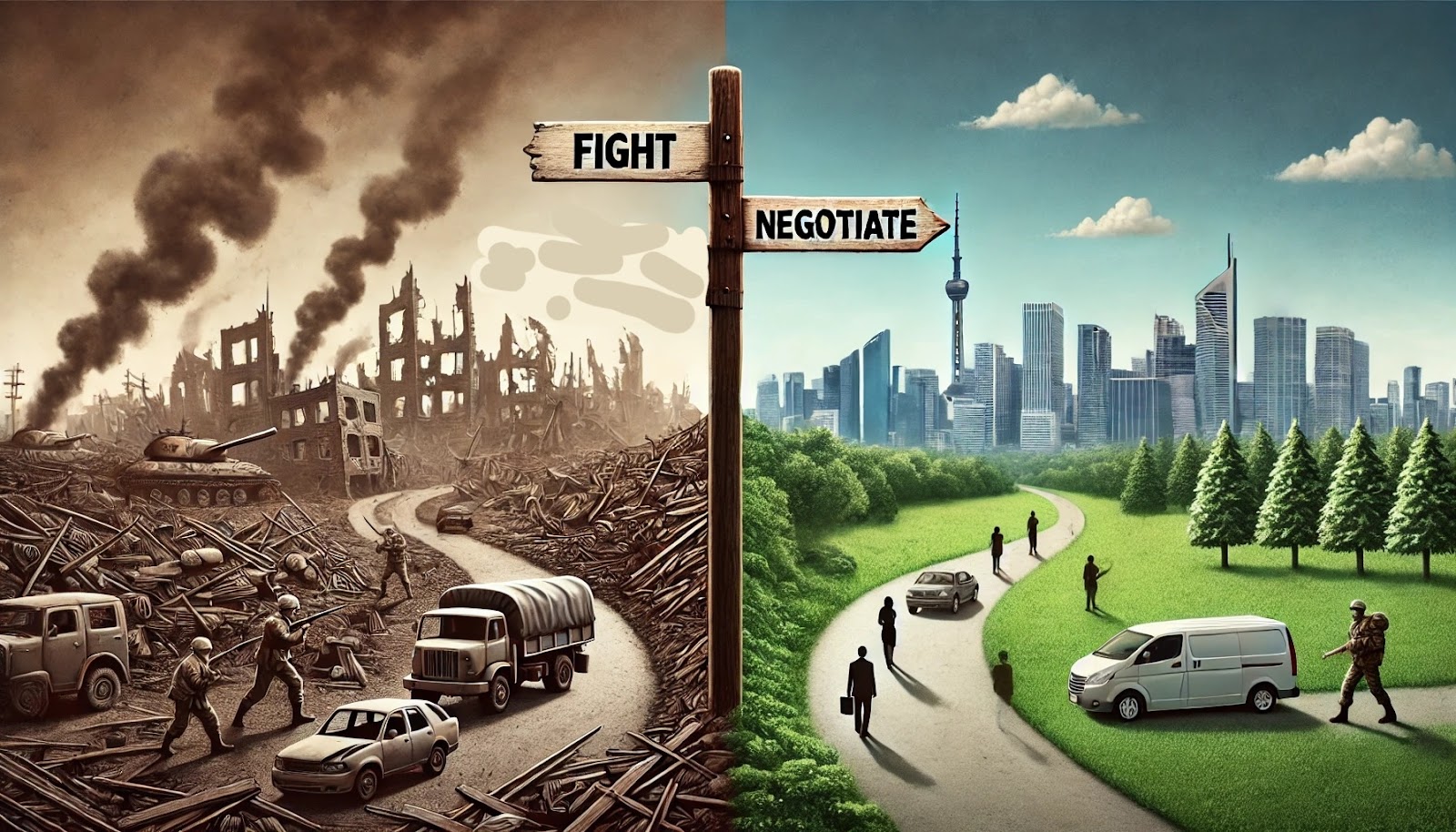
But to be serious, the big picture is world peace and prosperity and the context is the decline of the West.

This decline is an own-goal, because we have built up a debt that is swallowing our tax revenues and making it difficult to sell our governments bonds, and we have put sanctions on our competitors to break their economies, and we have moved too close to their borders for their comfort & security to break their governments.

(Never mind that at home we are creating a society of extremes aggravated by economic inequality. But this is not the subject of this article, the subject of this article is IR, International Relations.)

America thinks that it can keep its place as world hegemon by threat.

But we in the West, our leadership, could play our cards differently. We could negotiate. This is not from weakness or about concessions. It is about win-win.

We are not in a unipolar world anymore - America is no longer the only great power. There are others, Russia, China - and more on the way - India and the BRICS. It's a multi-polar world.

Win-win means negotiation. It means listening to and understanding the different demands and positions of the other side; and agreeing to certain of their major points in exchange for concessions on some of our minor points: win-win, the subtle art of negotiation.

(This is a version of that Really Useful spreadsheet, right?)

So hard negotiation could move us along the path of peace and prosperity; rather than war and sanctions that is moving along the path of death, destruction, huge expense and even the possibility of nuclear annihilation in a third world war if things carry on as they are at the present.

Friday, 12 July 2024

FRANCE, BEACON OF HOPE FOR THE THIRD WORLD

12 July 2024

France, Beacon of Hope for the Third World

This is the kind of piece that I could have written 10 years ago, but unfortunately there has been a notable decline in the west since then led down by successive American administrations, so this is now what you might call a party political broadcast.

---

France has a tradition of being a beacon to the world outside the Western world, a beacon of liberty, equality, and fraternity. In practical diplomatic terms, it has reached out to “third-world” countries, quite possibly for its own economic reasons, and supported them. Consequently, these countries often look to France for political guidance.

However, all this has become rather unstitched since Algeria and particularly since Macron.

---

France had an enormous empire in the Caribbean, Southeast Asia, West Africa, and the Middle East. It still has many bases, and this has left it with many responsibilities and obligations.

France created the Organisation Internationale de la Francophonie, part of which is the Alliance Française and the Institut Français, promoting French language and culture across the world.

---

France also has its own independent foreign policy. While that may not be entirely feasible these days, it maintains its nuclear force, which de Gaulle would not abandon. This independence gives it the opportunity to mediate in conflicts, which Macron tried to do at the beginning of the Ukraine war.

The British took off and flew over France on their way to bombing Libya in April 1986, during Operation El Dorado Canyon, much to the annoyance of France and its Prime Minister Jacques Chirac at the time. The French government refused to allow American bombers to fly over France for this operation, forcing them to take a longer route around France.

France was also against the war in Iraq in 2003. Chirac’s government emphasised the importance of international law and the role of the United Nations, arguing that the war was not justified without clear evidence of weapons of mass destruction and a mandate from the UN Security Council. He was absolutely correct, and France’s stance gives it a reason to hold its head high in international society. Compare that with what the Americans do and the slavish pom-pom girl behavior of the Brits.

---

France is also a staunch supporter of human rights and democratic values, and in this way, it is a beacon of freedom to peoples outside the West.

To give some concrete examples:

- It helped mediate the deal between America and Iran known as the JCPOA.

- Because Lebanon was a former French mandate, it has always helped Lebanon in times of crisis. However, more recently, it has fallen under the dominion of the wretched American empire, which supports Israel, who has plans to attack Hezbollah and once again invade the south of Lebanon.

- France was involved in anti-terrorist operations in the Sahel region of West Africa, primarily through Operation Barkhane, involving around 5,100 French troops from 2014 to 2022. The operation aimed to combat Islamist militant groups in the region and was conducted in cooperation with five Sahelian countries: Burkina Faso, Chad, Mali, Mauritania, and Niger. However, its actions failed to address underlying governance issues and fueled anti-French sentiment. As a result, military coups in Mali and Burkina Faso and protests against the French presence eventually obliged France to withdraw, and its influence was replaced by that of Russia and the Wagner group.

- To give a typical ongoing example - Relations Between France and Indonesia.
France and Indonesia maintain a strong and multifaceted relationship characterised by diplomatic, economic, and cultural ties. As part of its broader outreach to the non-Western world, France has engaged with Indonesia through trade, investment, and cultural exchange. The two countries collaborate on various global issues, including climate change, maritime security, and education. Through initiatives like the French Institute in Indonesia (Institut Français d'Indonésie), France promotes language and cultural programs, fostering mutual understanding and strengthening bilateral relations. This partnership underscores France's role as a supportive ally and a beacon of cooperation in the Southeast Asian region.

Summary of France's Place in the World

France has historically been a beacon of liberty, equality, and fraternity, often reaching out to support third-world countries both for altruistic and economic reasons. It has maintained a unique position due to its independent foreign policy, its commitment to human rights and democratic values, and its extensive cultural diplomacy through organizations like the Organisation Internationale de la Francophonie. 

Despite recent setbacks and rising anti-French sentiment in regions like the Sahel, France continues to play a crucial role in international diplomacy, balancing its historical legacy with contemporary geopolitical challenges.

=====

12 juillet 2024

La France, Phare d’Espoir pour le Tiers Monde

C’est le genre d’article que j’aurais pu écrire il y a dix ans, mais malheureusement, il y a eu un déclin notable en Occident depuis, conduit par des administrations américaines successives. Cela ressemble donc maintenant à une émission politique.

---

La France a une tradition d'être un phare pour le monde en dehors de l'Occident, un phare de liberté, d'égalité et de fraternité. En termes diplomatiques pratiques, elle a tendu la main aux pays du "tiers monde", probablement pour ses propres raisons économiques, et les a soutenus. Par conséquent, ces pays se tournent souvent vers la France pour une orientation politique.

Cependant, tout cela s'est dégradé depuis l'Algérie et particulièrement depuis Macron.

---

La France avait un empire immense dans les Caraïbes, en Asie du Sud-Est, en Afrique de l'Ouest et au Moyen-Orient. Elle possède encore de nombreuses bases, ce qui lui impose de nombreuses responsabilités et obligations.

La France a créé l'Organisation Internationale de la Francophonie, dont font partie l'Alliance Française et l'Institut Français, promouvant la langue et la culture françaises à travers le monde.

---

La France a également sa propre politique étrangère indépendante. Bien que cela ne soit pas entièrement faisable de nos jours, elle maintient sa force nucléaire, que de Gaulle n'aurait jamais abandonnée. Cette indépendance lui donne l'opportunité de jouer le rôle de médiateur dans les conflits, ce que Macron a tenté de faire au début de la guerre en Ukraine.

Les Britanniques ont survolé la France pour aller bombarder la Libye en avril 1986, lors de l'Opération El Dorado Canyon, au grand dam de la France et de son Premier ministre de l'époque, Jacques Chirac. Le gouvernement français a refusé de permettre aux bombardiers américains de survoler la France pour cette opération, les obligeant à prendre une route plus longue autour de la France.

La France s'est également opposée à la guerre en Irak en 2003. Le gouvernement de Chirac a souligné l'importance du droit international et du rôle des Nations Unies, arguant que la guerre n'était pas justifiée sans preuves claires de la présence d'armes de destruction massive et un mandat du Conseil de sécurité de l'ONU. Il avait parfaitement raison, et la position de la France lui permet de se tenir la tête haute dans la société internationale. Comparez cela avec ce que font les Américains et le comportement servile des Britanniques.

---

La France est également un fervent défenseur des droits de l'homme et des valeurs démocratiques, et de cette manière, elle est un phare de liberté pour les peuples hors de l'Occident.

Pour donner quelques exemples concrets :

- Elle a aidé à négocier l'accord entre l'Amérique et l'Iran connu sous le nom de JCPOA.

- Parce que le Liban était un ancien mandat français, elle a toujours aidé le Liban en temps de crise. Cependant, plus récemment, il est tombé sous la domination du misérable empire américain, qui soutient Israël, qui a des plans pour attaquer le Hezbollah et envahir à nouveau le sud du Liban.

- La France a été impliquée dans des opérations antiterroristes dans la région du Sahel en Afrique de l'Ouest, principalement à travers l'Opération Barkhane, impliquant environ 5 100 soldats français de 2014 à 2022. L'opération visait à combattre les groupes islamistes militants dans la région et a été menée en coopération avec cinq pays sahéliens : Burkina Faso, Tchad, Mali, Mauritanie et Niger. Cependant, ses actions n'ont pas réussi à traiter les problèmes de gouvernance sous-jacents et ont alimenté un sentiment anti-français. En conséquence, les coups d'État militaires au Mali et au Burkina Faso et les manifestations contre la présence française ont finalement obligé la France à se retirer, et son influence a été remplacée par celle de la Russie et du groupe Wagner.

- Pour donner un exemple typique en cours - Relations entre la France et l'Indonésie.
La France et l'Indonésie entretiennent une relation forte et multiforme caractérisée par des liens diplomatiques, économiques et culturels. Dans le cadre de son outreach plus large au monde non occidental, la France a engagé l'Indonésie par le biais du commerce, des investissements et des échanges culturels. Les deux pays collaborent sur diverses questions mondiales, y compris le changement climatique, la sécurité maritime et l'éducation. Grâce à des initiatives comme l'Institut Français en Indonésie (Institut Français d'Indonésie), la France promeut des programmes linguistiques et culturels, favorisant la compréhension mutuelle et renforçant les relations bilatérales. Ce partenariat souligne le rôle de la France en tant qu'allié de soutien et phare de coopération dans la région de l'Asie du Sud-Est.

**Résumé de la place de la France dans le monde**

Historiquement, la France a été un phare de liberté, d'égalité et de fraternité, soutenant souvent les pays du tiers monde à la fois pour des raisons altruistes et économiques. Elle a maintenu une position unique grâce à sa politique étrangère indépendante, son engagement en faveur des droits de l'homme et des valeurs démocratiques, et sa diplomatie culturelle étendue par le biais d'organisations comme l'Organisation Internationale de la Francophonie.

Malgré des revers récents et une montée du sentiment anti-français dans des régions comme le Sahel, la France continue de jouer un rôle crucial dans la diplomatie internationale, équilibrant son héritage historique avec les défis géopolitiques contemporains.

ANALYSIS OF 2024 FRENCH ELECTION RESULTS

12 July 2024


The results paint a picture that is complicated by that deal made on the left where weaker candidates in the new Popular Front alliance would step aside and let the stronger candidate fight directly the RN, with the result that although the RN's share of the vote went up from 33% to 37%, and the number of seats they won did increase dramatically, but the increase was far less than had been expected by the pollsters.

I think that many people voted not for what they wanted, but to keep the RN out of power. And some even took to the streets to protest the first round results.

I think as well that without all that tactical voting, there would have been a clear win for RN. Now some people may think this would be good and some may think it would be bad, but the reality is that it was a choice between keeping the RN out and the chaos that has followed, or allowing the RN to pass and have their turn at government.

Instead of letting them pass, what we have now is a situation where they are more likely than ever to win in 2027 - "Ce n’est que partie remise", "This is only postponing the inevitable", said Marine Le Pen.

As to the Mainstream Media rhetoric, the MSM made out the RN to be on the extreme, far or hard right, and in this way were trying to tell us that they are the same as the national socialists in Germany of the 1930s and 40s ... but is this true? They just seem to be a party that wants to put the interests of 90% of the electorate who have French as their first language and culture, before those of the waves of immigrants, legal and some illegal. The objection to this is that many of these are French passport holders, some dual nationals, and the state acting to lessen their rights is a fundamentally apartheid idea and against the Liberal idea that we are all created equal and have the same rights to "life liberty and the pursuit of happiness".

So I would characterise the French second round in the same way as the UK elections: it is the electorate rejecting the incumbent more than anything else. 

In fact, it is possible to split the electorate into three groups, a socio-economic breakdown, and to identify those rejecting the incumbent - this is useful because it might suggest a possible coalition of interests as a way out of the current impasse. 

A. Urban, living in major cities like Paris, Lyon, and Marseille. These voters will have access to better infrastructure, education, and employment opportunities. Generally more cosmopolitan and supportive of progressive policies, which include immigration and EU integration and in the UK at least neo-liberalism (often called Woke).

Then there is also the Management and Executive Elite, again living in urban areas where the work is, but high-income professionals, corporate executives, and entrepreneurs. They would tend to support pro-business policies, lower taxes, and economic deregulation.

These groups align more with centrist or centre-right parties like Macron's Renaissance party.

B. Secondly, Rural, the French equivalent of America's rust-belt left-behinds, living in the towns and villages of the provinces, outside big conurbations, major urban centres. They have economic problems, such as poor employment prospects and slower economic growth. These voters are often more conservative and nationalist, with concerns over immigration and globalisation. 

This is where the National Rally finds its main base, due to its anti-immigration anti-globalist stance and its promises to revitalise rural economies. Dissatisfaction here could spawn more yellow-vest protests.

C. And then thirdly, we have the Left-Wing alliance of a diverse range of voters, from young urban professionals (coucou), to blue-collar workers in industrial centres and high school & university students. 

Their values are in social justice, environmental protection, and workers' rights. They are often highly critical of neoliberal economic policies and favour increased government intervention in the economy. 

The New Popular Front, comprising parties like the France Unbowed and moderate socialists, draws significant support from this group.

This 3-way split results from analysis on economic and social factors, but what if we divide into governing class and governed? If you see the conflict as between a globalist elite Who cares more about itself than its peoples, and peoples who huddle under a socialist umbrella, then you would only need to divide the peoples' leaderships between those who are internationalists and those who are nationalists.

This would help understand why the RN got such a pasting in the MSM - because they do not support the global neocons - a position which is also pro negotiation and anti arms sales for Ukraine and Israel. 

So you might now think an alliance is possible between the left and right on the common ground of rejection of the centre's pro-globalist, pro immigration, pro-war policies and the centre's lack of support for "the people". But while it is true that it is easier to get agreement on things that you don't like such as globalisation and economic protectionism, It is more difficult get agreement and implementation on things you do like such as immigration ( The left and centre both have a view of a world without borders, though for different reasons).

So on top of this tactical voting maneuver, the RN also suffered all the negative MSM elite-inspired press coverage, call it propaganda

The cleavage runs along the line of where each party feels "home" to be. The RN believe in borders and the idea of a nation state with a people - the French - with a French national interest and a French culture and identity, of which they are proud. This is a political and social attitude that favours equality and fraternity and finds its home - herein lies the problem - in the nation state or the workers international proletariat.

Aswhere in this view of "elite and people", the elite is for open borders, economic freedom, movement of capital to wherever the returns are greatest, in other words for more integration into supra-national bodies like the EU -  this is globalisation. This is an economic attitude that favours liberty and equality and finds its home in the American Order.

I think that fundamentally the Establishment is trying to have us live in a black and white world: "if you're not for us, you are against us", but reality is more nuanced. There are now many smaller centres of power and instead of opposing views being a trigger for violence or conflict, they should be treated as an opportunity for cooperation and consensus and maybe even coalition government... but that is certainly not in the minds of the deputies in the National Assembly, not at this time.

One solution to this utter chaos in France is for a prime minister from the centre to be chosen by Macron, and for dossiers for each of the policy areas identified in the table above, to be handed out to different leaderships in the Assembly. These leaderships, each now with a Minister in a Cabinet, to be asked to work on their dossier and come back with proposals to be voted on in the National Assembly. 

This could work, once the deputies realise that if they vote against everyone else, then everyone else will vote against them. In other words, the deputies would be obliged to work together cross-party, in a spirit of cooperation so that all the different interests and voices in the country could be heard and in a spirit of tolerance (ie respect for the interests of others), find a place in the Assembly. Let us recall that almost 40% of the electorate are really fed up as they are not represented, plus there are those who voted not for what they wanted, but for what they didn't want: the country is in confusion and there is chaos in parliament.

For interest, here above are the policies of the Left, Centre and Right, according to policy areas that I have identified. Of course these areas, or issues, are not written in tablets of stone, priorities may change, indeed the Left program was put together in just a few days after the shock announcement of elections by Macron. And of course a program of policies is not necessarily going to be implemented - there are many hurdles in the way of execution, notably how will they be paid for, given the state of France's public finances.

=====

12 juillet 2024

Les résultats dépeignent une image compliquée par cet accord conclu à gauche où les candidats plus faibles de la nouvelle alliance du Front populaire se retireraient pour laisser le candidat plus fort affronter directement le RN. En conséquence, bien que la part des voix du RN soit passée de 33 % à 37 %, et que le nombre de sièges remportés ait augmenté de manière spectaculaire, l'augmentation a été bien inférieure aux attentes des sondeurs.

Je pense que beaucoup de gens n'ont pas voté pour ce qu'ils voulaient, mais pour empêcher le RN de prendre le pouvoir. Certains sont même descendus dans la rue pour protester contre les résultats du premier tour.

Je pense aussi que sans tout ce vote tactique, il y aurait eu une victoire claire pour le RN. Certains peuvent penser que cela serait bien, d'autres que ce serait mal, mais la réalité est que c'était un choix entre empêcher le RN et le chaos qui a suivi, ou permettre au RN de passer et d'avoir son tour au gouvernement.

Au lieu de les laisser passer, nous nous trouvons maintenant dans une situation où ils sont plus susceptibles que jamais de gagner en 2027 - "Ce n’est que partie remise", a déclaré Marine Le Pen.

Quant à la rhétorique des médias traditionnels, le MSM a fait passer le RN pour un parti d'extrême droite, en les comparant aux national-socialistes d'Allemagne des années 1930 et 1940... mais est-ce vrai ? Ils semblent simplement être un parti qui veut mettre les intérêts de 90 % de l'électorat qui ont le français comme première langue et culture avant ceux des vagues d'immigrants, légaux et certains illégaux. L'objection à cela est que beaucoup de ces immigrants sont détenteurs de passeports français, certains sont binationaux, et que l'État agissant pour réduire leurs droits est une idée fondamentalement apartheid et contre l'idée libérale que nous sommes tous créés égaux et avons les mêmes droits à "la vie, la liberté et la recherche du bonheur".

Ainsi, je caractériserais le second tour en France de la même manière que les élections au Royaume-Uni : il s'agit de l'électorat rejetant l'incumbent plus que toute autre chose.

En fait, il est possible de diviser l'électorat en trois groupes, une répartition socio-économique, et d'identifier ceux qui rejettent l'incumbent - cela pourrait suggérer une coalition possible d'intérêts comme solution à l'impasse actuelle.

A. **Urbain**, vivant dans des grandes villes comme Paris, Lyon et Marseille. Ces électeurs ont accès à de meilleures infrastructures, éducation et opportunités d'emploi. Ils sont généralement plus cosmopolites et soutiennent des politiques progressistes, incluant l'immigration et l'intégration européenne, et au Royaume-Uni, le néolibéralisme (souvent appelé Woke).

Il y a aussi l'élite de la gestion et de l'exécutif, vivant également dans les zones urbaines où se trouve le travail, mais des professionnels à haut revenu, des cadres d'entreprise et des entrepreneurs. Ils tendent à soutenir des politiques pro-entreprises, des réductions d'impôts et la dérégulation économique.

Ces groupes s'alignent davantage sur les partis centristes ou centre-droit comme le parti Renaissance de Macron.

B. **Rural**, l'équivalent français des laissés-pour-compte de la Rust Belt américaine, vivant dans les villes et villages des provinces, en dehors des grandes conurbations, des grands centres urbains. Ils ont des problèmes économiques, comme de mauvaises perspectives d'emploi et une croissance économique plus lente. Ces électeurs sont souvent plus conservateurs et nationalistes, avec des préoccupations sur l'immigration et la mondialisation.

C'est là que le Rassemblement National trouve sa principale base, en raison de son positionnement anti-immigration, anti-mondialisation et de ses promesses de revitaliser les économies rurales. Le mécontentement ici pourrait engendrer davantage de protestations des gilets jaunes.

C. **L'Alliance de gauche** regroupe une gamme diversifiée d'électeurs, allant des jeunes professionnels urbains (coucou), aux ouvriers dans les centres industriels et aux étudiants des lycées et universités.

Leurs valeurs résident dans la justice sociale, la protection de l'environnement et les droits des travailleurs. Ils sont souvent très critiques envers les politiques économiques néolibérales et favorisent une intervention accrue du gouvernement dans l'économie.

Le Nouveau Front Populaire, composé de partis comme La France Insoumise et des socialistes modérés, reçoit un soutien important de ce groupe.

Cette division tripartite résulte d'une analyse des facteurs économiques et sociaux, mais que se passerait-il si nous divisions en classe dirigeante et gouvernée ? Si l'on voit le conflit comme étant entre une élite mondialiste qui se soucie plus d'elle-même que de ses peuples, et des peuples qui se regroupent sous un parapluie socialiste, il suffirait de diviser les dirigeants des peuples entre ceux qui sont internationalistes et ceux qui sont nationalistes.

Cela aiderait à comprendre pourquoi le RN a subi un tel déluge dans les médias traditionnels - parce qu'ils ne soutiennent pas les néocons mondiaux - une position également pro-négociation et anti-ventes d'armes pour l'Ukraine et Israël.

Ainsi, vous pourriez penser qu'une alliance est possible entre la gauche et la droite sur le terrain commun du rejet des politiques pro-mondialistes, pro-immigration, pro-guerre du centre et du manque de soutien du centre pour "le peuple". Mais bien qu'il soit vrai qu'il est plus facile de s'accorder sur les choses que vous n'aimez pas, comme la mondialisation et le protectionnisme économique, il est plus difficile de s'accorder et de mettre en œuvre des choses que vous aimez, comme l'immigration (la gauche et le centre ont tous deux une vision d'un monde sans frontières, bien que pour des raisons différentes).

Ainsi, en plus de cette manœuvre de vote tactique, le RN a également souffert de toute la couverture médiatique négative inspirée par les élites du MSM, qu'on peut appeler propagande.

La fracture se situe là où chaque parti se sent "chez lui". Le RN croit en des frontières et l'idée d'un état-nation avec un peuple - les Français - avec un intérêt national français et une culture et une identité françaises, dont ils sont fiers. C'est une attitude politique et sociale qui favorise l'égalité et la fraternité et trouve son foyer - c'est là que réside le problème - dans l'état-nation ou l'internationale prolétarienne des travailleurs.

Alors que dans cette vision de "élite et peuple", l'élite est pour des frontières ouvertes, la liberté économique, le mouvement du capital là où les rendements sont les plus élevés, en d'autres termes pour une intégration accrue dans des entités supranationales comme l'UE - c'est la mondialisation. C'est une attitude économique qui favorise la liberté et l'égalité et trouve son foyer dans l'Ordre américain.

Je pense que fondamentalement, l'establishment essaie de nous faire vivre dans un monde en noir et blanc : "si vous n'êtes pas avec nous, vous êtes contre nous", mais la réalité est plus nuancée. Il existe maintenant de nombreux centres de pouvoir plus petits et au lieu que des opinions opposées déclenchent la violence ou le conflit, elles devraient être considérées comme une opportunité de coopération et de consensus et peut-être même de gouvernement de coalition... mais cela n'est certainement pas dans l'esprit des députés de l'Assemblée nationale, pas pour le moment.

Une solution à ce chaos total en France serait que Macron choisisse un premier ministre du centre, et que des dossiers pour chacune des politiques identifiées dans le tableau ci-dessus soient confiés à différentes directions de l'Assemblée. Ces directions, chacune maintenant avec un ministre dans un cabinet, devraient travailler sur leur dossier et revenir avec des propositions à voter à l'Assemblée nationale.

Cela pourrait fonctionner, une fois que les députés réaliseraient que s'ils votent contre tout le monde, alors tout le monde votera contre eux. En d'autres termes, les députés seraient obligés de travailler ensemble de manière transpartisane, dans un esprit de coopération pour que tous les différents intérêts et voix du pays puissent être entendus et, dans un esprit de tolérance (c'est-à-dire de respect pour les intérêts des autres), trouver une place à l'Assemblée. Rappelons que près de 40 % de l'électorat en a vraiment marre car il n'est pas représenté, et il y a ceux qui ont voté non pas pour ce qu'ils voulaient, mais pour ce qu'ils ne voulaient pas : le pays est en confusion et il y a le chaos au parlement.

Pour information, voici ci-dessus les politiques de la gauche, du centre et de la droite, selon les domaines politiques que j'ai identifiés. Bien sûr, ces domaines, ou questions, ne sont pas gravés dans le marbre, les priorités peuvent changer, en effet le programme de la gauche a été élaboré en quelques jours seulement après l'annonce choc des élections par Macron. Et bien sûr, un programme de politiques n'est pas nécessairement destiné à être mis en œuvre - il y a de nombreux obstacles à l'exécution, notamment comment elles seront financées, étant donné l'état des finances publiques de la France.

Thursday, 11 July 2024

COMBINING PROPORTIONAL REPRESENTATION AND DIRECT DEMOCRACY

11 July 2024

1. Introduction

- Proportional Representation (PR) and Direct Democracy are two distinct concepts in political systems.
- Focus of this article: Understanding their definitions, mechanisms, and differences.

2. Proportional Representation (PR)


2.1 Definition

- Electoral System: PR is a type of electoral system where seats in a legislature are allocated based on the proportion of votes each party receives.

2.2 Mechanisms

- Party Lists: Voters select a party, and seats are distributed according to the percentage of votes each party gets.
- Thresholds: Some systems have a minimum vote percentage threshold to gain representation.
- Multi-Member Districts: PR typically uses larger electoral districts that elect multiple representatives. This is PR at the level of the constituency, not the nation.

2.3 Examples

- Countries: Many European countries, such as Germany and Sweden, use PR systems.
- Outcome: Encourages multi-party systems and coalition governments.

3. Direct Democracy

3.1 Definition

- Governance System: Direct democracy is a form of government where citizens directly participate in decision-making processes.

3.2 Mechanisms

- Referendum: Citizens vote directly on specific laws or policies.
- Initiatives: Citizens can propose new laws or amendments, which are then voted on directly.
- Recall: Citizens can vote to remove elected officials before the end of their term.

3.3 Examples

- Countries and Regions: Switzerland is known for its extensive use of direct democracy. Some US states use referendums and initiatives.
- Outcome: Empowers citizens to have a direct say in governance, bypassing representatives.

4. Key Differences

4.1 Representation vs. Direct Participation

- PR: Focuses on fair representation of political parties in the legislature based on vote share.
- Direct Democracy: Emphasises direct participation of citizens in decision-making processes without intermediary representatives.

4.2 Implementation

- PR: Used in legislative elections to ensure proportionality in representation.
- Direct Democracy: Used in specific policy decisions, lawmaking, and recalls, allowing citizens to vote directly on issues.

4.3 Government Structure

- PR: Leads to representative democracies where elected officials make decisions on behalf of the people.
- Direct Democracy: Allows citizens to make decisions directly, often complementing representative structures.

5. Benefits and Challenges

5.1 Proportional Representation

- Benefits
  - Fairer representation of diverse political views.
  - Encourages coalition-building and collaboration.
- Challenges
  - Can lead to fragmented parliaments.
  - Potential for unstable coalitions.

5.2 Direct Democracy


- Benefits
  - Empowers citizens and increases political engagement.
  - Ensures that specific policies reflect the will of the people.
- Challenges
  - Supports short-term thinking: an be influenced by populism and short-term thinking.
  - Requires an informed electorate to make sound decisions.
 - Rational ignorance. When cost of acquiring new information outweighs benefits, voters do not acquire it and become rationally ignorant. Average voters spend <3 minutes per proposition!
 - Bare majoritarianism. Representative democracy can create more consensual coalitions, rather than DD's bare majority rule. Should DD give majoritarian votes on minority rights?

 - 'Lock-in effect'. DD system makes BIG changes to the governance system without considering long-term effects. Reversing them requires returning to the ballot box, costing much additional money and time.

6. Conclusion

- Complementary Roles: PR and direct democracy can complement each other, combining fair representation with direct citizen participation.
- Contextual Application: The suitability of each system depends on the political, social, and cultural context of a country.

Glossary of Terms:

- Proportional Representation (PR): An electoral system where seats are allocated based on the percentage of votes each party receives.
- Direct Democracy: A form of government where citizens directly participate in decision-making processes through referendums, initiatives, and recalls.
- Referendum: A direct vote by citizens on a specific law or policy.
- Initiative: A process where citizens propose new laws or amendments for a direct vote.
- Recall: A procedure allowing citizens to remove elected officials before the end of their term.


UK ELECTION RESULTS 2024

11 July 2024


1. Labour's Victory and the Electoral System

- Labour's win is exaggerated due to the electoral system.
- Voters rejected the Conservatives but didn't fully embrace Labour.

2. Conservative Party's Decline

- Conservative support dropped to 24%, the lowest ever.
- The party now has only 121 MPs, a historic low.
- Support fell most in their defended seats.
- Reform UK's 15% vote share weakened Conservative strongholds.

3. Impact of Reform UK

- Reform UK gained 15% of the vote, winning five seats.
- The rise in Reform support, especially in Conservative-held seats, significantly hurt the Tories.
- Nigel Farage's campaign efforts eroded Conservative support further.

4. Tactical Voting

- Voters chose Labour or Liberal Democrats strategically to defeat Conservatives.
- Labour support rose by six points in Conservative-contested seats.
- Liberal Democrats saw a nine-point rise where they were the main challengers.

5. Labour's Vote Share

- Labour won 35% of the vote, less than previous leaders Corbyn and Blair.
- This is the lowest vote share for a majority government in history.

6. Voter Turnout

- Turnout dropped by eight points to 60%, the second-lowest since 1885.
- Sharpest drop in seats where Labour polled well in 2019.

7. Disproportional Outcome

- The election result highlights the discrepancy between vote share and seats won.
- Labour's exaggerated strength in Commons may spur debate on electoral reform.

8. Challenges for Labour

- Labour's stance on Gaza and its tenure in Wales cost support, especially in Muslim-majority areas.
- To maintain power, Starmer needs to prove his party's capability to handle their new responsibilities.

9. Comparison of Parties

- Reform had a 14% vote share but only won five seats.
- Liberal Democrats, with a 12% vote share, secured 71 seats.
- This discrepancy underscores the disproportionality of the electoral system.

10. Conservative support fell most in their defended seats

1. Meaning of "Defended Seats"

- Definition: "Defended seats" are constituencies currently held by a party that they are trying to retain in an election.

2. Support Fell in Defended Seats

- Impact on Conservatives: The Conservative Party experienced the largest drop in voter support in constituencies they were defending.
- Reason: The disappointment with the results of 14 years of Tory rule was more significant in areas where the Conservatives had previously been relatively strong.

3. Contributing Factors

- Competition from Reform UK: Reform UK gained significant support, particularly in Conservative-held areas, weakening the Conservative vote.
- Voter Fatigue: As above, voters in these constituencies were likely more dissatisfied with the incumbent Conservatives, leading to a greater shift away from the party.

4. Electoral System Impact

- First-Past-the-Post: This system amplifies the loss in defended seats, leading to a significant reduction in the number of seats held by the Conservatives despite the overall vote share.