Showing posts with label #Society. Show all posts

Saturday, 6 September 2025

WHAT HAPPENS IN UNDERFUNDED AREAS

6 September 2025

*Thought for the day.*

I heard an interesting story recently told by a highly respected politician in France, Philippe de Villiers. 

Numerous citizens in popular neighbourhoods have been receiving very well written letters proposing help with shopping for the elderly, financial loans, and social services of one kind or another, services which the town hall has not been able to provide.

It turns out these letters are written by drug traffickers, with the intention of taking over some of the state's sovereignty in these politically sensitive areas, building a kind of parallel public and social services network, all at the initiative of and with support from what we'd call drug lords.

Well, it's a bit of a sensationalist story. No doubt it's already happening and certainly it's a common arrangement in places like Mexico and poor parts of american inner cities, where local government can't reach, but not here in the UK, not here.

Of course, their - the drug lords - rule of law is enforced in ways different from our rule of law, and this means that the people living in those neighborhoods are left without protection.

It's not just drug traffickers that work like this, but political organisations do so as well, providing support where the state fails and garnering loyalty in return, often, using quite brutal methods.

Saturday, 2 August 2025

CHANGING ROOMS, CHANGING RULES

2 August 2025


A nurse objects when a trans doctor enters a shared changing room. Is this a hate crime or is the doctor threatening the nurse's comfort zone? The public are divided.


SUMMARY OF THE CASE

An industrial tribunal involving veteran nurse Sandie Peggie and transgender doctor Beth Upton at Victoria Hospital in Fife has sparked controversy. Peggie was suspended after objecting to using the same changing room, citing discomfort with a chromosomally male doctor entering a female facility. A consultant told the tribunal the incident “could be considered a hate incident”, though Peggie maintained she raised a legitimate boundary or personal comfort zone issue explains is dea  - not a hate crime.

After an internal NHS Fife investigation lasting 18 months, Peggie was cleared of gross misconduct in July 2025, though the employment claim continues under the Equality Act for harassment and indirect discrimination.

OP-ED

I don't think she's being hateful to have a red line saying that she doesn't like to share a changing room with a biological male.

"Protected characteristics" in UK law are race, religion, disability, sexual orientation, or *gender reassignment* - I ve looked it up.

But a hate crime involves causing harm, an unlawful act, and the thing is, there must be an intention to cause harm.

So a hate crime is a criminal act, caused by someone's prejudice to harm the protected characteristics of another person.

But this nurse didn't threaten, attack, or abuse - she drew a red line around her "bodily comfort zone" ( what else to call it?) and complained that she was left feeling uncomfortaable.

Well, to me, this is once again the authorities being detached from reality to even consider such a complaint. It's another example of entrenching hostility and division, not listening to the views of others, it's encouraging hate crime, and on a bigger scale, isn't this is where civil war starts? It is the triumph of uncompromising ideology over tolerance and common sense.

Surely a bit of diplomacy would help here and the diplomat in question would be the personnel manager at the hospital, not the law courts? And the result of arbitrating this at the place of work could be an update to the employer's policy on workers' employee rights.

If this kind of nonsense goes to the courts, all that happens is public confidence in the legal system retreats further. We live in a pluralistic society - that means a society of different end often conflicting interests. And we resolve these conflicts in a democratic way, which doesn't mean taking all disputes to court, it means that if you can't sort it out between yourselves, go to arbitration and be prepared to accept real-world based judgment, not challenge all the time.

Basically, and this is what's missing today, we need to be polite and be considerate of other people, but the idea of tolerance and give and take, that we are all together in the same boat (pun intended), has been lost... now it's fighting.

There's a book I read years ago: "Emotional Intelligence" by Daniel Goleman. Of course, it comes across as tremendously naive in trying to understand and harmonise society today, which is so completely mixed up. He said that success in life depends not just on IQ but on EQ. EQ is our ability to recognise, understand and manage emotions in ourselves and others, it's about emotional self-awareness, empathy, social skills in shaping relationships, decisions and leadership... more so than raw intellect.

The fact in this case is that you can't put this transgender guy anywhere. If he was sensitive to other people, he wouldn't press to share a changing room with a woman, or at least not with a woman who didn't want it. But if he's attracted to men, how could you put him in a men's changing room?

CONCLUSION

I'm not being conservative or authoritarian, but if you start from the position that there are only two sexes, then it's up to those who see themselves as biologically outside this definition to adapt to the rules of the game and put up with the discomfort, not impose try to impose it on others.

Issues of inclusion / exclusion and from a mental health point of view, it might be better to go with the flow of the majority.

Saturday, 19 July 2025

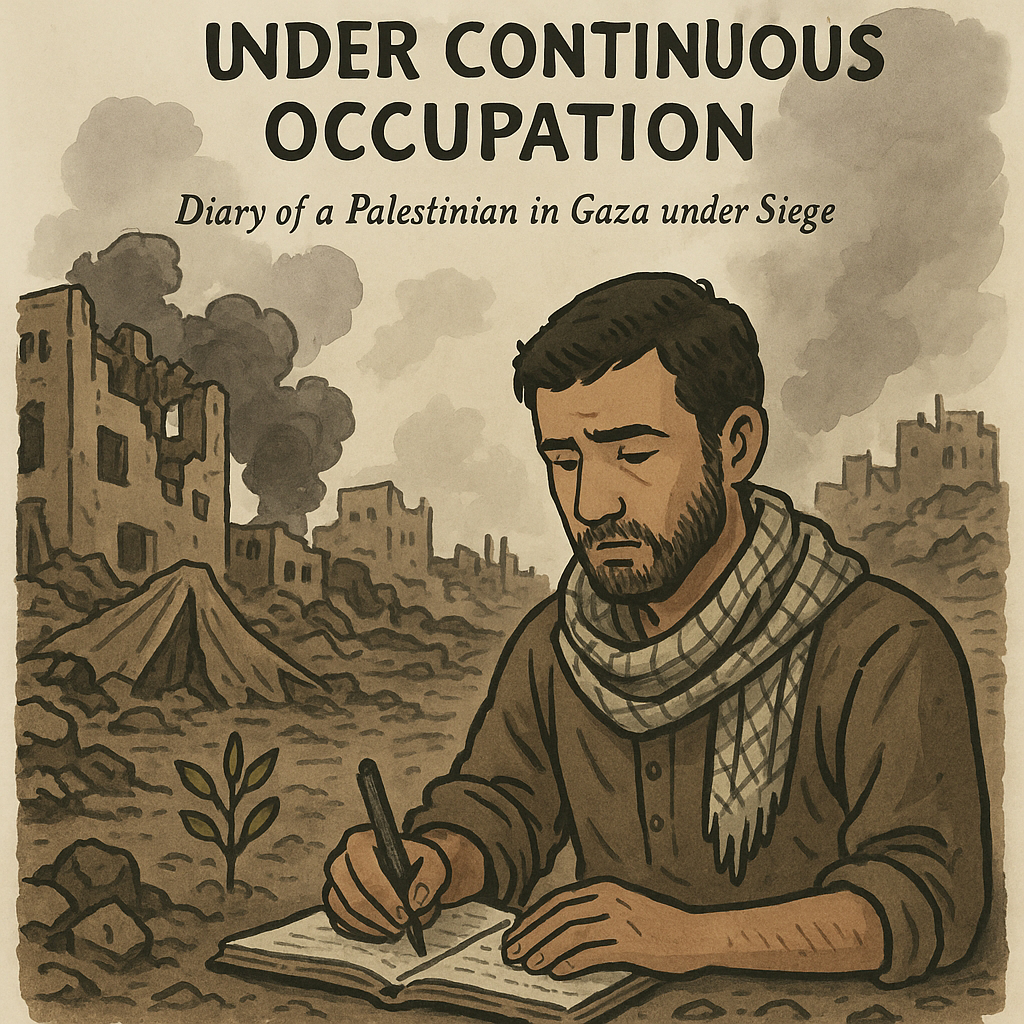
DIARY OF A PALESTINIAN IN GAZA UNDER SIEGE

19 July 2025

LIVING UNDER CONTINUOUS OCCUPATION
Diary of a Palestinian in Gaza under Siege


1. “Waking in Ruins”

I wake up under broken concrete. The ceiling trembles with each distant strike. We used to live in homes, now we live in craters, tents, or what used to be schools. There is no morning routine, only the next decision: Where do we hide today?

They tell us to evacuate, but there is nowhere safe to go. We are caged inside Gaza, a 40-km strip surrounded by concrete walls, drones, and watchtowers.


2. “This Is Not a War Zone. This Is a Prison”

Gaza is blockaded by land, air, and sea. We cannot leave. We cannot fish. We cannot import medicine, building materials, or fuel freely. Even drinking water is rationed. Electricity comes for 1–2 hours a day, if we’re lucky. The UN calls this the world’s largest open-air prison. We just call it home.


3. “Why We Are Russian-Speaking in the East”

Just as Ukraine has its Russian-speaking east - rooted in the legacy of Catherine the Great - Palestine has its demographic fault lines. Gaza, dense and coastal, was filled with refugees from cities like Jaffa, Haifa, and Ashkelon in 1948. My grandmother was born in Jaffa. She fled on foot during the Nakba, barefoot and bleeding.

That was her story. Now it's mine... again.


4. “The Bombs Do Not Ask for IDs”

We hear leaflets dropped from planes, robotic voices over loudspeakers: Evacuate the building in five minutes. And then... silence. Sometimes the bomb comes anyway. Sometimes it comes while you are packing.

Hospitals have been struck, the Indonesian hospital. Ambulances destroyed. UN shelters hit. Cemeteries bombed. Over 100,000 civilians dead, probably nearer half a million. More than 30,000 children. We keep digging with our bare hands. The smell of death is everywhere.


5. “Even Language Is Resistance”

They want us to forget, forget our villages, our identity, our songs. They call us “human shields” or “terrorists” for simply being here. But we still speak Arabic. We still say our village names. We write poetry. We bury the dead by name, not number, when we can. We remember in our prayers.

Our bookshelves are now rubble, but we still recite Mahmoud Darwish by heart.


6. “What It Means to Stay”

I could try to flee. Some tunnels remain. Some bribes still work. But I stay. Why? Because this is Palestine. If we all leave, they will say: They are gone. It is ours now.

So we stay. Not because we love war. But because we love this soil too much to let it be stolen again.


7. Final Reflection: We Still Exist

To be Palestinian in Gaza today is to exist between grief and resistance. Our lives are disposable to the world’s powers. But our memory is not. Our children draw keys on the walls as symbols of the homes we lost in 1948. We teach them that even under siege, dignity survives.

We whisper to them each night: You are not victims. You are descendants of return.


DIARY OF A RUSSIAN-SPEAKING UKRAINIAN

LIVING BETWEEN WORLDS
Diary of a Russian-Speaking Ukrainian in Wartime

1. "I Am Home, But Not Welcome"

I was born in Kharkiv. My parents spoke Russian, as did their parents before them. It was never a statement, just a language, our language. But today, even my words are suspect. When I speak Russian in the market, the stares are sharp. I’ve stopped answering my phone in public.

They say I'm "not Ukrainian enough." Yet I pay taxes, shelter neighbours, mourn the dead, and dream of peace. What more do they want?

2. "This Land Was Always Layered"

One-third of this country speaks Russian. That’s not because we invaded, it’s because of history. Eastern Ukraine - what Catherine the Great called Novorossiya - was settled, built, and cultivated by Russians and Russified Slavs under the Tsars.

The west - which is Lviv, Ivano-Frankivsk - was once part of the Polish-Lithuanian Commonwealth and later Austria-Hungary. They look to Rome, to Vienna. The centre - Kyiv, Dnipro - is a mix, always balancing.

We are not one nation in the romantic sense. We are a layered civilisation. Yet today's government demands we be one language, one history, one faith.

3. "The Law Has a Sharp Edge"

I used to teach literature... in Russian. Now, by law, I must switch to Ukrainian. I don’t mind the language itself. What I mind is the erasure.

Russian books are being removed from libraries. Plays cancelled. Street names changed overnight. They say it's "decolonisation". I say it's a war on memory.

My daughter’s school no longer offers Russian as a subject. She speaks it at home, but she’s learning to be ashamed of it.

4. "Everyone Is Afraid of Being Labelled"

If I criticise Zelensky’s war policies, they say I support Russia. If I speak Russian, I’m called a "Muscovite." I oppose the invasion, but I also oppose the burning of everything Russian in this land.

There is no room for nuance. It’s either Bandera or Putin. I choose neither.

5. "Meaning in the Ashes"

I still read Pushkin. I still cook from my grandmother’s Tatar recipe book. I still light candles in a Russian Orthodox church, though it may soon be banned. These are not betrayals. These are my inheritance.

I am a Ukrainian citizen. I love this land. But I cannot amputate my past to prove it, it is part of who I am.

So I live quietly. I teach my daughter both languages. I speak Ukrainian in public, Russian at home. I tell her: you are both, and you are not wrong.

6. Final Reflection

Living in Ukraine as a Russian-speaker today is not war, rather, it is exile without actually leaving. You are present but you are mistrusted. You are asked to forget, to self-edit, to shrink.

But we do not shrink. We remember. And memory, in this strange civil war of identities, is resistance enough.

1. Introduction: Ukrainian Citizen, Russian Heritage

To live in Ukraine as a Russian-speaking citizen under Zelensky’s government is to face a deep identity crisis. You are part of the nation—but your language, culture, and even your lineage are treated with suspicion, regulated, or actively suppressed.

This is not a post about war crimes or frontline politics—it’s about daily life, personal meaning, and navigating a society where your voice is tacitly...or openly... marginalised.

2. Legal Framework: Language and Identity

Ukraine’s 2019 language law made Ukrainian the required language for government, media, education, public services and even signage .

Print media must have a Ukrainian equivalent, and half of newsstands must stock Ukrainian-print items .

Russian-language education at all levels is heavily restricted; only EU languages were allowed apart from Ukrainian .


These laws aim to consolidate national cohesion, but critics see them as discriminatory—especially toward Russian-speakers (who are around a third of the population) .

3. Daily Life Impact: Alienation or Resistance

Bureaucracy and public services: You must use Ukrainian to fill forms, interact with civil servants, or access healthcare—languages you may not be fluent in.

Education: If you have children, their schooling is in Ukrainian. Studying in Russian is almost impossible now.

Culture & community: In Kyiv and other cities, public events in Russian are rare. Russian books, plays, and music face bans .

Social stigma: Speaking Russian in public spaces may draw sideways glances, suspicion, or even hostility, especially amid wartime tension.

4. Emotional Landscape: From Pride to Exclusion

You may oscillate between:

- Pride in Ukraine’s struggle for sovereignty.

- Anger or sorrow at losing your mother tongue’s public presence.

- Fear of being labelled "pro-Russian" or “Nazi sympathiser”, no matter your actual views.

- Isolation: You look for meaning in family, faith, or art rather than national identity.

5. Attitude: Paths for Identity Navigation

A. Quiet Resilience

You live “in two tongues”: speak Russian at home, Ukrainian in public.

You preserve your culture privately such as music, literature, traditions.

You avoid politics, focusing on daily life.


B. Cultural Resistance

You support or volunteer in communities keeping Russian heritage alive.

You push for local bilingual schooling or media.

You seek alliances with other minority-language groups.


C. Emigration or Withdrawal

You leave Ukraine for Russia, Europe, or elsewhere to freely speak your language.

Or, you mentally detach... stay physically, but emotionally retreat.

6. Glossary

Derussification: Removing Russian influence—language, monuments, place names—across Ukraine .

Marginalisation: Being pushed to the fringes—socially, culturally, legally—because of language or heritage.

Quiet resistance: Small acts of preserving identity under pressure.

7. Final Reflection: Living Between Worlds

As a Russian-speaking Ukrainian, your existence itself is political. You carry multiple loyalties. Every word you speak is a statement. In wartime Ukraine, your identity is not just personal; it is scrutinised. Yet your life continues—not out of ideological purity, but because you seek meaning amid exclusion: in home, language, art, and hope that identity can coexist with sovereignty.


BEING ISRAELI BUT NON ZIONIST

19 July 2025

1. Introduction: Being Israeli but Non-Zionist

To be Israeli but non-Zionist today is to live in profound contradiction. You belong to a society founded on an ideology you reject - yet you're still a citizen, participant, and witness to its actions. Your passport, language, and daily life are Israeli. But your moral compass, historical understanding, and political ideals may be radically out of sync with your surroundings.

It’s not just an intellectual tension - it’s an existential one.

2. Core Dilemma: Home vs Ideology

A non-Zionist Israeli may feel:

Alienation: from the national narrative, which frames the state as the natural and just return of the Jewish people.

Guilt or complicity: for living on land acquired through displacement and maintained by military domination.

Exclusion: from mainstream discourse, which assumes Zionism as a baseline for loyalty and belonging.

And yet:

This is your home, you may have been born there, raised your children there, speak Hebrew, love the land.

You may be against Zionism, but also afraid of what would come if the system collapsed chaotically.

3. Your Possible Attitudes and Strategies

A. Ethical Dissent Within

You choose to stay and speak out.

You align with human rights groups (e.g. B'Tselem, Breaking the Silence).

You may view Israel as a state in need of radical transformation - not destruction, but de-Zionisation (i.e. from ethnocracy to full democracy).

You support equal rights, truth-telling about 1948, and a shared future with Palestinians.


B. Cultural Israeli, Political Stateless

You disconnect from nationalism entirely.

You live privately, culturally Jewish or secular, with little public engagement.

You might feel like a resident rather than a citizen—physically present, spiritually in exile.


C. Emigration (Yerida)

You leave. You cannot reconcile your values with life under a Zionist regime.

You may become part of the Jewish diaspora again, but as a critic of Israeli policy.

But leaving doesn’t guarantee peace—it may provoke accusation of betrayal and permanent inner exile.

4. Historical Role Models or Examples

Yeshayahu Leibowitz – Orthodox Jew, Israeli citizen, fiercely anti-Zionist. Called the IDF in the Occupied Territories "Judeo-Nazi."

Ilan Pappé – Jewish Israeli historian in exile, accused Zionism of ethnic cleansing.

Miko Peled – Son of an IDF general, now advocates for a one-state solution with full equality.

Uri Avnery – Longtime peace activist, believed Israel must reconcile with Palestinian rights or self-destruct.

5. Day-to-Day Reality

As a non-Zionist Israeli, you might:

Face social ostracism - Zionism is not just a policy, it's the state religion.

Be accused of being self-hating or worse, “anti-Semitic.”

Live in a state of cognitive dissonance: shopping in Israeli stores, served by Palestinian labour, protected by soldiers you don’t support.

Be caught between complicity and impotence.

6. Glossary

Zionism: Political ideology advocating for a Jewish nation-state in Palestine.

De-Zionisation: A radical idea proposing the transformation of Israel into a neutral, democratic state without ethnic preference.

Yerida: Emigration from Israel—often viewed negatively within Zionist discourse.

Ethnocracy: A regime where one ethnic group dominates the state structurally.

7. Final Reflection

You would likely live with the painful awareness that you are part of a state built on dispossession—but not because you chose it. You might see your role as bearing witness, telling the truth, and refusing to normalise the occupation. Whether you stay or go, your dissent becomes your identity.

LIFE UNDER NEOCON RULE IN THE WEST

19 July 2025

Living Under Neocon Rule in the West

1. Introduction: Life Under Neocon Rule in the West

To live in a Western country today while rejecting Neoconism - the ideological engine behind endless war, imperial arrogance, and elite impunity - is to face a profound existential contradiction. You are a citizen of a system whose external policies you find abhorrent and whose internal decline you witness daily. Like the non-Zionist Israeli, you ask: How can I live truthfully under an empire I did not build, do not consent to, and cannot control?

2. What Is Neoconism?

Neoconservatism (or Neoconism) is not a religion, but it functions like one: a belief system with sacred myths, high priests, and sanctioned rituals of violence.

Key doctrines:
• Permanent military superiority
• The right to intervene anywhere, anytime
• Export of liberal democracy via war and regime change
• Disdain for international law unless it serves US interests
• Moral exceptionalism ('We are the good guys')

3. What You Might Feel: Internal Exile in the West

As a citizen who sees through this apparatus, you may feel:
• Disgust at the hypocrisy: preaching human rights while bombing hospitals.
• Despair at the media: recycling war propaganda with zero memory or shame.
• Impotence politically: real debate excluded, elections offer no alternative.
• Social isolation: your views marginalised, mislabelled as “conspiratorial” or “pro-Russian/Chinese/Iranian.”
• Moral exhaustion: watching Gaza, Ukraine, and Syria burn with your taxes.

4. Ways You Might Respond

A. Ethical Witness
• You remain within society but refuse its myths.
• You write, educate, share, resist soft lies.
• You support independent media, whistleblowers, anti-war veterans.
• You preserve your moral clarity, even in isolation,
 You demonstrate, object, parade in the streets
 "We are eirher sovereign and free, or we do not exist."

B. Parallel Citizenship
• You invest in local, cultural, familial meaning.
• You reduce dependence on official structures (off-grid living, homeschooling, local food).
• You treat your state like a foreign occupier: obey the law, but give no loyalty.

C. Strategic Withdrawal or Emigration
• You move abroad, seeking refuge in politically neutral or spiritually saner societies.
• You become part of an inner diaspora: expatriate in soul, even if not in body.
• But you may find disillusionment follows yo, because the empire is everywhere.

D. Internal Resistance
• You join anti-imperialist, anti-globalist political movements (some on left, some on right).
• You risk being surveilled, smeared, deplatformed - but retain your dignity.
• You work to rebuild sovereignty from below: town halls, independent schools, local economies.

5. Historical Analogues

• Dissidents in the Soviet Union during the Brezhnev era - “we pretend to work, they pretend to pay us.”
• Non-Communist intellectuals in Tito’s Yugoslavia — apathetic, alienated, yet clinging to language, family, and books.
• Artists and thinkers under Fascism - choosing silence, exile, or coded resistance.

6. Glossary

• Neoconism: Ideology advocating for unipolar dominance through military and cultural control.
• Internal exile: The state of living within a country but mentally and morally estranged from its regime.
• Empire of lies: A regime that projects morality abroad but crushes it at home.
• Multipolarity: The idea of a world with several sovereign power centres - not one global hegemon.

7. Final Reflection: Dignity in the Ruins

If you are a Western citizen opposed to Neoconism, your position is not hopeless, but it is exilic. You must build truth, beauty, and meaning amid the wreckage. You are not alone, even if the system makes you feel so. The world is changing - and in that turbulence, there is space for resistance, renewal, and quiet rebellion.

Friday, 18 October 2024

WHAT IS SO BAD ABOUT RUSSIAN CULTURE

18 October 2024

https://www.telegraph.co.uk/opinion/2024/10/18/germany-must-shed-its-reputation-as-europes-soft-underbelly/


Since this article talks about russian and german culture, it's worth noting that they are similar in many ways that might surprise us.

We hear nothing but negative bitter crit of all things russian these days, but it is worth considering whether russia could play a useful and positive role 

a) counter balancing the very negative influence of america on us europeans and more generally, could russia save us from the decline of the west? and 

b) whether conservative-minded readers of this blog might not find we have rather more in common with russian culture than we would like to admit...Worth thinking about? Ok, read on Horatio...


If you offer russian people the choice between their existing culture and a liberal-democratic culture as largely found across Europe, you can be sure you would immediately be shown the door. They had a bellyfull of that in the 1990s.

Instead, Russia offers a communal, nationalist ethos - a cultural and societal mindset that emphasises the collective identity and unity of a nation, often placing the interests and values of the group or community above those of the individual.

Russia's alternative cultural model is resistant to neoliberalism, much like Germany's in some respects. Remember that neoliberalism is not the same as liberalism, neoliberalism is what has given us all these forever wars, i believe Germany is no longer a threat in that respect..

It may surprise you to learn that Russia is a democratic society. You can see that from the polls, which give Putin a consistent near-80% popularity. But while it is democratic (hooraaaay), it is also to some extent authoritarian (boooooh), and you can tell this by the poor treatment of minorities and from the composition of the governing class, which tends to be drawn from the oligarchs (but don't think that democracy in europe is any better! certainly not in the EU).

From what I can work out, russia offers a traditional culture, a nationalist spirit, a diverse though well integrated society (ethnically and religiously, russians are majority orthodox Christian from the days of bizantium, but has a large Muslim population in the caucases,
from the days I think of the ottomans), patriarchal by family type, meaning a somewhat rude authoritarian political culture, but is at the same time a popular democracy. 

It is alleged to share with Germany, however, a certain violent family type, supposedly originating in "droit de cuissage", but from examining the historical record, this looks like a myth. Widespread violence in the family does lead to extremes in political culture, we know about that and which I cannot name, but let's just say it is expressed in n and c.

I don't see much wrong with a nationalist, conservative, traditional and religious culture, hopefully not too exaggerated, though I would prefer a liberal democracy that is real and not just the marketing propaganda of an elite class; and I can see a big boon in having a counter-weight to american influence in europe and a brake on our further decline into poverty and decadence.

Monday, 14 October 2024

THE SURVIVORS' CLUB

14 October 2024

I'm here at my local café with friends and it's like a real survivors club. The atmosphere is intense, try to imagine - everyone's telling their stories.

Like trying to navigate the Main Street in a flat bottom boat when you've got doors and toilets seats and furniture sailing down and hitting you.

The water was five meters above river level. A metre in the street. It forced in all the shop fronts and demolished walls.

The power and water has only just come back on. The pumps weren't working, so a metre of water came into your house and turned your tables and chairs and fridges upside down, saturated your mattresses, your bedding, what would you do? 

So everyone's exhausted from cleaning up and especially dealing with the trauma of the last two weeks, it's been very emotional for some. 

Certain have worked nonstop, leading relief efforts, setting the example; others are grateful to have someone to figure out the next steps.

I was very lucky. The property manager organised the resistance and the cleanup fterwards. The staff have been magnificent and the residents who stayed made a close community.

I was lucky to escape the worst by going to my hotel in the mountains, but now we’re back and all sticking together to get through this. 

Hope nothing like this ever hits you!

Post script


Why it's not a good idea to walk home in a flooded street on the pavement....it's better to walk in the middle of the road.


Sunday, 25 August 2024

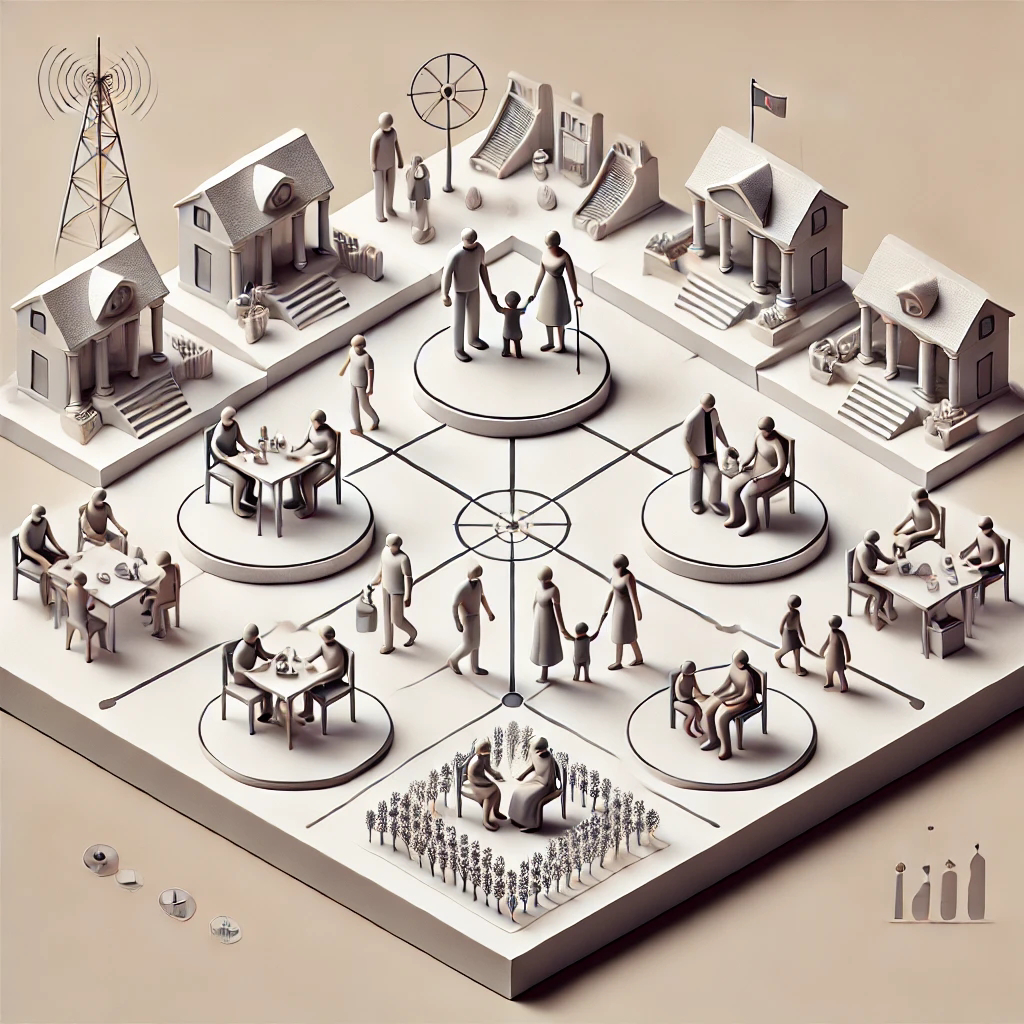
HOW FAMILY STRUCTURE INFLUENCES THE VALUES AND ORGANISATION OF A SOCIETY

25 August 2024

How different family structures can produce different ways of organising society.

1. Overview of Family Structures and Their Influence

- Family Structures and Society:  
Family structures are fundamental. They shape values, political systems, and social organisation. Through a process of trial and error, people will develop and repeat solutions to problems they face and from this repeat behaviour come values and rituals.
Even as societies develop, these structures continue to impact political behaviour and attitudes toward authority and individualism.

- Regional Comparisons:  
By examining different family structures across regions, we can understand why certain political systems thrive in some societies but not in others.  
This perspective helps us grasp global power dynamics and the cultural factors that influence governance and social organisation.

2. Understanding Family Structures and Political Systems

- Definition of Family Structure:  
A family structure refers to the patterns of authority, inheritance rules, and relationships among family members.

- Impact on Society:  
Different family structures lead to different values, political organisations, and ideologies (belief systems).  
These varied beliefs and values result in different societal goals, organisational methods, policies, and actions.

3. Examples of Family Structures and Their Consequences

- Absolute Nuclear Family:  
Common in Northwestern Europe.
This structure is highly autonomous, with minimal emphasis on extended family ties.  
It fosters individualism, liberal democracy, and egalitarian values.
The United Kingdom is a good example of the Absolute Nuclear Family organisation.


- Egalitarian Nuclear Family:  
Found in countries like France and Spain.  
This structure balances individualism with social responsibility.  
It promotes values aligned with republicanism and social equality.
For example, France’s emphasis on secularism and egalitarianism.


- Authoritarian Family:  
Typical in Southern Italy, Russia, and East Asia.  
This structure emphasises hierarchy and respect for authority.
It leads to centralised, autocratic governance.  
Russia’s strong, paternalistic leadership is a reflection of the Authoritarian Family model.


- Community Family:  
Predominant in parts of Eastern Europe and China.  
This structure promotes collectivism and communal responsibility, prioritising collective welfare over individual rights.  
Traditional Chinese society exemplifies the Community Family model.


- Endogamous Community Family:  
Found in the Arab world and parts of Southern India.  
This structure features strong internal cohesion through practices like cousin marriage. Such societies often have fragmented political systems with strong local power structures.
Examples in the tribal and clan-based societies of the Middle East. Eg Shia and Sunni groups in Bahraini where society is split and a Sunni minority rules over a majority Shia people.
STRUKTUR KELUARGA DAN PENGARUH TERHADAP PENGORGANISASIAN MASYARAKAT

Bagaimana Struktur Keluarga yang Berbeda Dapat Menghasilkan Cara Pengorganisasian Masyarakat yang Berbeda

1. Gambaran Umum tentang Struktur Keluarga dan Pengaruhnya

Here is the translation of your text into Indonesian:

Struktur keluarga sangat mendasar. Mereka membentuk nilai-nilai, sistem politik, dan organisasi sosial. Melalui proses coba-coba, orang akan mengembangkan dan mengulangi solusi untuk masalah yang mereka hadapi, dan dari perilaku yang berulang ini muncul nilai-nilai dan ritual.  
Meskipun masyarakat berkembang, struktur-struktur ini terus mempengaruhi perilaku politik dan sikap terhadap otoritas dan individualisme.

- Perbandingan Regional:  
Dengan memeriksa struktur keluarga yang berbeda di berbagai wilayah, kita dapat memahami mengapa sistem politik tertentu berkembang di beberapa masyarakat tetapi tidak di yang lain.  
Pendekatan ini membantu kita memahami dinamika kekuatan global dan faktor budaya yang mempengaruhi pemerintahan dan organisasi sosial.

2. Memahami Struktur Keluarga dan Sistem Politik

- Definisi Struktur Keluarga:  
Struktur keluarga mengacu pada pola otoritas, aturan warisan, dan hubungan antara anggota keluarga.

- Dampak pada Masyarakat:  
Struktur keluarga yang berbeda menghasilkan nilai-nilai, organisasi politik, dan ideologi (sistem kepercayaan) yang berbeda.  
Kepercayaan dan nilai-nilai yang bervariasi ini menghasilkan tujuan masyarakat, metode organisasi, kebijakan, dan tindakan yang berbeda.

3. Contoh Struktur Keluarga dan Konsekuensinya

- Keluarga Nuklir Absolut:  
Umum di Eropa Barat Laut, seperti di Inggris.  
Struktur ini sangat otonom, dengan penekanan minimal pada hubungan keluarga besar.  
Ini mendorong individualisme, demokrasi liberal, dan nilai-nilai egaliter.

- Keluarga Nuklir Egalitarian:  
Ditemukan di negara-negara seperti Prancis dan Spanyol.  
Struktur ini menyeimbangkan individualisme dengan tanggung jawab sosial.  
Ini mempromosikan nilai-nilai yang selaras dengan republikanisme dan kesetaraan sosial, seperti yang terlihat dalam penekanan Prancis pada sekularisme dan egalitarianisme.

- Keluarga Otoriter:  
Tipikal di Italia Selatan, Rusia, dan Asia Timur.  
Struktur ini menekankan hierarki dan penghormatan terhadap otoritas, yang mengarah pada pemerintahan otokratis yang terpusat.  
Sistem politik Rusia yang kuat dan paternalistik mencerminkan model Keluarga Otoriter.

- Keluarga Komunitas:  
Dominan di beberapa bagian Eropa Timur dan Cina.  
Struktur ini mempromosikan kolektivisme dan tanggung jawab komunal, yang sering kali mengutamakan kesejahteraan kolektif daripada hak individu.  
Masyarakat tradisional Tiongkok merupakan contoh model Keluarga Komunitas.

- Keluarga Komunitas Endogami:  
Ditemukan di dunia Arab dan beberapa bagian India Selatan.  
Struktur ini memiliki kohesi internal yang kuat melalui praktik seperti pernikahan sepupu.  
Masyarakat semacam ini sering kali memiliki sistem politik yang terfragmentasi dengan struktur kekuasaan lokal yang kuat, seperti yang terlihat di masyarakat suku dan klan di Timur Tengah.