



Showing posts with label #Health. Show all posts

Tuesday, 17 February 2026

WHEN THE WORLD CHANGES AND WE DO NOT

17 February 2026

WHEN THE WORLD CHANGES AND WE DO NOT

Erasure or evolution? 

1. This Poster And The Feeling Behind It

An image such as this, despite its surface references to theology or food or drink, is not really about those things at all. It is about loss. It compresses a complicated historical process into a simple moral drama in which everything familiar appears under attack and someone or something else is presented as the cause.

That story carries emotional force, particularly in later life when there is more time to observe change rather than simply adapt to it. Streets look different. Accents sound unfamiliar. Shop fronts change. It can genuinely feel as though the country once known, has shifted beyond recognition. There is truth in the perception of change.

Furthermore it is not just change itself, it is the rate of change which appears to have accelerated beyond the ability of ordinary people to successfully adapt.

The grievance can be restated as a perception or feeling of betrayal. As Neil Howe explains, identity and values are largely formed from events experienced in our youth. Is it realistic to expect older generations to adapt to and reinterpret their nation through such a radically different cultural frame later in life?

In addition, what did older generations get in exchange for this added disruption? Globalisation has accelerated economic and demographic change. Those changes were promoted by political and financial elites. Ordinary citizens bore the disruption, but the gains accrued disproportionately to capital, not labour. 

It may be a fact of life that younger generations adapt more easily to rapid change simply because their starting point is nearer their baseline, while older generations - further away - experience the same change as loss rather than evolution. Ok, but what are the policy implications of this? Is, for example, the triple lock pension designed to keep older people quiet? 

When you listen to the arguments on both sides those pro immigration and those for controlling it, don't they come across as emotional to the point of hysterical, rather than objectively grounded and promoting worked-out and achievable policies? We all have an idea of who we are and what our identity consists of. Aren't the two sides defending different identies, values and in reality different memories of the country that shaped them?

Populist - or if you prefer revolutionary - movements have historically been the result of economic deprivation but is it more than that today? Is it that there are large cohorts within the population who have been "culturally displaced"? We are talking about social fragmentation, and not just generational but regional and class-based as well, and isn't it the emotional response to this that is the cause of instability and may conceivably push us to Civil War? 

The governors should be able to buy off objections. Although there is considerable inequality between those with assets and those without, the problem is more than economic. Can the governors preserve core trans-generational civic symbols that reassure continuity, and also at the same time integrate immigrants within those symbols rather than allow immigrants to replace them? 

This is what the Great Replacement Theory, beloved of Eric Zemmour and others, is all about. The British are a declining nation, facing even "civilisational erasure", as JD Vance called it. 

So here Vance is talking about our cultural confidence, about "demographic continuity", about the nations of Europe each defending their national sovereignty and institutions, and keeping a "moral coherence". He argues that a nation unable to regulate entry cannot preserve its "civic identity" and that once immigrants are legally admitted they must be assimilated into the national culture - he says that multiculturalism simply doesn't work. He also argues that Western societies are ageing and shrinking, and demographic collapse weakens long-term stability and so family-centric policies must be developed. 

The starting point is the social contract. To reduce the gap between governing and governed, corporate influence - that is influence from donor classes, big tech and so on - should be a limited. The financialisation of assets needs to stop and production together with fair wages needs to be restarted. And ways must be found to encourage and prioritise domestic labour in place of global capital mobility ie rebalance the system towards national workers rather than transnational capital.

History

Immigration into the UK today sits within a much longer imperial and economic arc. After the war, Britain invited Commonwealth labour, including the Windrush generation, to rebuild the country and staff institutions such as the newly created Health Service. Later, Britain accepted Ugandan Asians under legal and moral obligations. In the late twentieth century, labour mobility deepened under globalisation, particularly after EU expansion and the growth of finance, universities and health care recruitment.

High inflows are therefore not an isolated accident but a feature of an economy integrated for decades into global capital and labour markets. History shows that empires under fiscal strain and global entanglement often struggle to control population flows. Immigration in such circumstances becomes a symptom of structural forces rather than a tap that can simply be turned off. To attempt to do so abruptly would mean shrinking the economy and retreating from a global system Britain itself helped to build.

At the same time, while most migrant communities over time have integrated into the wider legal and cultural framework while retaining elements of their heritage, there are concerns that a minority within more recent, strongly ideologically motivated movements have been more resistant to integration, maintaining parallel norms and advocating forms of religious law that sit in tension with the supremacy of British civil law. This raises legitimate questions about cohesion and the principle that one sovereign legal system must apply equally to all.

Before accepting a narrative of civilisational collapse or erasure however, it is worth considering whether some of the discomfort arises not only from external change but also from an internal struggle to adjust to it.

2. Building A Life Versus Living Inside It

Most of adult life is spent building - career, family, identity and routine. That phase is active and outward looking. Retirement alters the rhythm. There is more space for personal reflection and comparison between past and present.

If identity has been tightly bound to a particular era or cultural atmosphere, then demographic change can feel like personal erasure. If identity rests on deeper foundations than a single historical period, change can be approached as something to understand rather than something to fight.

Global trade, decolonisation, capital flows and labour mobility cannot be reversed any more than ageing itself can be reversed. The economic dynamics associated with late stage empire are structural. Daily resentment won't alter them.

The underlying choice in later life is whether to expend energy resisting historical currents or to cultivate steadiness within them.

3. The Hidden Side Of Anger

When individuals confront forces far larger than themselves, anger can provide a sense of clarity and strength. It simplifies complexity and assigns responsibility. Yet sustained anger often conceals deeper anxieties - fear of decline, fear of irrelevance, fear that the world is moving forward without one’s participation.

Demographic change can become a symbol of those fears. New languages, new customs and new generations serve as reminders that time moves on. Facing that reality calmly requires a different kind of strength from blaming visible outsiders. The latter may feel momentarily satisfying, but it rarely produces peace.

4. Meaning Beyond The Headlines

Retirement can narrow perspective or enlarge it. Time once consumed by work can be used to rehearse grievances or to mentor, read more widely, engage with history in greater depth, converse across differences, keep a reflective journal or even write a biography that integrates a lifetime of experience.

A country shaped by empire and global trade was never destined to remain static. Movement and exchange have long been part of its fabric. Recognising this does not require endorsement of every policy choice; it simply removes the temptation to interpret structural change as a personal attack.

With that shift, energy becomes available for adaptation rather than defence. Identity ceases to be a fragile relic and becomes something capable of evolution.

5. The Choice In Later Life

Later life presents a quiet but profound decision. One path hardens around what once was. The other integrates what now is.

Hardening can initially feel strong and principled, yet over time it often produces isolation and bitterness. Integration may feel unsettling at first, but it tends to lead towards calm, proportion and perspective.

Memories and affections for earlier decades need not be abandoned. They can remain valued chapters within a longer narrative. Historians divide the past into periods for a reason; each era forms a section of a larger story. The Britain of the Swinging Sixties was not the Britain of the Victorian age, and the present is not the 1960s.

History moves. Economies evolve. Populations shift. These currents cannot be stopped by indignation alone. What can be chosen is the stance taken towards them.

Retirement need not become a daily referendum on what has been lost. It can instead become a stage of clarity, proportion and even quiet enjoyment, once the assumption is released that the world must remain as it was for life to retain meaning.

Peace often arrives not through winning the argument, but through stepping beyond it.

REFERENCES

http://www.livingintheair.org/2026/01/the-economics-of-late-stage-empire.html

http://www.livingintheair.org/2025/12/nothing-can-be-done-about-immigration.html

https://www.youtube.com/watch?v=yUmscnUliBs&list=WL&index=1&pp=iAQBsAgC

https://www.youtube.com/watch?v=2TdC9Xd76UM&list=WL&index=2&pp=iAQBsAgC

YOUR STORY IS NOT FINISHED: WHY NOW IS THE TIME TO WRITE IT

17 February 2026

CERITA ANDA BELUM SELESAI: MENGAPA SEKARANG ADALAH WAKTU YANG TEPAT UNTUK MENULISKANNYA

I. Pengamatan Seorang Penulis Biografi

Setelah bertahun-tahun mendengarkan kisah pria dan wanita di usia lanjut, saya menyadari ada perubahan yang tenang tetapi kuat ketika dorongan untuk berprestasi mulai berkurang dan perenungan menjadi lebih dalam. Percakapan menjadi lebih lambat, namun juga lebih bermakna, dan di balik kalimat sehari-hari muncul pertanyaan besar tentang arti hidup, tentang keterhubungan, dan tentang warisan. Apa sebenarnya makna dari semua ini? Apakah pengorbanan itu sepadan? Benang apa yang menghubungkan cita-cita masa muda dengan tanggung jawab dan kompromi di masa dewasa?

Psikiater Swiss Carl Jung menyebut tahap ini sebagai proses menuju individuasi, yaitu penyatuan seluruh pengalaman hidup menjadi satu kesatuan yang utuh dan bermakna. Ini bukan sikap egois dan bukan pula keinginan untuk dipuji. Ini adalah perkembangan psikologis yang wajar ketika seseorang ingin memahami pola hidupnya sendiri. Biografi yang ditulis dengan sungguh-sungguh menjadi bentuk nyata dari proses penyatuan itu.


II. Prestasi Membangun Rumah

Sebagian besar orang yang lebih tua telah menghabiskan puluhan tahun membangun sesuatu yang nyata. Mereka membangun karier, usaha, lembaga, dan keluarga, sering kali dalam tekanan dan tanpa banyak penghargaan. Mereka membuat keputusan yang dampaknya jauh melampaui diri mereka sendiri, dan memikul tanggung jawab yang mungkin tidak sepenuhnya dipahami oleh generasi yang lebih muda karena mereka tidak melihat beratnya pada saat itu.

Prestasi membangun rumah.

Namun pada satu tahap, pembangunan melambat dan seseorang harus tinggal di dalam rumah yang telah dibangunnya. Jika kisah hidup itu tidak pernah direnungkan, beberapa bagiannya bisa terasa terpisah atau belum selesai. Ketika kisah itu dituturkan dengan jujur dan seimbang, bab-bab yang terpisah mulai terhubung dan rumah itu terasa benar-benar dihuni, bukan sekadar berdiri. Menulis kisah hidup memungkinkan cita-cita awal, krisis paruh baya, keraguan pribadi, dan perubahan tak terduga terlihat sebagai satu rangkaian yang saling berkaitan, dan apa yang dulu terasa seperti kebetulan sering kali memperlihatkan pola yang jelas.


III. Bayangan Juga Pantas Mendapat Tempat

Jung juga berbicara tentang bayangan, yaitu bagian dari diri kita yang tidak ingin kita lihat terlalu dekat, termasuk kesalahan, penyesalan, rasa iri, ketakutan, dan kelemahan moral. Pada masa muda dan dewasa, bagian ini sering tertutup oleh kesibukan dan tanggung jawab, tetapi pada usia lanjut ia sering muncul kembali dengan lebih jelas.

Biografi yang serius tidak menghapus bagian-bagian ini, dan juga tidak membesar-besarkannya. Sebaliknya, ia memasukkannya ke dalam cerita yang lebih besar sehingga menjadi bagian dari kisah manusia yang utuh, bukan beban yang tersembunyi. Ketika penyesalan tidak pernah diungkapkan, ia bisa mengeras menjadi sikap mudah marah atau ketidakpuasan yang diam. Namun ketika diakui dalam kerangka yang lebih luas, ia sering menjadi lebih ringan dan menemukan tempatnya. Dalam arti ini, biografi bukan pembelaan diri, melainkan tindakan berdamai dengan kompleksitas diri sendiri.


IV. Makna Melampaui Prestasi

Pada masa muda, pertanyaan utama biasanya adalah apa yang akan saya capai, sedangkan pada usia lanjut pertanyaannya menjadi apa arti semua ini. Penelitian jangka panjang seperti Harvard Study of Adult Development berulang kali menunjukkan bahwa pada usia lanjut, kesejahteraan lebih berkaitan dengan hubungan dan rasa makna daripada dengan kekayaan atau status. Prestasi mungkin memudar dari ingatan publik, tetapi karakter di baliknya tetap hidup dalam ingatan keluarga.

Karena itu, biografi tidak hanya berguna bagi penulisnya, tetapi juga bagi keluarga dan orang-orang terdekat. Ia memberi konteks kepada anak dan cucu, sehingga mereka memahami bukan hanya apa yang dilakukan, tetapi juga mengapa hal itu dilakukan dan dalam tekanan serta keyakinan seperti apa keputusan itu diambil. Tanpa konteks, keturunan hanya mewarisi potongan cerita. Dengan konteks, mereka mewarisi pemahaman yang utuh.


V. Kesadaran Akan Kematian Memperjelas Perspektif

Usia lanjut membawa kesadaran bahwa waktu terbatas. Kesadaran ini memang bisa terasa tidak nyaman, tetapi juga memperjelas apa yang penting. Keluhan kecil kehilangan urgensinya, sementara nilai-nilai yang bertahan menjadi lebih terlihat. Menulis kisah hidup pada tahap ini bukanlah sikap suram, melainkan sikap yang tenang dan realistis. Ia mengakui bahwa waktu terbatas, sambil menegaskan bahwa pengalaman memiliki bobot dan arti.

Dengan menuliskan hidup, seseorang juga merekam sejarah sosial sebagaimana dialami secara pribadi. Perang, perpindahan, krisis ekonomi, perubahan budaya, dan kemajuan teknologi semuanya terlihat berbeda ketika diceritakan oleh orang yang benar-benar menjalaninya. Biografi menjaga kekayaan pengalaman itu bagi generasi berikutnya.


VI. Untuk Generasi Yang Akan Datang

Ada satu dimensi tambahan yang sering terlewat. Kita menulis biografi bukan hanya untuk memahami diri sendiri, tetapi juga agar orang lain dapat memahami kita, dan melalui kita memahami diri mereka sendiri. Dalam setiap keluarga terdapat pola keberanian, ketahanan, kegagalan, kemurahan hati, dan juga kelemahan. Jika pola-pola ini tidak pernah diungkapkan, mereka bekerja secara diam-diam. Ketika diungkapkan, mereka menjadi warisan yang disadari.

Bagi anggota keluarga yang lebih muda, membaca kisah hidup seperti ini bisa menjadi sumber inspirasi sekaligus peringatan. Mereka melihat apa yang mampu dicapai oleh keluarga mereka dalam kondisi sulit, dan mereka juga melihat di mana kesombongan, ketakutan, atau kesalahan penilaian membawa masalah. Pengetahuan ini dapat memperkuat jati diri dan menyeimbangkan ambisi dengan kebijaksanaan. Dengan demikian, biografi menjadi cermin bukan hanya bagi masa lalu, tetapi juga bagi masa depan.


VII. Sebuah Undangan

Jika Anda merasakan dalam diri Anda, atau dalam diri seseorang yang Anda cintai, dorongan untuk merenung dan menyatukan pengalaman hidup, dorongan itu layak diperhatikan. Itu bukan tanda kemunduran, melainkan kedalaman. Itu bukan sikap mementingkan diri sendiri, melainkan penyelesaian tugas psikologis yang memang milik tahap akhir kehidupan.

Menyusun biografi berarti mengumpulkan peristiwa yang tersebar menjadi satu narasi yang dapat dipahami oleh diri sendiri dan oleh generasi berikutnya. Ia memungkinkan prestasi dan kerentanan, kekuatan dan bayangan, keberhasilan dan kesalahan, duduk bersama dalam satu kisah yang utuh.

Prestasi membangun rumah. Integrasi, yang dibagikan melalui cerita, membuat rumah itu layak dihuni bukan hanya bagi Anda, tetapi juga bagi semua yang suatu hari akan melangkah masuk ke dalamnya.

==========

YOUR STORY IS NOT FINISHED: WHY NOW IS THE TIME TO WRITE IT

I. A Biographer’s Observation

After many years listening to men and women in later life, I have come to recognise a quiet but powerful shift that takes place when the urgency of external achievement begins to recede and reflection becomes more prominent. Conversations grow slower, but they also grow deeper, and beneath everyday remarks one hears larger questions forming about meaning, coherence and legacy. What did it amount to? Were the sacrifices justified? What thread connects the early ambitions of youth with the compromises and responsibilities of middle age?

The Swiss psychiatrist Carl Jung described this stage as a movement towards individuation, by which he meant the integration of one’s life into a meaningful whole. This is not self indulgence and it is not vanity. It is a natural psychological development in which a person seeks to understand the pattern of their own existence. A biography, thoughtfully undertaken, becomes the visible form of that integration.


II. Achievement Built The House

Most older people have spent decades building something tangible. They built careers, businesses, institutions and families, often under pressure and frequently without applause. They made decisions whose consequences extended far beyond themselves, and they bore responsibilities that younger generations may never fully appreciate because they never saw the weight of them at the time.

Achievement builds the house.

Yet there comes a stage when the construction slows and one must live within what has been built. If the story remains unexamined, parts of it can feel fragmented or unresolved. When the story is told with honesty and proportion, the separate chapters begin to connect and the house feels inhabited rather than merely constructed. Writing a life story allows early aspirations, mid life crises, private doubts and unexpected turns to reveal their continuity, and what once seemed like a series of accidents often discloses a discernible pattern.


III. The Shadow Deserves Its Place

Jung also wrote of the shadow, meaning those aspects of ourselves that we would rather not examine too closely, including mistakes, regrets, envy, fear and moments of moral weakness. In youth and middle age these elements can be buried beneath activity and responsibility, but in later life they often reappear with surprising clarity.

A serious biography does not erase these chapters, nor does it dramatise them. Instead, it integrates them into the broader narrative so that they form part of a human story rather than a hidden burden. When regrets remain unspoken they can harden into irritability or quiet dissatisfaction, whereas when they are acknowledged within a larger framework they frequently soften and find proportion. In that sense, biography is not a defence brief but an act of reconciliation with one’s own complexity.


IV. Meaning Beyond Achievement

In youth the central question tends to be what one will accomplish, while in later life the question becomes what it all meant. Longitudinal research such as the Harvard Study of Adult Development has repeatedly shown that in older age, wellbeing correlates more strongly with relationships and a sense of meaning than with wealth or status. Achievements may fade from public memory, but the character behind them endures in private memory and family culture.

A biography therefore serves not only the writer but also the entourage. It gives children and grandchildren context, allowing them to understand not merely what was done but why it was done, and under what pressures and convictions those decisions were made. Without such context, descendants inherit fragments and anecdotes. With it, they inherit coherence and insight.


V. Mortality Clarifies Perspective

Later life brings an increasing awareness of finitude, and although this awareness can be unsettling it also clarifies priorities. Trivial grievances lose urgency, while enduring values become more visible. Writing one’s life at this stage is not morbid; it is measured. It acknowledges that time is finite while affirming that experience has weight and significance.

In recording a life, one is also recording social history as lived reality. Wars, migrations, economic crises, cultural revolutions and technological changes all appear differently when viewed through the eyes of someone who navigated them personally. A biography preserves that lived texture for those who come after.


VI. For Those Who Come After

There is an additional dimension which is sometimes overlooked. We write our biographies not only to understand ourselves, but so that others may understand us and, through us, understand themselves. Within every family there are patterns of courage, resilience, failure, generosity and blind spots. When these remain unspoken they operate invisibly. When they are articulated they become conscious inheritance.

For younger members of the family, reading such a life can be both inspiration and warning. They see what their lineage has been capable of achieving under constraint, and they also see where pride, fear or misjudgement led to difficulty. This knowledge can strengthen identity and temper ambition with wisdom. A biography thus becomes a mirror held up not only to the past but to the future.


VII. An Invitation

If you sense within yourself, or within someone close to you, that reflective turn towards integration, it is worth taking seriously. It is not decline but depth, not self absorption but completion of a psychological task that belongs to later life.

To shape a biography is to gather scattered episodes into a narrative that can be understood by oneself and by one’s descendants. It allows achievement and vulnerability, strength and shadow, success and error to sit together within a single coherent account.

Achievement built the house. Integration, shared through story, makes it habitable not only for you but for everyone who will one day walk through its doors.


A SENSITIVE ADOLESCENT WATCHING HER GRANDPARENTS GROW OLD

17 February 2026

A SENSITIVE ADOLESCENT WATCHING HER GRANDPARENTS GROW OLDER

I. When You Begin To Notice

There comes a moment, often in adolescence, when a young person begins to see their grandparents differently. They are no longer simply kind figures who bring sweets or tell stories. They appear more fragile, sometimes more anxious, occasionally more rigid or critical. For a sensitive teenager, this can be confusing, even unsettling. It may feel as though something is “going wrong”.

In truth, what they are witnessing is not failure but ageing, ageing in its full psychological depth. Growing old is not only a physical process. It is an emotional and existential one.


II. The House They Built

Much of adult life is spent building. School, exucation, work, training, reputation, property, wealth, business, family - these are the bricks and beams of identity. For decades, people are occupied with construction. They are needed. They are productive. They are busy. They become the achievements.

Later in life, however, the activities of building slow down. Retirement arrives. Children leave home. Social roles shrink. At that point, a person must live inside and reconcile themselves to what they have built. If their identity was based entirely on achievement, the house can feel strangely empty. If they also built inner depth - maybe reflection, self-knowledge, acceptance of change within and without - the house feels warmer.

A teenager observing their grandparents may notice this difference without having language for it. One grandparent may seem peaceful and reflective. Another may seem restless or dissatisfied. What she is seeing is the difference between achievement and integration. Achievement builds the house. Integration makes it habitable.


III. The Shadow That Emerges

The Swiss psychiatrist Carl Jung wrote about the shadow, meaning the parts of ourselves we prefer not to see - regrets, weaknesses, unfulfilled desires, mistakes made. When people are busy, these aspects can remain hidden, but later in life, when external distractions diminish, they have a tendency to resurface.

This may express itself as repeated complaints, irritation, moral rigidity, or nostalgia for a past that feels safer than the present. For a sensitive adolescent, such behaviour can feel personal. It is important to understand that it often appears like a personal comment by the grandparent on the young person, but in reality what is happening is that the older person may be reflecting on their own life rather than making a judgement of the young.

To see things in this way may help the young person to soften their understanding of what's going on. One begins to understand that ageing can expose unresolved chapters of a long story.


IV. The Search For Meaning

In youth, the central question is often “Who will I become?” In older age, the question shifts to “Did my life matter?” This is not self-pity. It is a natural psychological turn toward meaning.

When grandparents repeat stories, dwell on memories, or reflect on earlier decades, they are not merely being repetitive. They are organising their life narrative. Psychologists describe this as the movement toward ego integrity — the ability to look back on one’s life with a sense of coherence rather than despair.

Ther is a long-running Harvard Study of Adult Development that has consistently found that, in later life, meaning and relationships matter more for wellbeing than wealth or status. What appears from the outside as reminiscence is often an attempt to weave experience into a whole.


V. Mortality In The Background

An adolescent may not consciously think about death, but an older person often does. Friends pass away. Health shifts. Time feels finite rather than expansive. This awareness can bring gratitude and tenderness. It can also bring fear or defensiveness.

A teenager who senses this tension is perceiving something real. Mortality sits unspoken in the room, no one names it. Some older people reconcile themselves to it. Others resist it. Both reactions are human.

Understanding this changes the emotional atmosphere. What looked like stubbornness may partly be vulnerability. What felt like criticism may partly be anxiety.


VI. What The Adolescent Is Learning

To witness ageing closely is an education. It reveals that life is not only about ambition or visibility. It is about becoming whole. It shows that success does not automatically guarantee peace. It teaches that inner work matters as much as outer accomplishment.

For a sensitive young person, this can be both sobering and profound. He or she is seeing the later chapters of a story while they're still writing the first. They may feel sadness or tenderness or even feel fear of what ageing means. All of these responses are natural.

What the young person does not need to feel is responsibility. After all, they cannot repair another person’s unfinished psychological work. But what they can offer is presence, listening, and respect. That is often more powerful than advice.


VII. A Wise Old Conclusion

Old age is not merely decline. It is a stage of reckoning and integration. Some navigate it with serenity. Others struggle. Most do a mixture of both.

A sensitive adolescent who begins to see this clearly is already developing wisdom. He or she is learning that human beings are layered up and unfinished at every age.

And perhaps, without yet fully realising it, they are also learning how to build their own house in a way that one day will make it easier to live inside.

Thursday, 10 April 2025

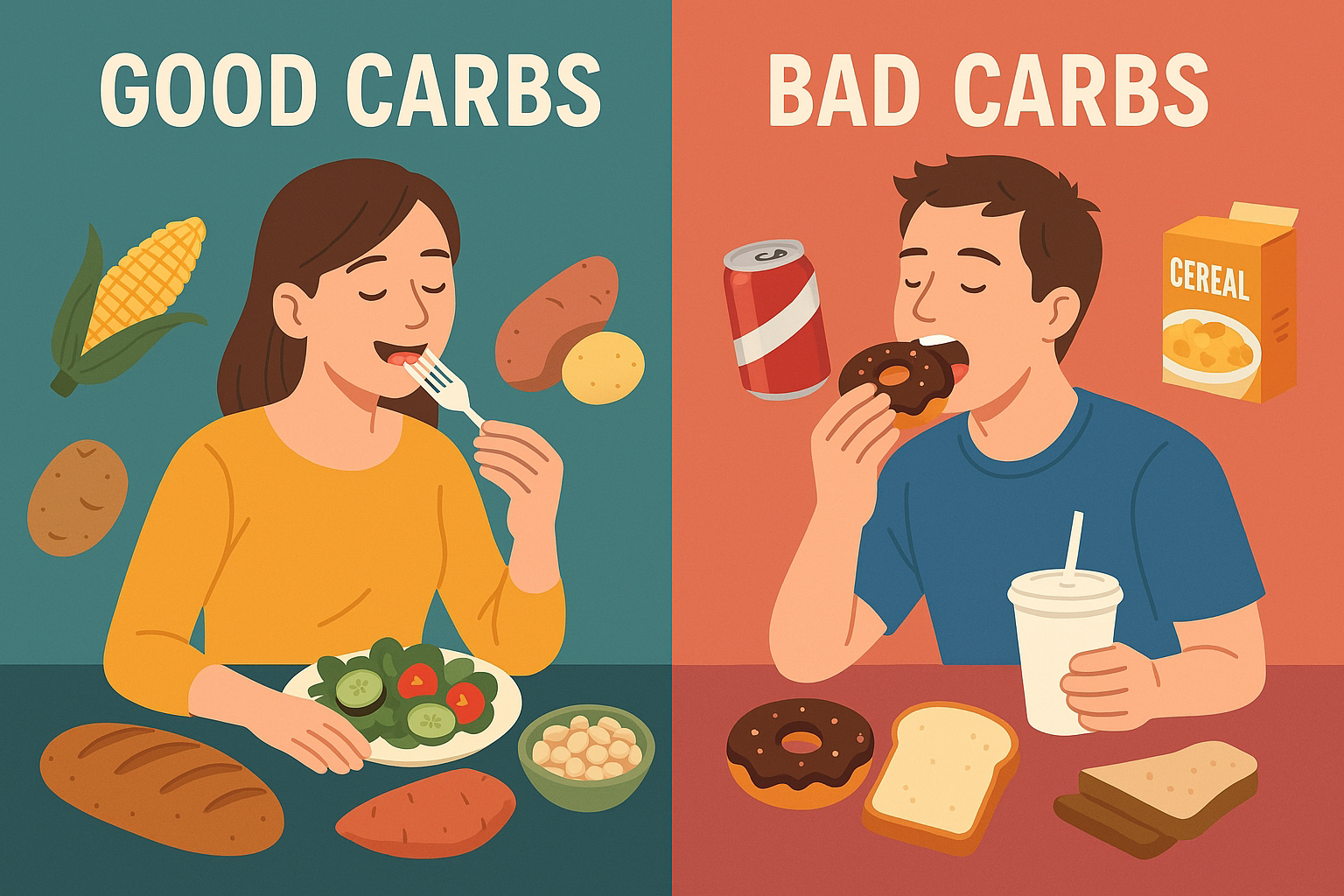
WOULD YOU LIKE THE GOOD CARBS FIRST, OR THE BAD

10 April 2025


Carbohydrates are your body’s fuel—your engine runs on them. But not all carbs are created equal.

Simple carbs are like jet fuel: fast-burning, fast-crashing. They spike your blood sugar and often come from added sugars—look for sneaky names like sucrose, dextrose, or fructose on labels. Soda? Cereal? That sweetened latte? Packed with them.

But it’s not that simple. Some healthy foods naturally contain simple sugars too—milk has lactose, fruit has fructose—but they also give you fibre, vitamins, and slow release energy.

Complex carbs, on the other hand, are the good guys. Found in whole grains, beans, vegetables, and popcorn, they take time to digest, keeping you full and balanced.

Want better carbs?
Choose whole grain bread, brown rice, quinoa, lentils, and starchy veg like sweet potatoes. Skip the syrups and sweeteners hiding in fancy packaging.

Bottom line: Carbs are vital—but pick the ones that give you more than just a sugar rush.

Saturday, 7 December 2024

LIFE EXPECTANCY IN GLASGOW IN 2024

7 December 2024


Life Expectancy in Glasgow Challenges and Lessons
No surprises here

Women in Glasgow continue to have the shortest life expectancy in the UK, and while men have improved slightly, they still rank poorly. In stark contrast, the south of England leads the way with significantly higher life expectancy. This survey confirms what we already know from previous surveys.

Thete are probably a few interlinked factors responsible:

Diet and Health Conditions
Poor diet contributes to chronic diseases like heart disease and diabetes.

Housing Conditions
Damp, poorly insulated housing is harmcful to health.

Environmental Factors
Air pollution and the industrial legacy of regions like Glasgow worsen respiratory and cardiovascular conditions.

Economic Disparities
Lower incomes limit access to nutritious food and quality healthcare.

Healthcare Access
Preventive healthcare, like screenings and vaccinations, is less accessible in deprived areas.

Education
Affluence often leads to better education, which in turn fosters healthier behaviours like improved diet, reduced smoking, and regular exercise.

COVID-19’s Role

Nationwide policies to manage COVID-19 delayed healthcare access, worsening existing health issues. This impacted the entire country, but deprived areas have struggled to recover.

Addressing the Root Causes

The patterns are clear - inequality lies at the heart of these health disparities. Solutions focus on the usual culprits, the goals shoukd be:

Reduce poverty

Improve education to make individuals aware of health issues abd lifestyle choices.

Invest in healthcare infrastructure and ensure accessibility.

Target deprived areas with tailored public health campaigns.


Beyond Politics and Policies: A Culture of Hope

More than politics, policies and programmes, we need to create a culture of hope. People need to see a future worth striving for, one where health and wellbeing are attainable as the basis of enjoying life. This involves fostering hope and resilience in tge community and providing opportunities for all.

Personal Actions

While the broader issues require setting strategic goals, with solutions and measures of progress, for readers here, we can:

Get Regular Health Check-ups
Early detection can prevent or slow severe conditions.

Monitor Air Quality
Understanding and dealing with pollution can protect long-term health - buy an air purifier which costs naybe £150 and will keep the air in the room clean.


The challenge lies in moving beyond correlations and analyses to meaningful action, "rfe execution oremium" as it is called, ensuring everyone has the chance to live a healthier, longer life.


Tuesday, 8 October 2024

THE INCREASE IN CANCERS AMONGST YOUNG PEOPLE (25 - 40)

8 October 2024

https://www.bbc.com/future/article/20241004-the-puzzle-of-rising-early-onset-breast-and-colorectal-cancer-in-younger-people

Here are the top nine suspected factors, according to this article:

Obesity and metabolic syndrome

Ultra-processed foods

High sugar and processed food consumption

Sleep pattern changes

Artificial light exposure (including streetlights and mobile devices)

Microplastics exposure

Increased antibiotic use

Gut microbiome disruption

Opportunistic pathogens (e.g., Fusobacterium nucleatum and E. coli)

These factors are all being investigated as potential contributors to the rise in early-onset cancers among younger populations.

Looking more closely at the last two:

The argument concerning gut microbiome disruption and opportunistic pathogens like Fusobacterium nucleatum and E. coli is based on how alterations in the balance of gut bacteria can lead to increased cancer risk.

Gut microbiome disruption: Antibiotic overuse and poor diet (high in ultra-processed foods) can alter the natural balance of beneficial bacteria in the gut. This disruption may impair the immune system's ability to detect and eliminate abnormal cells, increasing cancer susceptibility.

Opportunistic pathogens: Certain bacteria, like Fusobacterium nucleatum and E. coli, can thrive when the gut microbiome is out of balance. These pathogens may promote cancer by invading gut tissues, driving inflammation, and even causing DNA damage, leading to the development and progression of cancers, particularly colorectal cancer.

This interaction between the microbiome and harmful bacteria highlights the importance of gut health in cancer prevention.


Sunday, 9 June 2024

TOP TIPS FOR MANAGING JETLAG

9 June 2024

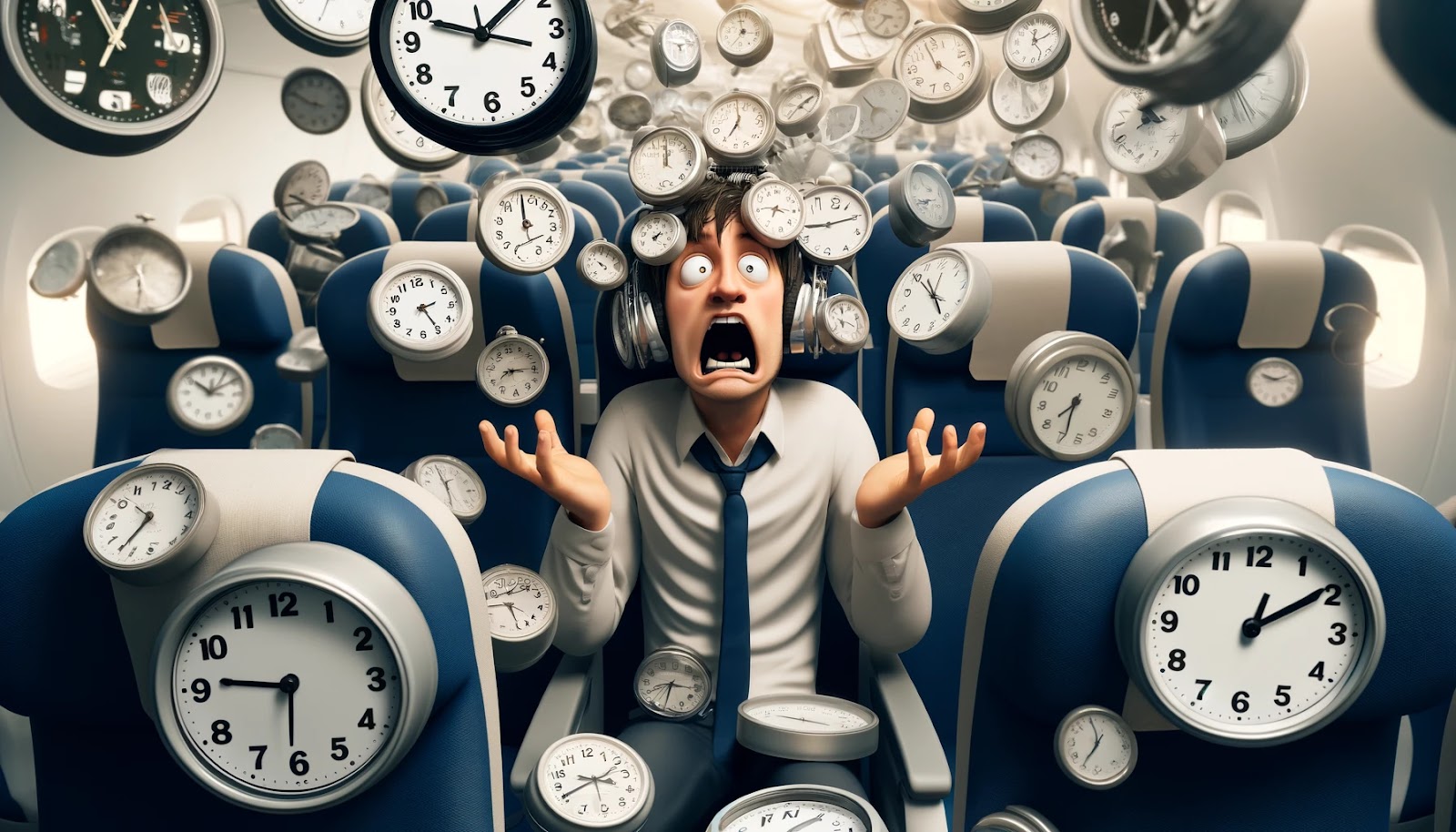
Here are some tips for adjusting to a new time zone after a long flight bear in mind that you would normally take a day per hour difference but here you can collapse the time.

1. Change Your Clocks


- Adjust all clock faces (laptop, watch, etc.) to the destination's local time as soon as you board the plane.
- This helps you mentally prepare and operate on the new time zone.

2. Sleep Strategy

- Sleep during the first half of a long flight.
- If the flight leaves in the middle of the day, try to fall asleep early.
- Stay awake for at least 12 hours after waking up on the plane to align with the new time zone.
- Use eye masks and earplugs to facilitate rest on the plane.
3. Avoid Alcohol

- Alcohol can disturb sleep patterns and cause drowsiness the next day.
- Avoid alcohol and caffeine to help reset your circadian rhythm.

4. Bright Light Exposure

- Get daylight exposure upon arrival.
- Spend 20-30 minutes outside, exercising or walking.
- Avoid wearing shades in the morning to maximise sunlight exposure and reduce melatonin production.

5. Adjust to New Schedule

- Resist eating when you're hungry if it’s not meal time in the new time zone.
- Align meals with local standard times to help reset your internal clock.

6. Nap Strategically

- Take short naps (10-20 minutes) early in the day if needed.
- Avoid long naps to maintain healthy sleepiness for the night.

Glossary of Terms

- Circadian rhythm: The body's natural 24-hour cycle.
- Melatonin: A hormone that regulates sleep.

Further Reading

Thursday, 7 April 2022

ROTATOR CUFF AND CHARACTER

7 April 2022

Sunday, day 0
Tomorrow is Friday, day 5 after the operation on my shoulder, which was last Sunday. That op. put me into a light trauma, a kind of post traumatic shock syndrome someone said to me. 

Monday, day 1
So Monday I was quite disoriented. Some friends noticed this and rallied round, asking me questions about the experience and getting me to talk; for those here in CM, offering practical help as the shock of a six hour operation was one thing, but in practical terms, I've only got one arm! Just try to imagine that!!

Tuesday, day 2
But by Tuesday, when I left hospital, two days after the six hour op., my high spirits had returned. How a person deals with adversity tells you a lot about the strength of character of the person.

Wednesday, day 3
Yesterday Wednesday was OK too - I went out for a walk round the park. And again today.

I have a set of exercises to do four or five times a day at my room, to restore flexibility, but not overdoing it as the tendon has been freshly sewn back.

Thursday, day 4
And today Thursday is more normal still. The person who takes care of my room on a Wednesday morning, while I go for Thai massage two hours, has called daily with food and helped me wash and dress. Good practise for when I'm truly old and decrepid, you might think!!!

Friday, day 5
Then tomorrow, Friday, is the third day after I left hospital and the dressing that protects the wound must be changed every three days. So back to hospital - probably in the morning.

I write all this nonsense as a kind of therapy, away to stay attached to reality.


How to measure the strength of character of a person. Observe them:

-How do they deal with adversity? Do you analyse and draw lessons for yourself, or do you point the finger of blame?
-Faced with a headache of a problem, do you say "oh, I can't do it", or do you persevere till they find the solution?
-Do you stick stubbornly to your decisions, right or wrong, or do you review and are you able to learn from experience?
-Can you accept new thinking without becoming emotional or feeling challenged?
- Are you able to work with others and not feel "ruffled"?

Character is the most important quality a person possesses. It is more important than intelligence, reputation or beauty. What do you think about "character"?

I looked up the etymology of the word "character". It seems to come from the word for an engraving instrument, to carve...carve, carve and carve again. Interesting, eh?!

Friday, 9 July 2021

COVID FOR TRAVELING TO ENGLAND

https://www.gov.uk/guidance/coronavirus-covid-19-testing-for-people-travelling-to-england

https://www.find-travel-test-provider.service.gov.uk/test-type/green