

Saturday, 16 November 2024

BRAINS, BUCKS AND BAGPIPES : WHO GETS TO STUDY IN SCOTLAND

16 November 2024


A recent report concludes that "26% of Edinburgh's students are from Scotland, while more than 70% are from England, the rest of the UK or overseas.

Those attending private schools make up 40% of the intake."


This is an issue to do with the need for Scotland to balance the needs of its society for a well-educated population, with the financial incentives of universities to attract high-paying international and private school students.

When considering how to respond to this report, we can ask what is best for Scotland and we can offer separate answers addressing short, medium and long term perspectives. 

SHORT TERM

In the short term, funding from wealthier students allows universities to invest in facilities, staff, and global research recognition.

But of course, this means limiting access for local students, especially from disadvantaged backgrounds, in order to sell "their" places to wealthy and overseas parents.

This risks exacerbating social inequality and could impact the availability of skilled professionals (e.g., teachers, healthcare workers).

What is to stop the Scottish Assembly from setting quotas for Scottish students to ensure local representation? Or providing financial or other carrots, or sticks, to encourage private school students to study outside Scotland, freeing places for locals?

MEDIUM TERM

To respond seriously to this challenge of "Scotland for the Scottish", we could start by creating an Equity Based Admissions Policy, EBAP let's call it.

We would like a higher proportion of qualified Scottish students, to enhance the availability of educated workers in crucial sectors like the nascent aerospace industry we intend to create in Edinburgh, and generally for supporting the local economy.

After all, letting the universities make lots of money to spend on we don't know what is rather like letting them catch lots of fish, whereas what we want is the fishing rods that could come from educating our own youth.

As well as a seedbed for greater economic growth, another goal of the equity based, the EBAP, is equality - greater diversity as an objective in admissions will boost social mobility, reducing inequality in the long run.

Of course, the university’s reputation might suffer if funding cuts and budget constraints limit research opportunities or "global outreach", or international cooperation on important future projects.

But again, how could we deal with these potential disadvantages? We could encourage philanthropic funding or partnerships with industries to offset financial losses - this was always the way in the past, where wealthy individuals and successful corporations would sponsor projects in the public sector and why don't we have PPP private public partnerships today?

Also, look at the student-level mix - focus on attracting international students into postgraduate courses, because this will mean less impact on the availability of undergraduate places.

It would definitely be a good idea for Scotland to offer a UK passport to those paying students successfully completing their course.

LONG TERM

The goals must surely be economic growth and social peace. A well-educated, locally-rooted population will strengthen Scotland’s ability to address its economic and social challenges, independently of wealthy interfering foreigners, including dare I say those from Westminster.

Furthermore, by investing in Scottish students, we will foster loyalty and retention ie they are more likely to stay and contribute to the national workforce and economy and make for a well integrated and peaceful, albeit ethnically diverse community, because local solutions give hope to local people and encourage ambition and conscientious hard work for the nation.

But to repeat, the risk is that on lower budgets, the universities will lose overseas opportunities to enhance their reputation. And at home, there could be a brain drain because once local Scottish lads and lasses get over-qualified in an economy which cannot offer them sufficient opportunity for career advancement and salary, the best will flee to higher reward economies such as Silicon Valley.

So, in terms of long term solutions, EBAP could establish SGRS, a Scottish Graduate Return Scheme, where local students commit to working in Scotland post-graduation and in return receive a first class subsidised education. And for reasons of symmetry, a scheme too, attract foreign students into postgraduate courses with the promise of a uk, passport could equally enrich the knowledge base of Scotland.

I'm sure this happens already, but it also makes sense to have the universities less dependent on tuition fees from these wealthy overseas parents by diversifying funding sources, eg create corporate partnerships.

CONCLUSION

Scotland stands at a crossroads in shaping the future of its higher education system. The challenge lies in balancing the pressing need to develop a well-educated, locally invested population with the financial realities of running a globally competitive university setup.

In the short term, the reliance on high-paying international and private school students provides essential funding but risks widening social inequality and limiting opportunities for local talent. Implementing quotas or incentives for local students could address this imbalance while maintaining financial stability.

In the medium term, an Equity-Based Admissions Policy (EBAP) could transform admissions to prioritise Scottish students, fostering economic growth and social mobility. Innovative funding models, such as public-private partnerships or postgraduate-focused international recruitment, could offset financial risks and ensure universities remain globally competitive.

In the long term, the vision must centre on a well-educated, locally rooted workforce driving Scotland's independence, prosperity, and equality. Policies like the Scottish Graduate Return Scheme (SGRS) can ensure local graduates remain invested in their homeland while diversifying funding sources to reduce dependency on tuition fees. The university system could even be used to attract high calibre graduates to Scotland on the promise of a UK passport.

Ultimately, Scotland’s universities must serve the nation’s needs without sacrificing the nation's global ambitions. Thoughtful reforms that prioritise equity and opportunity for Scottish students will secure a stronger, fairer, peaceful and more prosperous future for all.


Monday, 11 November 2024

THE PEOPLE OVERCAME THE POLLSTERS AND THE MAINSTREAM MEDIA TO DEFEAT THE ELITE...BUT

12 November 2024

https://x.com/WallStreetSilv/status/1855759957624283241


This fascinating eight minute video traces how the pollsters and the MSM came to realise in the course of the day that they had been defeated by the people. So it can be done ... but how to do it?

If you take a close look at the interior workings of Trump's 2024 campaign, you will find that they built on and refined the numerous techniques used by Biden to beat Trump last time round and you can go all the way back to Cambridge Analytics if you wish.

BUT

The euphoria is on account of Trump successfully defeating the pollsters, the mainstream media and even seemingly the elite.

Hold hard for a moment, though, let's not get too carried away, remember MAGA. In other words, everything that Trump does will be for America and as it concerns Europe, it will be at our expense - Europe will be collateral damage to Trump's victory.

What we can do is learn from the Trump campaign about how to defeat the existing wet Starmer, duplicitous Macron and bloated EU. We need real leaders to take back control and get out from under America.

AND EUROPE WILL RISE AGAIN

Saturday, 9 November 2024

A NEW DAWN IN EASTERN EUROPE

9 November 2024

A NEW DAWN IN EASTERN EUROPE - RUSSIA'S PATH TO LASTING PEACE AND PROSPERITY 

 In a remarkable turn of events, the landscape of Eastern Europe is poised for a transformative era. Progressive advance by Russian troops all along the 800 kms of front line suggest that the military defeat and surrender of Ukraine cannot be more than weeks away. Russia must therefore surely be planning an ambitious regional redevelopment to rebuild, rejuvenate and repopulate the Donbass, devastated by conflict. This would offer a beacon of hope for lasting peace. Such a scheme hinges on several pivotal factors: 

- Russia reponsible for Town Planning, providing realistic and inclusive Regional Concept and Design proposals, 
- the wholehearted participation of the local populace in the Build and Operation, and 
- an acceptance by the West that it has no role in the country east of, say, the Dnieper river. 

Could this herald a new chapter of stability and prosperity in Eastern Europe?

Rebuilding from the Ashes: Russia's Ambitious Vision 

Russia will unveil a comprehensive plan to reconstruct war-torn areas, focusing on revitalising infrastructure, boosting the economy, and improving the quality of life for its citizens. This is not only about bricks and mortar; it's about restoring hope and fostering a sense of community. The Russian government is prioritising local involvement in these projects, ensuring that the voices of the people are heard and their needs met. By engaging local talent and resources, Russia could expect to create buyin - job opportunities, stimulate economic growth, and nurture a sense of ownership among the inhabitants. 

This approach is reminiscent of the mythical phoenix rising from the ashes—a powerful symbol of renewal and rebirth. Investment will pour into sectors such as education, healthcare, and technology. New schools and hospitals will be built, and there'll be a concerted effort to modernise infrastructure with state-of-the-art facilities. 

The goal is clear: to create a vibrant, self-sustaining economy that can stand tall on the Eurasian stage. 

The Heart of the People: A Collective Choice for the Future 

Perhaps the most significant factor in this unfolding narrative is the sentiment of the people themselves. There is, I believe, a palpable sense of optimism and a collective desire to embrace the future that is possible as part of Russia. 

Communities are coming together, united by a shared vision of prosperity and stability. Surveys and local reports indicate this - a majority of the population in these regions prefer to align with Russia and the promise of tangible improvements to their daily lives. The cultural and historical ties that bind these Russian-speakers to the motherland play a role, but it's the prospect of a better future that truly resonates. The youth, in particular, are enthusiastic about the opportunities ahead. With new educational institutions and technological hubs being established, they see a pathway to personal and professional growth without the need to venture abroad. 

This generational shift could be the cornerstone of lasting peace, as young people invest their energies into building their homeland. 

A Changing Perception: The West's Waning Influence 

At the same time, there's a noticeable shift in how the local populace perceives the West. The allure of European integration appears to be fading amid concerns about economic instability and political fragmentation within the European Union. Reports of financial crises, social unrest, bureaucratic challenges, top-down democracy, the influence of American elite, have all combined to dampen the enthusiasm that once existed for joining The West.. 

The narrative that Europe is facing a period of decline is gaining traction. As people compare the immediate and practical benefits offered by Russia with the uncertain promises from the West, the change in American narrative from "do what it takes" to "do what we can", and now the arrival of Trump, many are concluding that their interests are better served by looking eastward. 

Moreover, the protracted debates and hesitations surrounding NATO and EU memberships have left some feeling disillusioned. The drawn-out processes and stringent requirements contrast sharply with Russia's immediate and action-oriented approach to rebuilding and development. 

The Promise of Lasting Peace 

With these three factors converging—the proactive efforts of Russia to rebuild, the genuine support of the people, and the diminishing appeal of Western alternatives—the stage is set for a durable peace in the region. 

This scenario reduces the likelihood of future conflicts, as the root causes of tension are addressed through development and mutual cooperation. 

Russia's strategy will refocus away from military dominance to winning hearts and minds through tangible improvements in people's lives. By fostering economic growth and social well-being, Russia will be able to build a foundation that could prevent the resurgence of hostilities. 

Implications for NATO and Global Dynamics 

This development also has significant implications for NATO and the broader geopolitical landscape. With the local population firmly aligned with Russia and less receptive to Western influence, the rationale for NATO's eastward expansion becomes less compelling. 

A peaceful and prosperous region reduces the need for military posturing and could lead to a de-escalation of tensions between Russia and the West and possibly a comprehensive security agreement from central Asia to central Europe. 

The door is open for dialogue and potential collaboration on global challenges such as precisely security, trade agreements, and environmental issues. 

A Model for Conflict Resolution? 

Russia's approach could serve as a model for resolving other protracted conflicts around the world. By focusing on reconstruction, inclusive development,  respecting the will of the people and competition in the domain of commerce rather than military, lasting solutions become attainable. 

It's a reminder that military might is not the onl, or even the most effectiv, tool in securing peace. Economic opportunity, social cohesion, and genuine engagement with local communities can be far more powerful in creating stable and prosperous societies. 

Looking Ahead: Cautious Optimism 

While challenges undoubtedly remain, there's a sense of cautious optimism about what the future holds. The success of this ambitious endeavor depends on sustained commitment, transparency, and the continued inclusion of the populace in decision-making processes. International observers will be watching closely to see how this situation unfolds. 

If Russia can deliver on its promises and foster a thriving region, it could reshape perceptions and relationships on the global stage. 

Conclusion 

 The potential for a new era of peace and prosperity in Eastern Europe is on the horizon. Russia's realistic and people-centric plans, combined with the local population's support and a changing view of the West, could break conflict that has long plagued the region, going back to the first Crimean war and British fears, as a maritime power, of Russia's interference, as a landpower, in the route to India and exploitation of that immense country. 

As the phoenix rises, so too does the hope that lasting peace is not just a dream but an achievable reality. This development challenges the conventional wisdom of Western elites and offers a perspective on how nations can move beyond conflict towards a safer cooperative future based in commerce. 

In the words of a resident of Donbass, "We are ready to build our future with our own hands, and we believe that together with Russia, we can create something truly remarkable." 

It's a sentiment that captures the spirit of this transformative moment—a collective aspiration for peace, prosperity, and a shared destiny.

ON KITCHEN-SINKING MASSIVE TAX RISES

9 November 2024
A completely different approach to soaking the rich is needed.

This new Labour administration's "Soak the rich" policies hit the incomes of talented, hard-working people, of which this country has too few. This is harmful and immoral.

What I don't like is the balance-sheet inequality where the wealthiest 1% of households hold 20% of the nation's total household wealth - a concentration that has been increasing since the early 2000s. In contrast, the bottom 50% of households possess only about 9% of the total wealth.

I also do not like a democratic system where rich individuals contribute to campaign funds and expect in return, favorable treatment from a new administration.

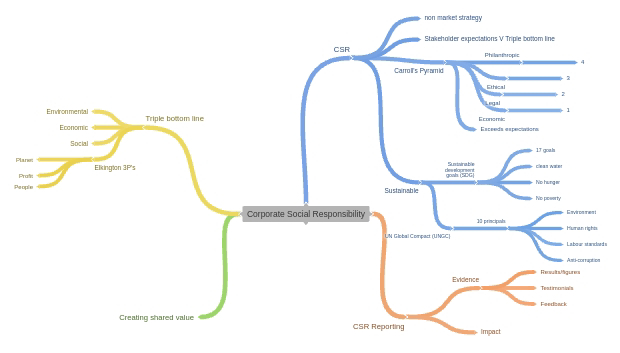
And corporate social responsibility CSR initiatives hit corporations, but not the wealthy one percent behind them.

However, some billionaires do respond to the call. For example, Bill Gates and Warren Buffett's "Giving Pledge" is a commitment by billionaires to give away a majority of their wealth to philanthropic causes. It isn’t tied to government projects, but it sets a cultural precedent for wealth sharing.

Or Andrew Carnegie’s philanthropy: an industrialist in the late 19th century, Carnegie funded libraries, universities, and cultural institutions across the U.S. and the U.K. He believed the wealthy had a moral obligation to give back.

I believe, even in these cynical times, the wealthy have a moral obligation to give back to the society that made their wealth possible and I would like to see the wealthy "encouraged", or shamed, to fund projects (preferably during their lifetime) that benefit society, increase the nation's quality of life, such as infrastructure, education, healthcare, or defense.

This is not just a moral project in the national interest, but is far more sensible than kitchen sinking massive tax rises at the start of this administration, which will only lead to inflation by the end and sink their hopes of re-election.

Friday, 8 November 2024

Markets Weekly 4 Oct 2024

6 October 2024

Here is Joseph Wang including geopolitics in his markets weekly report (and seems to be taking sides even, from the point of view of the investor, though he does say he's saddened by these developments in the Middle East).

The main point he is making is that Israel sees this as a "generational opportunity" to expand its territory and the window will likely be closed by the next presidential election. So if they're going to do anything they will do it now. "Now" means in the next couple of weeks!

Markets Weekly 4 Oct 2024

But he doesn't actually go into what might be the effects of an all-out war between Israel backed by America, and Iran, on asset prices.

So in summary, here's what analysts, reading from previous wars, are saying we could expect:

1. Short-term sharp decline in stock markets due to global uncertainty and market fear.
2. Oil price spike leading to higher costs, inflation, and pressure on corporate profits.
3. Sector-specific effects: Energy stocks may rise, while tech, consumer, and industrial sectors could face declines.
4. Safe-haven assets such as gold and US Treasuries would likely see inflows, while equities would experience outflows.
5. Long-term recovery in asset prices, especially stock markets, is possible, but would depend on the length and scale of the conflict and its impact on global trade and energy supplies.

Thursday, 7 November 2024

TRUMP WON

7 November 2024
What is so interesting about this election is that trump got the popular vote, so the people can defeat the elite, and also it means the media (the DT working on the postal vote here) failed. So their games are revealed, eg all the fake polls showing Harris ahead, and they are failures and Trump won a landslide, maybe even a trifecta.

These wars made it possible. It wasn't just immigration and de-industrialisation, it was the wars that revealed the elite as lying burstards, and the media conniving with them.

1) NATO will have to stop pushing east and instead agree a security architecture for Russia in Europe. 2) We'll need a new trade agreement with Russia. (Though the latter will raise american fears, admittedly.)

The savagery and butchery visited on innocent people living in Palestine, warehouses full of two-tonne bombs dropped on residential blocks, kids shot in the head by snipers, white phosphorus, women murdered, the mockery.... horrific inhuman acts committed by the last of the colonisers, under American direction, led to widespread protests and riots across America. Although again admittedly, trump has been obliged to strongly support the zionists.

Incidentally, if you look at turn out and the actual popular vote over the last half dozen presidentials, it's usually in the sixty millions, but biden's was eighty two million, so a very anomalous result, proving that the last election was indeed stolen.

Plus all the censorship, the woke junk, the cancellations, enraged everyone and we all ... well many of us ... burst out of that MSM propaganda straightjacket into the independant press.

Anyway, to over-simplify: the people defeated the elite and we don't read the mainstream media anymore.

Monday, 4 November 2024

WHAT IS BEST, QUALITY OR SPEED

4 November 2024

WHAT IS BEST, QUALITY OR SPEED ?

What is best: spending more time on your work, checking to make sure your answer is accurate and holds together; or delivering an imperfect result for discussion?

PART ONE - QUALITY V. SPEED

1. Introduction

Introduction: So what is best, speed or completeness? Of course, in time-critical environments where time is money, turn-around time is most important. But on the other hand you want results that are evidenced, can be relied upon and do not require much further discussion with the boss or client. 

The Requirements of each challenge and each customer will differ, so perhaps a balanced team of workers with different talents is required, permitting a flexible approach to all the different situations that the team might face.

Part One: So let's look through the issues: quality or speed? innovation or routine? right-first-time or in-flight correction? Then we can answer the question by identifying the characteristics of a flexible organisation, one that is able to meet a varierty of challenges, thanks to a balanced team.

Part Two: And finally, for a bit of fun, let's look at the different character-types that you might find in a successful organisation, in this regard. 

And if you are a quality guy who doesn't want to take a lot of work home, then maybe you can assess the jobspec (the task), using Part One here and put the choice of quality or speed to the boss.

2. Quality or Speed?

 First is the issue of quality or speed ? I would imagine that in high value-add work, it is better to favour accuracy, rather than delivering a result quickly. The customer is paying a lot for what you deliver and expects a high quality answer, and wouldn't want to have to spend a lot of time thrashing through the details. Same for the boss, whose time is also limited.

3. Innovation or Routine?

 Second, reading around the subject and reflecting on the challenge, seeing it through different lenses and perspectives, does require more time and is likely to produce a more innovative or original or surprising answer. Certainly a more balanced answer.

4. Right First Time or In-flight Correction?

 And thirdly, a result which is "right first time" because it has been checked through by the worker, means that there will be a lot more confidence in that worker's answer, and the manager will be grateful at having to spend less time checking the worker's output.

5. Horses for Courses

 Although of course, it depends on the environment you're working in - it may be time-driven, dynamic, where a fast turn-around is the number one priority, for discussion and correction later with the boss and end customer. 

 Or maybe an environment where the challenges posed take the knowledge-worker into unknown territory that obviously will require more thought, so a more academic, balanced and intelligent approach. 

 We can conclude that it is "horses for courses" from the point of view of the organisation. Some horses will perform best on soggy ground, others on dry ground, some are better for jumps etc, etc. 

6. Conclusion: Balanced Team

So overall, in your team, you want a nice balance of different approaches and talents so that the boss can parcel out the work to those most able to deal with the particular demands, according to the different kinds of challenges from different customers and the availability of workers, of course.


PART TWO - MATCHING THE WORKER TO THE TASK

We are playing with three things here: the team, the task and the worker.

Imagine the scene: The boss is deciding who to give the latest piece of work to. And he picks you. 

Well, you can look through the jobspec and a) understanding the task as above, in Part One and also b) knowing yourself as herebelow in Part Two, you might be able to say to the boss pretty quickly,

 "Well boss, this job of work is going to take 3 hours or 3 days [your quick assessment]. Tell me what is best in the circumstances. A high quality result that might take a bit longer, or a quick response that will require further discussion and correction?"

1. Introduction to Character Traits of Worker A and Worker B

Character traits often influence work styles, with particular qualities aligning with either a speed-focused or quality-focused approach. Understanding these traits can help clarify the strengths each worker brings and how they may fit within a team dynamic.

2. Worker A: Speed-Focused Traits

2.1 Key Character Traits

Energetic: Likely has a high level of motivation and energy, fuelling a proactive approach to meeting deadlines and quick responses.

Decisive: Makes swift decisions, trusting their judgement without excessive deliberation, which can drive efficiency in fast-moving tasks.

Confident in Action: Shows confidence in their ability to deliver results quickly, which often fosters a sense of reliability in time-sensitive situations.

2.2 Potential Challenges

Risk-Taking: May prioritise action over caution, occasionally risking errors or overlooking details. This tendency may require a tolerance for minor setbacks or iterative adjustments.

Impatient: Could feel frustrated with slower, more deliberative processes, sometimes underestimating the value of thorough review.

Results-Oriented: Often prioritises the end result over process, which might limit their engagement with tasks that require deep analysis or prolonged focus.

3. Worker B: Quality-Focused Traits

3.1 Key Character Traits

Meticulous: Pays close attention to detail, showing dedication to producing polished, well-researched, and accurate work.

Reflective: Prefers to think carefully before acting, fostering an analytical mindset and strong problem-solving skills.

Patient: Willing to take the time necessary to ensure high standards, demonstrating patience and self-discipline in their approach.

3.2 Potential Challenges

Perfectionist: May sometimes strive for an ideal outcome, potentially leading to self-doubt or overthinking, which could slow down progress.

Risk-Averse: Often prefers to minimise errors, which may discourage taking risks or experimenting with unconventional solutions.

Process-Oriented: Finds value in the journey of understanding, which might lead to spending more time than necessary on tasks, especially in high-pressure environments.

4. Summary of Character Comparisons

Complementary Strengths: Worker A’s decisiveness and energy can balance Worker B’s patience and thoroughness, with each worker providing strengths where the other might be less effective.

Team Dynamics: Worker A’s quick results can keep projects moving, while Worker B’s meticulousness ensures that final outputs are credible and well-polished. Together, they could form a highly effective team if they can appreciate each other’s methods.

5. Conclusion: Balanced Character Contributions

In assessing both character types, neither worker is inherently “better”; each brings unique strengths that contribute to the team. Worker A may shine in roles requiring high energy and responsiveness, while Worker B excels in roles demanding precision and thoughtfulness.

Embracing these different characters within a team can promote a balanced environment where both speed and quality are appreciated and optimised for the organisation’s overall success.

Further Reading


Friday, 1 November 2024

LABOUR MADE FIVE PROMISES TO THE ELECTORATE

1 November 2024


In the lead-up to the 2024 UK general election, the Labour Party, under Keir Starmer's leadership, outlined five key national missions aimed at addressing the country's long-term challenges. 

https://labour.org.uk/wp-content/uploads/2023/02/5-Missions-for-a-Better-Britain.pdf

https://www.instituteforgovernment.org.uk/explainer/mission-driven-government-labour

These missions are:

1. Achieve the highest sustained growth in the G7: Aiming to boost the UK's economic performance to lead among the Group of Seven nations.

2. Make Britain a clean energy superpower: Transitioning to zero-carbon electricity by 2030 to cut bills, create jobs, and enhance energy security. 

3. Build an NHS fit for the future: Reforming health and care services to reduce health inequalities and ensure timely access to care. 

4. Make Britain’s streets safe: Halving serious violent crime and raising confidence in the police and criminal justice system to its highest levels. 

5. Break down barriers to opportunity: Reforming childcare and education systems to take away any class ceiling on the ambitions of young people in Britain. 

These missions are Labour's commitment to addressing economic, environmental, healthcare, safety, and educational challenges in the UK.

They make a great vision but where's rhe grounded fiscal strategy to deliver on them? Relying on this tax-and-spend approach, sidelining the private sector and piling pressure on the low-paid surely runs counter to Labour’s hopes and promises. This budget risks falling short not because of a lack of ambition, but because of an absence of the right policies needed to foster the promised genuine, sustainable growth.

If Labour is serious about delivering on these missions, a major course correction is needed. Reduce the tax burden on the low-paid, incentivise private investment, and implement real welfare reform to bring millions back to work.