Saturday, 26 April 2025

RECAP OF TRUMPS MAGANOMICS

26 April 2025

If america can't run its economy with twin deficits, then unlikely the UK can.

The idea now seems to be in the words of trump or pretty much his words."We don't want your money china".

Why, because china has been reinvesting its profits into american financial assets. This has plumped up their value, which has been great for rich americans and chinese, but no good for the economy, or the people who've seen their wages stagnate.

Instead, what Scott Bessent wants and trump too is for the money to be invested in real assets, for example, factories.

Seems america wants to make its way in the world and not live on borrowed money anymore....

As to the budget deficit, again a whole new idea coming in at the same time as others, and at a time of great difficulty for the last step in the life of this empire!

Given the need to refinance a third of the debt in the course of this year, the immediate pressing need is to reduce interest rates. And that's why trump has been putting such pressure on powell. Never mind the effect on inflation, already exacerbated by tariffs.

He's been pressing europe to pay their way for their own defense, and he's walking away from ukraine to cut wartime expenditure.

I ve not heard of any pressure on congress to stop spending money like there's no tomorrow, but if they don't, there won't be.

And another major idea to deal with the debt in what's called financial repression. This is where inflation is greater than interest rates, and you float the dept away over the course of several years.


Tuesday, 22 April 2025

IS ZELENSKY UKRAINIAN

21 April2025

Is Zelensky Ukrainian? Some people think he is.

He couldn’t recognise the reasons why Russia intervened in Ukraine. That’s one thing - OK. But it’s hard to believe he is of the Ukrainian people, considering what he has put Ukraine and Ukrainians through in the last three years, especially when there were plenty of opportunities to stop the slaughter.

From his behaviour, you might think he is a Russian émigré of Jewish extraction - one who hates Russia because of the pogroms (violent riots) and the anti-Jewish discriminatory laws, going back to the assassination of Tsar Alexander II and Soviet-era "anti-Semitism" (which meant anti-Jewish sentiment, though today, ironically, “anti-Semitic” can mean simply that you are pro-Palestinian). Recently, Zelensky went so far as to say that he hates Putin.

When it came to emigrating - this would be from 1880 through to the 1990s (Aliyah) - many Jews who fled pogroms and state-sponsored injustice in Russia and Eastern Europe chose to flee to Israel and France. Many chose America. 

As a result, there are many Jewish immigrants and their descendants from Russia, Ukraine, Poland, Lithuania, and Belarus in the United States today.

The Jewish religion, or Jewish people if you prefer, are remarkable in many ways. Perhaps the most important is how they are encouraged in knowledge management, producing a disproportionately high number of highly educated individuals. Those who emigrate tend to be intellectual, nationalist, and anti-establishment in their politics. 

Another strength is the trust and the organisational volunteer capability this makes possible within the community. 

Combine these qualities with a long history of oppression and exclusion, especially in Eastern Europe and Russia, and you get a group of people who emigrated to America from positions of hardship and worse, and end up playing key roles in foreign policy, academia, journalism, law, the sciences, chess, media, and politics. Quite remarkable.

One point worth noting is that many European Jews are secular - non-religious but Jewish, belief in liberal democratic values but not necessarily in God. Why? The Soviet state did its best to suppress religion, while to much the same effect, post-Enlightenment Europe moved from shall we call it collective wisdom based on authority, to individual reason in truth. And in this way, for safety, many Jews pursued integration and education over religious observance. That's european Jews.

Examples of notable Jewish émigrés:
• Zbigniew Brzezinski – Polish Catholic but part of the émigré intelligentsia
• Henry Kissinger – German-Jewish
• Victoria Nuland – Jewish, of Russian émigré descent
• Robert Kagan – Nuland’s husband, prominent neoconservative strategist.

See how these Ashkenazi Jews are known for their liberal values, history of hardship, their pragmatism, and they carry a suspicion of authority (Marx himself supported revolution), see where it comes from.

Their deep knowledge of Russia and Eastern Europe made them highly valuable to U.S. strategic thinking - especially during the Cold War, and again since Russia’s re-emergence as a super-power post-2000.

If you’ve read this far, that’s impressive. The argument has meandered along from the initial question "Is Zelinsky Ukrainian?", which may sound preposterous until you consider the facts of the persecution of the Jews, their emigration from Russia and Eastern Europe as a result, examine the exceptional qualities and character of the Jewish people, together with some notable examples, show how these abilities enabled them to successfully resettle in America, and find that many have played an important part formulating American geopolitics as a push eastwards and even overthrow of Russia. 

For anyone trying to make any sense of the driving forces behind this war in Ukraine, understand that:

- European elites fear Russia aims to rebuild an empire in Eastern and Central Europe or at least draw East Europe back into Russia's domain.

- America wants to remain global hegemon and saw a chance to weaken, maybe dismantle, Russia before confronting China....but alas.

- Russia seeks security: sovereignty, stable borders, no colourful foreign interference, and protection from encroaching armies or pointy missiles.

- Neoconservatives, often from Eastern European Jewish backgrounds, appear driven by a long-standing hostility toward Russia (and also Germany).

We are now in a position to conclude and answer the question.

CONCLUSION

Many leading neoconservatives have roots in Eastern Europe and Russia, where their families endured persecution under Tsarist and Soviet regimes and a German regime too. This historical trauma, combined with a deep ideological opposition to authoritarianism, has shaped a strong distrust of Russian power and motives. 

The strategic worldview of émigré Jewish people is often conditioned by this personal legacy and a commitment to liberal-democratic values, all leading to a particularly hawkish stance on Russia. 

This contrasts with the viewpoint of ukrainian people who when polled before this war wanted peace with Russia and voted Zelensky into office on his then-platform of restoring peace and justice in Ukraine and in its relations with Russia.

This is why Zelensky cannot be truly Ukrainian. He is, first and foremost, a Russian émigré Jew (born in Soviet Russia in 1975) as evinced in his hatred of Russians - a hatred that apparently fuels him - and callous treatment of the Ukrainian peoples.

It's a good story, reads like a 1990s thriller, just misses a romantic encounter and honeypot trap and ... perhaps we'll learn who the real Dr. Evil is in the next episode, if I live long enough to tell it.

Friday, 18 April 2025

WHY GOLD IS GOING UP

18 April 2025


Why Gold Is Going Up

In this and other videos, Chris says gold is "on a tear", while saying that he has been sitting on the sidelines for these last six weeks.

There are others who say that the gold price is rising because of institutional buying (by central banks and other institutional investors, who are selling their US dollars to buy gold) and that “retail” (the likes of you and me) has not joined in as yet.

They point out that if the job of gold is to balance monetary expansion (creating more and more money expands the money supply), then given all this printing since QE and so on, gold is “dirt cheap.” That's what some are saying.

How does this work? Why is gold going up? 

It used to be that anyone with a dollar bill in their hand could go to the bank and exchange it for gold. It was like that until 1971, when Nixon had to take America off the gold standard - everyone was asking for their gold, Fort Knox was almost empty!

Of course, gold is being mined all the time, little by little, but that supply is more or less fixed, and now value has to match the hugely increased amount of paper money - what’s called “fiat currency.”

So imagine a world with one block of gold and one one‑dollar note. A dollar is worth one block of gold. What happens if you print another dollar? The block of gold now must be worth two dollars. Or if you prefer, a dollar is now only worth half a block of gold. The dollar has been devalued against gold, or if you like, gold has doubled in price.

With all this printing, people lose confidence in the dollar, don’t they, as it buys less and less in the real world. Gold is the store of value that people trust. When they want to buy a loaf of bread, they now have to pay two dollars instead of one. That’s inflation!

And just look at the figures: since the turn of the century, the amount of money in circulation has gone up tenfold, and - surprise, surprise - gold has gone up tenfold as well!

One basic reason for gold going up in price is that money has been printed out of thin air. In fact, you could say that it’s not that gold has gone up in price—it’s that the dollar has been devalued by all this “monetary expansion.”

Currency

This is another reason why the price of gold might change: currency. For example, in Indonesia, the rupiah is constantly losing value against the dollar. Gold is priced in dollars. So you need more and more rupiah to buy gold. Gold is getting more expensive in Indonesia simply because the rupiah is devaluing on the currency market.

Well, if you lived in Indonesia and were trying to save, would you prefer a rupiah in the bank or gold tucked under your pillow? You’d buy a bit of gold every month as part of your savings and investment plan, wouldn’t you.

Risk

Market risk. Chris is sitting on the sidelines. If you thought American tech stocks were now a risky asset to hold, you’d probably sell them and if you’re looking for safety, you’d maybe buy gold instead. Before, investors bought US Treasuries, ie government bonds, notes and T-bills (according to the duration), but at the moment people are worried about the dollar, so they prefer to store in gold.

Geopolitical risk. with all these sanctions and the threat of hot war, people are worried because conflict destroys value. You’d want to sell the assets that are in the line of fire and buy gold instead.

Three Reasons Why Gold Is Going Up

Why buy gold?

  1. Money printing: Devalues fiat currency - more dollars chase the same goods, so people lose confidence and turn to gold as a store of value.
  2. Currency hedging: If your local currency is losing value against the global reserve currency (the dollar), you’d rather hold gold than your home currency.
  3. Risk hedging: In times of economic or geopolitical crisis, gold acts as a safe haven. When uncertainty is high, people flee to assets that historically have been shown to hold value. Economiccrisis

Wednesday, 16 April 2025

THE STEPPE: HIGHWAY FOR THE RUSSIAN BOGEYMAN

The Steppe Highway: The Deep Roots of Russophobia

For millennia, the great expanse of the Pontic-Caspian steppe has served as the launchpad for mass human migrations and military invasions into Europe. This flat, open corridor stretching from Central Asia to Eastern Europe offered an unobstructed route westwards — a natural highway used repeatedly by nomadic and imperial forces alike.

From the Scythians and Sarmatians, to the Huns, Avars, Bulgars, Magyars, Pechenegs, Cumans, Mongols, and Tatars — wave after wave swept across this grassland. Each group left its own imprint on the cultural, genetic, and political makeup of Europe. But these incursions also shaped a collective memory: one of threat and trauma from the East, which over centuries hardened into a cultural anxiety — what we might now call Russophobia.

It is a mystery why so many educated alert peoples should have a deep fear of Russia in today's world. Here, we try to explain this in terms of the collective unconscious, built over centuries of cultural memory, myth, and trauma.


The Drivers of East-to-West Migrations

  • Ecological pressure: Harsh winters, droughts, or overgrazing pushed nomadic peoples west in search of new pasture and resources.
  • Political fragmentation: The collapse of centralised powers in Asia or the Middle East often set off chain migrations.
  • Imperial ambition: Empires such as the Huns or Mongols were expansionist, seeking to incorporate wealthier, settled lands into their dominion.

The Impact on Europe

The invasions brought violence, cultural mixing, and political upheaval. Rome reeled from the Huns; the Magyars reshaped the Carpathian Basin; the Mongols devastated much of Eastern Europe in the 13th century. Cities fell, populations fled, and feudal societies adapted in response to these existential threats.

Though centuries have passed, the memory of these incursions remains embedded in the European psyche, especially in Eastern Europe, where the scars are deepest. Today, this historical memory colours how many in the West perceive Russia: a vast land stretching eastward into the steppe, capable of launching power from the same corridor as those ancient invaders.

Russophobia, then, is not just a Cold War construct. It draws on something older and more primal — the fear of that great open plain, and what might come galloping out of it.

A History of Steppe-Borne Migrations and Invasions

From prehistory to early modernity, many waves of nomadic peoples have crossed this steppe:

  • Cimmerians (c. 1000 BCE)

  • Scythians (c. 700 BCE)

  • Sarmatians (c. 300 BCE)

  • Huns (4th century CE)

  • Avars (6th century)

  • Magyars (9th century)

  • Pechenegs (10th century)

  • Cumans/Kipchaks (11th-13th centuries)

  • Mongols (Golden Horde) (13th century)

These movements shaped the ethno-political landscape of Europe, often arriving suddenly, spreading fear, and transforming borders. Many of these peoples were either pushed westward by climate change, overpopulation, internal conflicts, or new invading forces from further east (like the Mongols displacing the Kipchaks).

Why Did They Move?

Three main drivers of steppe migration stand out:

  1. Ecological pressure: Droughts or overgrazing pushed populations west in search of fertile pastures.

  2. Military displacement: Defeat or pressure from rising powers (e.g., the Mongols) pushed earlier nomads further west.

  3. Opportunity and wealth: The wealth of settled civilisations in Europe presented tempting opportunities for raiders and migrants alike.

Consequences for Europe

These steppe invasions had profound impacts:

  • Collapse of empires: e.g., Rome weakened under pressure from Hunnic movements.

  • Formation of new states: e.g., the Magyar migration led to the formation of Hungary.

  • Cultural exchange and warfare: Ideas, technologies (like stirrups and compound bows), and genetic lineages spread westward.

But they also left deep scars in European memory. For centuries, "threat from the East" became a powerful cultural narrative. This long memory helps explain the roots of modern Russophobia: Russia, geographically positioned in the steppe's path and having inherited the legacy of Mongol rule and power projection, became—fairly or unfairly—the stand-in for these ancient threats.

Understanding this geography and history is essential to appreciating the psychology of fear and mistrust that persists in parts of Europe today. For American Russophobia, see here.


Steppe Migrations and Their Impact on Europe

Steppe Migrations and Their Impact on Europe

1. Why Did They Migrate?

1.1 Environmental Stress & Resource Scarcity

  • Droughts, overgrazing, or climatic shifts made steppe life unsustainable.
  • Tribes moved west seeking better pastures and stability.

1.2 Population Pressure

  • Expanding populations demanded more grazing land.

1.3 Internal Power Struggles

  • Collapse of khanates and tribal confederacies triggered factional migrations.

1.4 Pressure from Other Nomadic Groups

  • The domino effect: one tribe displacing another further west.

1.5 Strategic Expansion & Plunder

  • Some migrations were militarised invasions (e.g., Huns, Mongols).

2. Consequences for Europe

2.1 Demographic Shocks

  • Population displacement and ethnic transformation.
  • Groups like the Magyars settled permanently.

2.2 Cultural Exchange

  • Introduction of cavalry warfare, stirrups, and new foods and words.

2.3 Military Disruption

  • Empires like Rome weakened under pressure.
  • Eastern Europe became a turbulent frontier.

2.4 Political Fragmentation

  • Collapse of kingdoms, rise of fragmented tribal zones.

2.5 Lasting Fear of the East

  • Generational trauma evolved into lasting Russophobia.

3. How Far Did They Get?

  • Huns: Reached France (Battle of the Catalaunian Plains, 451 CE).
  • Alans & Vandals: Settled in Spain and North Africa.
  • Magyars: Raided Germany and Italy before settling in Hungary.
  • Mongols: Reached Austria and Poland (1241–42).
  • Steppe-descended peoples: Bulgars, Tatars, and Magyars shaped modern Eastern Europe.

Sunday, 13 April 2025

AMERICA HAS BEEN FIDDLING AND FINANCIALISING WHILE THE WORLD DIALECTIC MOVES ON

13 April 2025 

This post began as a reply to a reader who is frustrated at the headlines, the markets, and the mockery being hurled at the only Western leader who for all his faults, seems to grasp the scale of what’s happening in global geopolitics.

"Even Yellen is lecturing Trump. How bad can it be!! Looking at the big picture i think it's too late for America to challenge China. China is already too independent and economically powerfull. America too hobbled by debt. It's not going to work. America has lost. The MSM and chattering classes are ridiculing Trump.....they don't realise what being second best to China means and how the USA economy is about to look like the UK economy....services only."

It’s not about liking Trump, it’s about recognising when a global regime change is already in motion - and the West’s refusal to take it seriously.

The reader's comment is bleak indeed, but is it very far from realistic? Yes, we are witnessing global regime change and the only person trying to save America is being ridiculed by a complacent elite who thinks it is “exceptional”, a belief echoed by the ever-comfortable chattering classes.

Ray Dalio identified the three ingredients for full-scale global regime change:

  • Massive debt, budget and trade imbalances, credit spreads, liquidity difficulty, currency disruption, return to high inflation...the monetary order
  • Deep internal division... the political and social orders
  • The rise of a rival hegemon...the global geopolitical order.

This week we saw all three disrupted and on full display. It was the most volatile market week I can remember - a moment when the old orders cracked and the new one heaved into view.


Even Yellen is lecturing Trump. How bad can it be!!

Yellen is old-school: pro-globalisation and fiscally cautious. Biden was the last chance to shift America’s trajectory, but while the house burned, he was off playing pyromaniac war games with Russia (much like Macron President in France incidentally and the UK Prime Minister Starmer).

Now Yellen is lecturing Trump — a sign of internal division at the elite level. The ruling class can’t agree on trade, industry, or strategy. No consensus on what’s wrong. No agreement on how to fix it. So Trump pushes forward with Executive Orders under Emergency Powers.

The elites’ arrogance extends to their own people, American citizens - the “deplorables”, they call their underclass. That’s never going to work for long. How do they think Trump was voted into office?

Looking at the big picture, it may be too late for America to challenge China.

China is now too independent, too powerful. The U.S. is hobbled by debt. It not going to work.

Or could there be bipartisan support for reducing the budget imbalance to 3% of GDP?

 it's all in the execution. Even if these various threats from tariffs to World War 3 can be handled competently, will it make any difference in the end?

Because, while the U.S. fiddled with its finances., look what China has been building:

  • Energy and materials input supply chains via BRICS+
  • A vast manufacturing base
  • Independent digital platforms for administering trade and payments
  • Global distribution output via Belt and Road
China’s debt has built factories, ports, and alliances.

America distracted itself with war and delusion, while its leaders clipped their coupons. Debt soared - principally, because of all the endless wars that brought no return. The myth of exceptionalism persisted. The internal weaknesses, long ignored, were eventually exposed by external rivals.

America’s debt has built nothing durable — no new pipelines, ports, or domestic cohesion.

Trump says America was ripped off. The truth? America, through its military and dollar dominance, ripped off the rest of the world. The profits generated from servicing American needs were recycled in the form of loans into American treasuries, allowing America to live beyond its means. And that world now sees a chance to level the playing field.

The wars bought no return on investment to America, just inflation, trauma, and declining global trust. Meanwhile, China has been going around offering infrastructure deals to the nations America tried to police. America thought it could force democracy onto other nations and it failed; China forced economic development loans onto the same nations and it has succeeded.

America has lost

Maybe. But it won’t give up without a fight. It won’t regain the lead, but it won’t go quietly either.

The weirdest part of this week?

Gold surged. Yields surged. In a crash, capital usually flees to the dollar, to US treasuries. This time, it flowed to gold.

What does that tell us?

  • Some say short covering in the derivatives market
  • Others say China, Japan and Euro  dumped US Treasuries in what appears to have been a coordinated move
  • I'd guess really what it's saying is that investors are increasingly reluctant to refinance debt, and even don't want hallowed US debt. That's bad. That's a liquidity crisis in the making.

Either way, the message is clear:
Investors are no longer buying the dollar. They’re buying gold.

The USA economy is about to look like the UK economy...services only

They outsourced the hard economy, where productivity begins, where profits are to be had, where growth starts; they gorged themselves on services offerings instead (successfully) but also on financial fiddling on tertiary markets and social media tech. The profits foreign manuacturers earned abroad were recycled into U.S. debt. Overdettedness forced America to break the link with gold in 1971, since when America has lived increasingly beyond its means.

The MSM and chattering classes are still ridiculing Trump. Still fiddling. Still hoarding financial returns from swaps and options and buybacks. Still blind to what it will mean to live under Chinese economic supremacy. Unaware that their children will be global second-class citizens.

Trump: “I go by instinct.”

And he’s not wrong accept, that is an instinct and instinct is emotion. Should a leader be guided by emotion or by reason? He trusts his gut feeling more than his civil service specialist teams.

He’s one of the few politicians who sees what’s needed. But he forgot the backfill. Despite the rhetoric, he’s still fuelling wars with Russia, threatening Iran, escalating tension with China, with Israel threatening to emblaze the Middle East, all this instead of getting on and reforming the American infrastructure.

Trump is trying to compress a two-term reform programme into two years. It won’t fit. It’s too late. The foundational reforms are missing. And meanwhile, a divided elite, clutching their digital share certificates, laughs at him from all sides.

Trump as Saviour Figure


This politically charged oil painting, rendered in a realistic Renaissance / Baroque style, shows President Donald Trump standing confidently but humbly in the centre, his gaze turned upward. Radiating light surrounds him, emphasising his sacrificial messianic posture, and the contrast between him and the mocking, dark crowd of political elites, while three supportive figures, dubbed 'deplorables,' stand in the foreground, gazing at him with resilience and determination amidst a backdrop of chaos and financial ruin.

You, dear reader, may laugh at the irony, the parody even, but Trump does see himself as a saviour figure.

A Legacy Moment: Trump on the Mount


 In this image, Trump evokes a kind of modern Moses. Shield in hand, he has held back the storm - tariffs as a temporary defence - buying time for deeper reform (which he is not yet awake to...). Behind him, the old world of outsourced industry and economic vulnerability; ahead, a path toward education, infrastructure, and innovation foundational reform. 

Like Moses on Mount Nebo, Trump points forward to a future he won’t fully walk himself, leaving the real journey to successors. It’s not a retreat, it's a legacy moment: having led through crisis, he now gestures toward renewal.

Saturday, 12 April 2025

WILL AMERICA BOMB IRAN

12 April 2025

The Coming Storm Stealth bombers soar towards a smouldering Middle East, where fire, smoke and ruin mark the stakes of the next great war. Below them, gold and oil stand as symbols of what remains to be gained, or lost. A wide-angle glimpse into our geopolitical future: cold strategy, hot conflict, high stakes.


1. The Historical Dialectic: Clash and Consequence

  • Dialectic means a process where opposites (thesis and antithesis) clash to produce a new result (synthesis).
  • History moves forward through these clashes. One empire rises, another pushes back. The conflict itself births the next phase.
  • The Middle East is the arena for such a historical turning point.
  • We are watching force meet counterforce. A combustible moment is taking shape.

2. Politicians and Power: The Psychology of the Elite

  • Political leaders, especially in geopolitics, tend to be assertive, sometimes aggressive. They play for power, not peace.
  • Once committed, it is hard to turn them back. Especially when their reputation, ideology, and legacy are on the line.
  • They often “lock horns” rather than compromise. The longer the standoff, the higher the stakes—and the more likely war becomes.

3. The 'Seven Countries in Five Years' Doctrine

  • Former US General Wesley Clark revealed a plan post-9/11: take out Iraq, Syria, Lebanon, Libya, Somalia, Sudan, and Iran.
  • Netanyahu initiated this all that time ago, it is his "Greater Israel" plan, supported by AIPAC, and Condoleezza Rice echoed this vision: reshape the Middle East, toppling regimes hostile to Israeli-US interests.
  • Iraq, Libya, Lebanon and Syria are already in ruins, NATO backed the overthrow of Muammar Gaddafi in 2011, Somalia is left as ever-shifting alliances, sporadic fighting, and foreign agendas. These are not stable countries, but theatres of permanent instability.
  •  Iran is the final domino in the sequence: Armageddon.

4. The Military Buildup: Stealth and Signals

  • Stealth bombers and fighter aircraft are massing at Garcia Diego, a strategic US base in the Indian Ocean.
  • This is not a routine exercise. The logistics, flight patterns, and fleet makeup suggest strike readiness.
  • Aircraft, drones, and naval assets are being repositioned, quietly but clearly.

5. Trump's Impossible Ultimatum to Iran

  • The Trump administration gave Iran a list of seven demands so harsh they could never be accepted—short of regime suicide. Notably to stop re processing uranium and plutonium.
  • These include ending all nuclear work, ceasing all support for regional allies, and full military transparency.
  • The goal is not negotiation. It is the pretext for confrontation.

6. The Attack Blueprint: Shock and Collapse

  • According to leaked doctrine, the plan is threefold:
    • Phase One: Destroy Iran’s air defence, radar, and communication systems.
    • Phase Two: Decapitate religious and military leadership through targeted strikes.
    • Phase Three: Leave the country open, like Syria, to insurgency, foreign control, and puppet governance.... Just walk in and take over.
  • This is not a guess. This is consistent with past US war playbooks: Iraq, Libya, Syria.

7. Markets Are Not Fooled: Gold and the Whisper of War

  • Gold prices have been heading to the moon this week, saw the highest price ever achieved. This is not just from inflation or interest rates, not only tariffs though they have been the trigger since 2 April, no, what's causing this is fear, fear.
  • Smart money sees beyond headlines. They follow aircraft carriers, not press releases.
  • Gold rises when risk rises. War risk, not just economic risk, is what we’re seeing now. China? The American debt crisis. Trade and the status of the reserve currency are at stake.

8. Can We Stop It? Probably Not. So Here's What You Can Do

  • You cannot vote this away. You cannot tweet it away. Take to the streets, they'll bundle you into a transit van and put you in prison. The die is cast, the pieces are in motion.
  • But you can prepare:
    • Move some capital into gold—history’s refuge in times of war and uncertainty. Forget crypto.
    • Keep an eye on oil—conflict in the Middle East often means surges in crude prices. Think 1967 > 1973.
    • Diversify out of markets that are overly exposed to peace and calm.
    • Putting my neck out, I would say get out of the US dollar.
    • Think not just money—but resilience: where you live, how you communicate, how dependent you are on fragile systems, barter and your support network.

9. Final Thought: This Is Not a Drill

  • We’re not watching a war maybe about to happen. We’re watching the early minutes of a plan already unfolding.
  • The Middle East will not be redrawn through diplomacy. The architects of this future use bombs, not ballots.
  • This is how empires act at twiligh, lashing out to hold on.
10. Stay Calm, Stay Ready
  • Don’t panic. War may be coming, is here, but Armageddon is not knocking at your front door. Not yet.
  • Stay informed, stay alert, and don’t get swept up by media frenzy or online fear.
  • Prepare prudently, act deliberately, count to ten and keep your mind clear.
  • In uncertain times, calm is a currency. Spend it wisely.


TARIFFS ARE THE SYMPTOM, NOT THE CAUSE

12 April 2025

Trump with shield labeled Tariffs, pointing to reform path

A Legacy Moment: Trump on the Mount

This shows Trump at the end of his term, as a kind of modern-day Moses (I know, I know...). Shield in hand, he has held back the storm, tariffs being a temporary defence buying time for the deep reform the American economy so very much needs. Behind him is the old world of outsourced industry, financialisation and economic vulnerability. Ahead, the path of reform, passing by education, infrastructure, and innovation. Like Moses on Mount Nebo, he points forward to a future he won’t fully walk himself, leaving the real journey as his legacy, to his successors. He is not retreating, not Trump, this is his end-of-term "legacy moment": having led through crisis, he now gestures toward completion of the renewal program he will have initiated (we are still waiting, ok, ok).

Ray Dalio writes a powerful piece, warning of a debt-cycle turning moment. Dalio’s take on tariffs, productivity and the slow rot inside the American system isn't dramatic, it's not ideological either. It’s observation and advice, supported by fact and history. His advice is structural and strategic. It speaks directly to this moment where we’re building defensive walls round the economy, while the foundations crumble away. As always, the real battle isn’t "out there", it’s inside. This is what Trump has to see.


The Real Problem Isn’t Tariffs

Ray Dalio, founder of Bridgewater Associates, warns that the focus on tariffs distracts from deeper issues. The U.S. faces structural problems: declining productivity, underinvestment in education and infrastructure, and political polarisation. Tariffs offer a stop-gap, but the root causes lie in internal decline - of the infrastructure (physical and digital), weakening innovation (innovation is about turning ideas into productive outcomes, and requires capacity and commitment, instead we have misaligned incentives, underinvestment, and systemic neglect).

The U.S.-China Imbalance - the problem

Over the decades, China has strategically invested in infrastructure, technology, and education, creating 

- a skilled labour force and 

- a knowledge base that allows it to progress up the technology innovation chain

- access to cheap commodities and the 

- property, plant and equipment needed for manufacture together with it's 

- belt and road for distribution.

Strengthening its sales, manufacturing and delivery base is the long-term drive. This path of industrialisation is the same path trodden by Britain, Germany and America.In the past.

We have watched and known this for decades. What path did the US take? The U.S. outourced its manufacturing and shifted towards services and financialisation, leading to dependency on imports, especially from China. This has resulted in trade deficits and strategic vulnerabilities.

The Illusion of Tariffs as a Solution - the fake solution

Tariffs can only be a stopgap. They can protect domestic industries by taxing imports. They can even pay back some of the national debt. However, if foreign manufacturers don't feel disposed to "eat" the tariff by lowering their prices, they often lead to lower profits of home companies, higher consumer prices and production inefficiencies. Protected industries may now lack the incentive to innovate and compete, thus falling further and further behind global competitors. Tariffs can also provoke retaliatory measures, disrupting global supply chains.... a typical Trump tactic is "escalage to negotiate", but what happens when you cannot go that extra rung?

The Need for Internal Renewal - the real solution

Dalio emphasises that true strength comes from internal renewal: investing in education, infrastructure, and innovation. The U.S. must focus on long-term strategies to enhance productivity and competitiveness, rather than relying on short-term fixes like tariffs. Financialisation is not successful s long-term strategy - we've always known this but have been focused on our GDP and share prices.

Historical Lessons - the warning

History shows that protectionism can lead to economic decline. The Smoot-Hawley Tariff Act of the 1930s exacerbated the Great Depression. Conversely, post-World War II economic growth was driven by openness and cooperation, somethign we have sadly lost. The U.S. must learn from the past to navigate current challenges. This includes the utter futility of never-ending wars, which are the cause of much of the debt and distrust.

Conclusion

Addressing the U.S.'s economic challenges requires a focus on structural reforms and long-term investments. Tariffs may offer temporary relief but do not solve underlying issues. As Dalio suggests, building internal strength is essential for sustainable prosperity.

 See also Peter Schiff's take. He recommend gold mining companies rather than gold stocks or even physical gold. He explains the rise in gold prices by all the usual arguments, though his main argument is that people are moving out of dollars into gold. It takes oil to get the gold out of the ground.And the ratio of oil price to gold price has never been lower.

Dalio, piece by piece

RAY DALIO WARNS: U.S. LIKELY HEADING INTO A RECESSION | URGENT ECONOMIC OUTLOOK 2025

1. Introduction: The Danger of Misdiagnosis

  • Most serious issues come not from ignorance but from applying the wrong solutions to problems we do recognise.

  • Tariffs, in this case, are a reaction to real economic challenges — but a misguided one.

  • Key idea: The solution must strengthen, not further weaken, a nation.


2. The Global Economic Imbalance: Roots and Shifts

2.1 Long-Term Divergence Between the US and China

  • Over 40 years, China pursued a state-directed, long-term strategy:

    • Infrastructure, tech, education, and currency management.

    • Built industrial and export strength.

  • The US moved in the opposite direction:

    • Prioritised services, financial returns, and outsourced manufacturing.

2.2 Strategic Dependency and Its Consequences

  • US now heavily reliant on imports from China — from cheap goods to advanced tech components.

  • Trade deficits widened; domestic industry hollowed out.

  • This is not only economic but a strategic vulnerability.


3. The Financial Masking and its Expiry

3.1 The Old Model: Trade Deficits + Capital Recycling

  • China financed US deficits via Treasury purchases, keeping US interest rates low.

  • That game is ending — China is decoupling and focusing inward.

3.2 Structural, Not Cyclical Change

  • China is building its own tech ecosystem and consumer base.

  • The imbalance is now unsustainable without change.


4. American Reaction: Legitimate Frustration, Poor Remedies

4.1 Asymmetric Globalisation

  • US opened markets in the name of free trade. Others (like China) didn’t reciprocate.

  • Subsidies and industrial policy abroad created unfair competition.

4.2 Fallout in the US

  • Wage stagnation, regional inequality, political polarisation.

  • Public sentiment: "The system doesn’t work for us anymore."


5. Core of the Crisis: Competitiveness and Strategy

5.1 Productivity Determines National Strength

  • Productivity is the foundation of prosperity — not tariffs or tax tweaks.

  • US productivity has slowed due to:

    • Weak education systems.

    • Poor infrastructure.

    • Underinvestment in innovation.

5.2 Diverging Incentives and Rising Inequality

  • Finance rewards capital, not labour.

  • Education leads to debt, not opportunity.

  • The result: polarisation, gridlock, reactive policy.


6. The Mirage of Tariffs: Quick Fixes, Long-Term Damage

6.1 What Tariffs Actually Do

  • Tariffs = tax on imports → Higher consumer prices, especially for inputs.

  • Hurt businesses relying on global supply chains.

6.2 Innovation Suffers Under Protection

  • Tariff-protected industries often lose efficiency and innovation pressure.

  • Tariffs hide weakness — they don’t fix it.

6.3 Retaliation and Strategic Risk

  • Tariffs provoke countermeasures.

  • Trust in global supply chains erodes.

  • Companies relocate, delay investment, and reduce efficiency.


7. The Deeper Structural Crisis

7.1 Declining Internal Strengths

  • Fragile growth, weak wage gains, vulnerable to shocks.

  • US infrastructure and education in decline.

  • Rising powers (like China) are:

    • Long-term oriented.

    • Strategic in investment.

    • Cohesive in policy.

7.2 Systemic Fragility

  • US appears strong on the surface (market cap, GDP), but:

    • Many citizens aren’t benefiting.

    • Public resilience is low.

    • Internal polarisation undermines governance.


8. Historical Patterns: Warnings from the Past

8.1 Repeating Cycles of Decline

  • Every declining power follows a similar path:

    • Rising debt.

    • Polarisation.

    • Internal decay.

    • External rivals rising.

8.2 The Smoot-Hawley Lesson

  • 1930s US tariffs → Collapse in global trade → Depression deepened.

  • Global retaliation, economic fragmentation, prelude to WWII.

8.3 The Post-War Model of Global Trade

  • Institutions (IMF, WTO) promoted open, rules-based trade.

  • For decades, trade fostered peace and growth.


9. The Real Work: What Actually Builds Strength

9.1 Long-Term, Coordinated Strategy

  • Focus on building, not blocking:

    • Talent.

    • Infrastructure.

    • Innovation.

9.2 Education and Labour Productivity

  • Update education to align with future industries (AI, biotech, advanced manufacturing).

  • Close the skill gap → boost labour participation and real wages.

9.3 Infrastructure and Innovation

  • Modern, efficient infrastructure is a growth multiplier.

  • Public-private collaboration essential to lead in emerging tech sectors.

9.4 Strategic Capital Allocation

  • Shift from financial engineering to:

    • R&D.

    • Skills training.

    • Long-term investment.


10. Fiscal Prudence and External Relationships

10.1 Smart Spending, Not Austerity

  • Align spending with productivity returns.

  • Avoid burdening future generations with debt-driven consumption.

10.2 Alliances and Global Leverage

  • Economic power also comes from global trust and cooperation.

  • Isolated nations lose influence — they don’t gain it.


11. Final Word: Strength Through Renewal, Not Reaction

  • Tariffs are a blunt, emotional reaction to a complex challenge.

  • Real strength = rebuilding national muscles, not building walls.

  • History is clear:

    • Nations rise through internal renewal.

    • They fall through protectionism, division, and complacency.


Friday, 11 April 2025

TARIFFS DEBACLE

11 April 2025

For anyone who sold gold on Thursday 10th, yesterday, they might have been reassured to see prices continue to fall, but then horrified as in later trading, prices started to pick up. Time for a lessons learned.

In the immediate market rebound, what we hadn't appreciated was that tariffs were still in place, but only suspended; and that they've been reduced, but not completely, just to 10%; and that China's tariffs were raised to 125%. 

So uncertainty remains, and in that uncertainty, gold is the usual refuge.

But there are a few other, longer term things to think about.

It seems to be true that Trump is attempting to rebuild manufacturing provide jobs for his base, the people who are in the bottom 50%, the people who have nothing. If he's thought about this, he must appreciate that that means Make America Productive Again - tariffs could offer a protective shield against competition and allow firms the time to move in to the Rust Belt, "the flyover states", or upgrade their production facilities. But equally, this protection cannot last for ever, as it would weaken the industry - remember, competition drives standards.

But there seem to be a few mistakes or false assumptions in the execution of this plan.

The tariffs are with immediate effect, but where is Walmart and the rest going to find alternative, cheap suppliers? And if they can't, what does that mean for inflation or even for social order, if people can't buy the things they need at a price they can afford?

He's doing this for his base. But recent polls suggest that more than half Americans think tariffs will be bad for the economy and bad for them personally. Maybe the country hasn't bought his plan.

I gather that direct and indirect (eg via Vietnam) imports from China into America account for 3 or 4% of Chinese GDP. Plus with the imbalance being so great, China's sales of goods to America are several times greater than America's sales to China, Trump's minister of finance, Scott Bessent, thinks that this gives America the upper hand in negotiations over a trade deal, and that China will relent, i e China will accept American tariffs, and take off its own retaliatory tariffs against American imports.

But that overlooks that China has absolutely enormous reserves, and that it can relax taxes at home, increase subsidies and take other measures to expand the economy inwards, ie the Chinese consumer will take up the slack and buy all those goods that cannot be exported, keeping the Chinese economy and employment going.

Anyway, the overall trouble is that Trump is a man in a hurry. He's only really got a couple of years because the second half of his term he'll be lame duck as usual, and this is his last term and he wants to make his mark in history.

It can be argued that the plan is a good one, but the timing is wrong. This is a two-term plan, squashed into two years. If a way could be found to slow things down, could the American economy have a better chance of integrating all this change and recovering its mojo? 

But even then, it needs capital investment flows into commercial and public infrastructure for the plan to work. And where will this money come from? We just saw the power of the bond markets because yields spiked as us bonds, uncharacteristically was sold off, and this forced Trump to blink first ... never mind the budget deficit the American Treasury has to finance of two trillion a year, Bessent's got 9 trillion of debt to refinance this year 2025 at what he hopes will be lower interest rates. 

Given that America has 37 trillion of public debt, we get back to the fundamental problem, which is how to get on top of the debt? 

At a minimum, starve the military-industrial complex, put Dr. Ron Paul on a DOGE of the Pentagon... it's the never-ending wars that achieve nothing that account for much of this debt. Hard to imagine. 

Tariffs, revalue Fort Knox.... None of this now seems possible, austerity or bankruptcy awaits. Maybe this is the defining truth that has dawned on investors. 

Thursday and Friday were sell-offs in the equity markets. Monday and Tuesday were further sell-offs in the equity markets, but but joined this time by the bond markets - yields were spiking, as presumably investors were selling out in order to cover the margin calls on debt they'd used to leverage their bets on equity, causing Tuesday's 3-year bond auction to fail as under subscribed. 

This is supposedly what prompted Trump to relax the tariffs, particularly as he has this nine trillion to refinance at what he hopes will be lower interest rates. Four hours after announcing on Truth Social that "this is a great time to buy shares", Trump announced his 90 day reprieve, and stock markets shot up again.

But now, Thursday 10th , it is noticeable that equity markets are coming off those highs, highs which incidentally don't get anywhere near to the position prior to last Thursday 3rd ( "Liberation Day" was the 2nd, recall, VHVG was at 86 on 26th March and 92 on 12th Feb). While gold is rallying to all-time highs as we've discussed.
A global developed world index showing SP movements Friday 6th through to thursday 10th April.

Let's think a little conspiratorial about this. What Trump wants is crashing equity markets because he thinks that investors will take their money out of equity and put it into bonds, raising bond prices and dropping yields, making it possible for him to rollover the debt at low rates of interest.

What will he get? Absolutely noone knows. UBS did a projection, and there were three forecasts, all wildly apart from each other and from today.

Think like a businessman. When those supposedly 75 countries telephoned Trump, did art-of-the-deal Trump say, "I'll relax the tariffs if you buy my debt"?. 

Who knows?

March's inflation report came out at 2.8%, down from 3.2% the previous month - this has got to be good news... hasn't it?

... But then the tariffs weren't in force until liberation day 2nd April and though some respite is offered to those 75 compliant countries, the March figure was still before the tariffs, and tariffs are inflationary. If inflation spikes, will the fed restart QE? If the trade war continues and shuts down part of the world's economies, will that lead to recession or even depression?

Who knows?

When a quant hedge fund, Renaissance Technologies, loses 9% in one month, you know that something is now very different, they will have to throw away their old models. There is absolutely no predicting the Donald. And this is why, as we have been saying, it is best at a time like this to be on the sidelines with any new money you might have.

Conclusion

Buy gold


[End]

One Comment


1. Overview and Tone

  • The piece reflects high alertness to market behaviour, driven by tariff policy, gold prices, equity shocks, and debt pressures.
  • It blends real-time observation (e.g., market moves from April 3rd to 10th) with longer-term systemic concerns (e.g., US debt and capital flows).
  • There's a speculative, contrarian streak—notably in the conspiratorial framing around Trump’s intentions.

2. Short-Term Market Dynamics

  • The gold price rebound illustrates what markets do best: react to ambiguity.
    The initial assumption that tariff tension was easing got overturned by the reality that tariffs remain—just suspended or reduced.
  • In uncertainty, gold regains safe-haven status.
    This fits a classic playbook: when fiat systems look fragile or geopolitics heats up, gold is a flight-to-safety asset.

3. The Trump Tariff Strategy: Rebuilding or Rushing?

  • The article makes a key distinction: Trump may be pursuing a genuine industrial policy, i.e. Make America Productive Again.
  • Tariffs as temporary shields can work if used to give industries breathing room to invest, reskill, and retool.
  • But without infrastructure spending, long-term capital commitment, and a patient timeline, tariffs become economically disruptive rather than strategic.

The article hits the nail on the head: this is a two-term policy squashed into two years.


4. Execution Gaps and Misread Public Mood

  • Imposing tariffs “immediately” creates logistical nightmares: where does Walmart, or anyone, find replacements for cheap Chinese goods?
  • Inflation risk isn’t theoretical—it’s real, and social tension could follow if prices rise too fast for the public to keep up.
  • Polls show more than half of Americans think tariffs will hurt, so Trump may be politically overextended, even among his base.

5. The China Miscalculation

  • The assumption that America has the upper hand because of the trade imbalance is simplistic.
  • China can pivot: use internal demand to replace lost exports, dig into its $3+ trillion reserves, and cushion exporters via domestic fiscal policy.
  • This is not 2008—China is no longer export-dependent, and Trump’s team may be fighting yesterday’s war.

6. Debt, Bonds, and the Bigger Economic Picture

  • The article rightly points to the existential pressure of US debt:
    • $2 trillion/year deficit
    • $9 trillion refinancing needs in 2025
    • $37 trillion total public debt
  • Bond markets are pushing back—a failed 3-year auction and rising yields are signs that investor confidence is fragile.

This is no longer just about tariffs. It’s about market trust in US fiscal stability.


7. Trump’s Real Game?

  • The suggestion that Trump wants equities to fall so investors move into bonds is fascinating—and not impossible.
  • Lower bond yields = cheaper refinancing = political win for Trump.
    But markets aren’t pawns, and confidence can’t be engineered by political manoeuvring.
  • Renaissance Technologies’ 9% loss implies model breakdowns across the board. This is no longer a normal market.

8. Inflation, QE, and What Comes Next

  • March’s inflation of 2.8% looks decent—but April’s tariffs are not yet baked in.
  • If tariffs push inflation back up, the Fed may face a brutal dilemma:
    • Raise rates to contain inflation?
    • Or resume QE to support markets and growth?
  • Either option weakens the dollar and tests credibility.

9. Final Take: Stay in Cash, Buy Gold

  • The piece ends with a conservative message: stand aside with new money.
  • In a market unmoored from fundamentals and ruled by political unpredictability, this is sound.

10. Conclusion:

This article is a strong, fast-paced survey of interconnected financial risks—tariffs, debt, monetary fragility, political impatience. It sees Trump as both improviser and strategist, but one without enough time, support, or capital.

Its sharpest insight? That the system is now too fragile for shock therapy. America needs reform, yes—but not while juggling inflation, social unrest, and refinancing a mountain of debt.


Thursday, 10 April 2025

YOUR INVESTMENT STRATEGY

10 April 2025

YOUR INVESTMENT STRATEGY


Your investment strategies are clear
 
- for short-term projects such as saving for a deposit on a house*, then put your money into something safe - a single government bond that matures in a few months to coincide with your anticipated purchase; or even easier is a money market fund.

- for longer term projects going as far as retirement, just carry on drip feeding into a world index with a low fee - VHVG, though ACWI is the current favourite because it is all the world, including emerging markets, and because it's fee is half that of VHVG, you can buy this on InvestEngine.

- this is for 90% or so of your investment, maybe 100% till you get more adept, so this is your stalwart fund; 

and you can have a satellite flutter fund where you try out a few ideas - e g an energy ETF, or small caps, or copper, or gold, or some single stocks... For bigger gains, or of course, bigger losses!

NOTE

Any global index will still be dominated by the US, but worth bearing in mind that the US has done tremendously well this last decade on account of the magnificent seven, which are absolutely superb companies; but since 1975 US markets have beaten other markets on an annual basis on only 55% of the time. This year-to-date, Europe has out-performed the US.

* there will be plenty of gilts to choose from, so consider those maturing at around the same time, but with different coupons, and pick the one with the lowest coupon as the gain at maturity will be mainly capital on which there is no income tax.

** of course, it's time in the market, not market timing for us amateurs, but if you want to chance your arm, try doping your monthly transfers according to the data point in the Bollinger Bands or according to the RSI. If you want to manage major turning points, then try Fibonacci.

WOULD YOU LIKE THE GOOD CARBS FIRST, OR THE BAD

10 April 2025


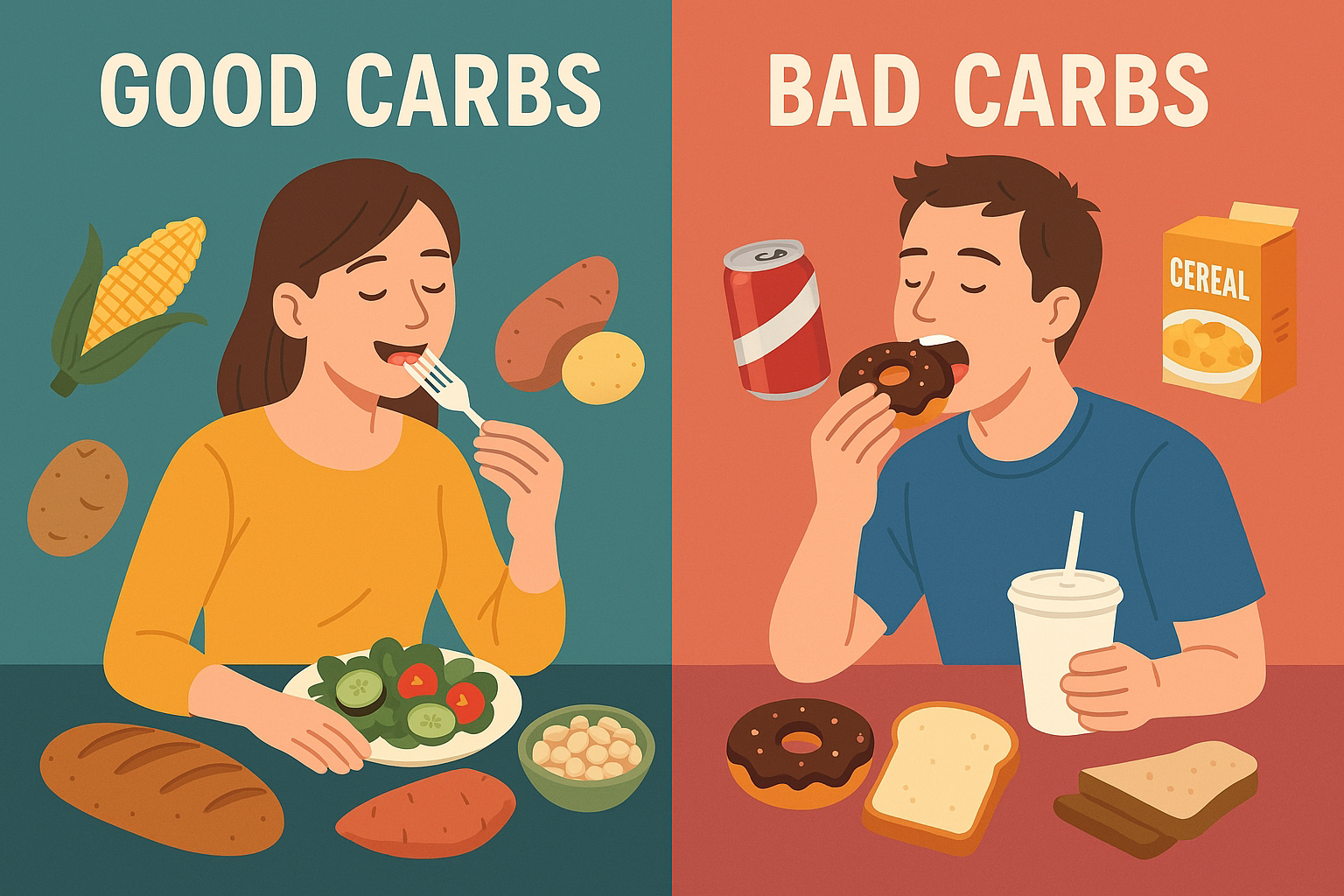
Carbohydrates are your body’s fuel—your engine runs on them. But not all carbs are created equal.

Simple carbs are like jet fuel: fast-burning, fast-crashing. They spike your blood sugar and often come from added sugars—look for sneaky names like sucrose, dextrose, or fructose on labels. Soda? Cereal? That sweetened latte? Packed with them.

But it’s not that simple. Some healthy foods naturally contain simple sugars too—milk has lactose, fruit has fructose—but they also give you fibre, vitamins, and slow release energy.

Complex carbs, on the other hand, are the good guys. Found in whole grains, beans, vegetables, and popcorn, they take time to digest, keeping you full and balanced.

Want better carbs?
Choose whole grain bread, brown rice, quinoa, lentils, and starchy veg like sweet potatoes. Skip the syrups and sweeteners hiding in fancy packaging.

Bottom line: Carbs are vital—but pick the ones that give you more than just a sugar rush.

Wednesday, 9 April 2025

MAGANOMICS - COMPARE TARIFFS WITH INCOME TAX

9 April 2025


We'd need to compare tariffs with income tax, as ways to fund federal operations.

One thing to keep in mind is that income tax accounts for 50% of federal income and tariff's account for 2%....Well that's currently.

Tariffs were superceded in 1913 by Amendment 16. So in this sense, you could say they are a pre-industrialisation, pre-globalisation relic, a time when the state was small and the budget with it.

It is noticeable that tariffs go with this small state ideal and with nationalism, protectionism, and deregulation... with withdrawal from the world.

With today's big state big income needs, tariffs don't measure up - they depend on imports, they rest on a narrow import base of raw materials, parts and finished goods. These are variable, by volume and value, and so will vary the US government's income... worse, what happens in a recession? So they cannot replace income tax and indeed that doesn't seem to be the aim.

That's not all. As we are seeing, you get retaliation too - an unstoppable China meets an immovable America. Plus you get China bowing out of dollar-based trade.
 
Plus like sales taxes eg VAT, tariffs will hit the poorer-off ( trump's base) as it's a tax on consumption, not income, not capital gains. Income tax is a way to redistribute wealth, but not tariffs.

So if tariffs can't generate enough income these days, if they are regressive, and if they provoke our trade partners, why persist?

When Trump says that tariffs will make us billions, hundreds of billions, he's right, he is using them to pay off the staggeringly enormous national debt of 37 trillion, along with DOGE and the rest. Of course, who will be actually paying these tariffs. Will it be the foreign producer eating the tariff into a reduced cost price, or will it be the consumer paying higher prices bringing in inflation, perhaps buying less and creating a recession. 

Think like a businessman - rebuild the balance sheet.

Trump's using them to nobble America's rivals, cut costs, make the supplier pay the tariff. 

Think like a businessman.

Tariffs can be a good way to choke off the competition, giving time to home industry to rebuild, ready for a fight on a level playing field, a fair fight. But a modern economy integrated into world trade can't rely on tariffs forever.That kind of protection will eventually destroy innovation and industry, that country will make no progress. 

But as a harbour in a storm to refit the ship, it seems like tariffs are a good idea. 

Think like a businessman.

But think like an economist and you wouldn't do this - it risks advancing the recession and flooding Europe with cheap Chinese goods, further destroying their economies.