


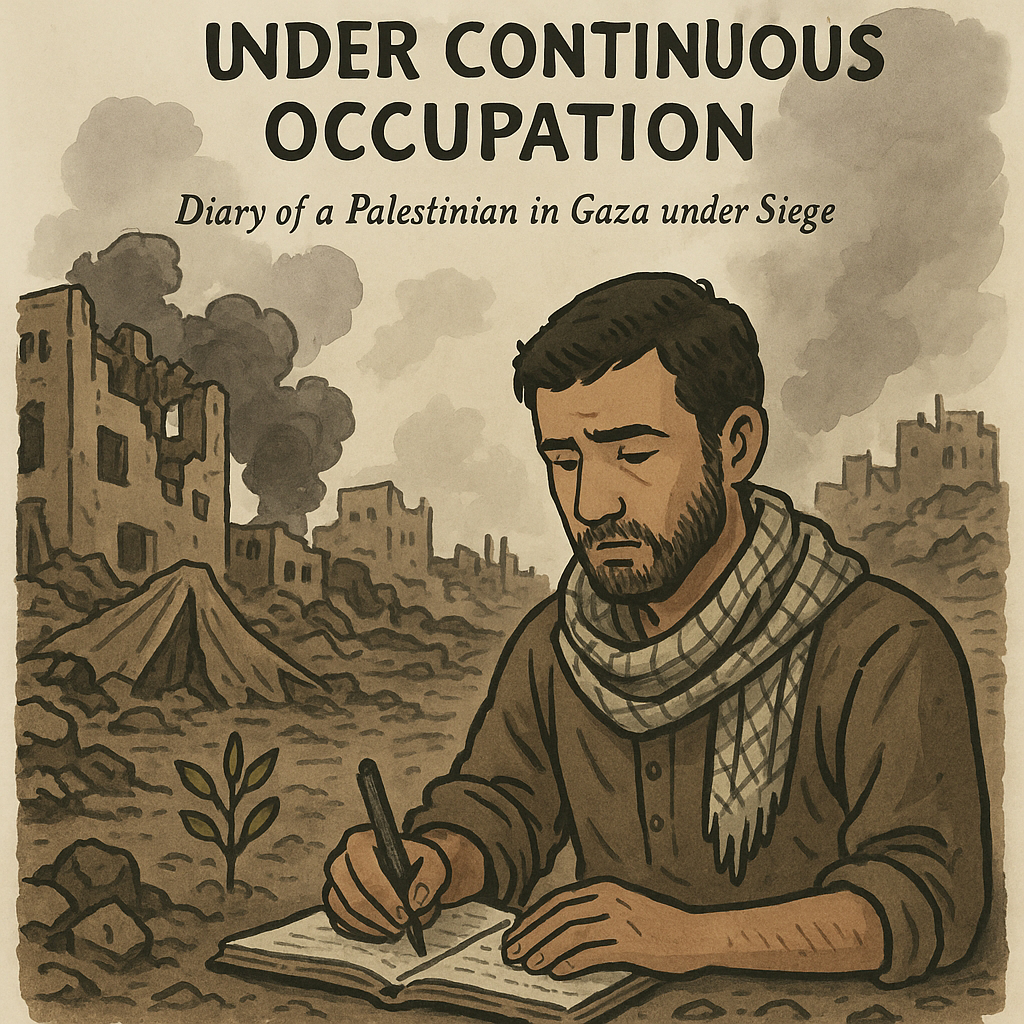
LIVING UNDER CONTINUOUS OCCUPATION
Diary of a Palestinian in Gaza under Siege
1. “Waking in Ruins”
I wake up under broken concrete. The ceiling trembles with each distant strike. We used to live in homes, now we live in craters, tents, or what used to be schools. There is no morning routine, only the next decision: Where do we hide today?
They tell us to evacuate, but there is nowhere safe to go. We are caged inside Gaza, a 40-km strip surrounded by concrete walls, drones, and watchtowers.
2. “This Is Not a War Zone. This Is a Prison”
Gaza is blockaded by land, air, and sea. We cannot leave. We cannot fish. We cannot import medicine, building materials, or fuel freely. Even drinking water is rationed. Electricity comes for 1–2 hours a day, if we’re lucky. The UN calls this the world’s largest open-air prison. We just call it home.
3. “Why We Are Russian-Speaking in the East”
Just as Ukraine has its Russian-speaking east - rooted in the legacy of Catherine the Great - Palestine has its demographic fault lines. Gaza, dense and coastal, was filled with refugees from cities like Jaffa, Haifa, and Ashkelon in 1948. My grandmother was born in Jaffa. She fled on foot during the Nakba, barefoot and bleeding.
That was her story. Now it's mine... again.
4. “The Bombs Do Not Ask for IDs”
We hear leaflets dropped from planes, robotic voices over loudspeakers: Evacuate the building in five minutes. And then... silence. Sometimes the bomb comes anyway. Sometimes it comes while you are packing.
Hospitals have been struck, the Indonesian hospital. Ambulances destroyed. UN shelters hit. Cemeteries bombed. Over 100,000 civilians dead, probably nearer half a million. More than 30,000 children. We keep digging with our bare hands. The smell of death is everywhere.
5. “Even Language Is Resistance”
They want us to forget, forget our villages, our identity, our songs. They call us “human shields” or “terrorists” for simply being here. But we still speak Arabic. We still say our village names. We write poetry. We bury the dead by name, not number, when we can. We remember in our prayers.
Our bookshelves are now rubble, but we still recite Mahmoud Darwish by heart.
6. “What It Means to Stay”
I could try to flee. Some tunnels remain. Some bribes still work. But I stay. Why? Because this is Palestine. If we all leave, they will say: They are gone. It is ours now.
So we stay. Not because we love war. But because we love this soil too much to let it be stolen again.
7. Final Reflection: We Still Exist
To be Palestinian in Gaza today is to exist between grief and resistance. Our lives are disposable to the world’s powers. But our memory is not. Our children draw keys on the walls as symbols of the homes we lost in 1948. We teach them that even under siege, dignity survives.
We whisper to them each night: You are not victims. You are descendants of return.


0 comments:
Post a Comment
Keep it clean, keep it lean