Wednesday, 19 March 2025

THE RISE, THE FALL, THE REINCARNATION OF DEBENHAMS

19 March 2025

Debenhams: The Rise, The Fall, The Reincarnation

Once a stalwart of the British high street, Debenhams was a textbook example the retail department store chain that fell out of fashion.. It didn’t just stumble; it was tripped, shoved, flattened and felled under the weight of private equity debt, shifting shopping habits, and a changing social fabric.

The Debt-Driven Doom Loop

Debenhams’ demise wasn’t simply about poor management or declining footfall. It was first and foremost a victim of financial engineering. Private equity owners loaded it up with debt, extracting value while leaving the business shackled to eye-watering repayments. This is what they always do, we can hear them coming by their big cheque books.

With rents on long, inflexible leases piling on the pressure, the company had little breathing space to adapt when consumer spending habits started to shift.

A Store Built for a Shrinking Middle Class

Debenhams sat comfortably in the middle of the UK department store hierarchy. It was not as luxurious as Harrods, Selfridges, or Fenwick; but it was also not as budget-focused as BHS or Woolworths. It positioned itself as a mainstream, mid-market department store catering to middle-class, price-conscious shoppers looking for affordable fashion, homeware, and beauty products, offering dependable, middle-class fashion and homewares. But the middle-class customer base was eroding, squeezed by stagnating wages and rising living costs.

Where did the ex-Debenhams shopper go?

Some went upmarket, seeking quality at John Lewis or boutique retailers.

Many went downmarket, chasing fast fashion at Primark and Zara—the budget-friendly haunts of clubbers and teenagers.

The rest simply left the high street altogether, moving online to the efficiency of Amazon and Boohoo.

By the time I visited the Southampton store in its final days, the grandeur was long gone. Instead of a bustling department store, it felt like a jumble sale, with stacks of discount ladder-proof tights and bargain bins full of last-gasp clearance stock.

The Tragic Squeeze: Costs Up, Sales Down

This was the perfect retail nightmare:
 ▪︎ Debt repayments were skyrocketing
 ▪︎ Operating costs were relentless
 ▪︎ Footfall was plummeting.

Debenhams fought back with store closures, staff layoffs, and desperate restructuring attempts, but none of it was enough. Perhaps subletting parts of its stores to pop-up markets or food halls could have worked - turning them into retail souks in the style of a bustling north African bazaar. But it was too late for tinkering.

Then came the final blow: COVID. The enforced closures of 2020 accelerated an already terminal decline. With revenue obliterated, it was only a matter of time before liquidation came a-knocking.

Reincarnation: Boohoo’s Digital Makeover

Just when we thought Debenhams was a relic of retail history, in swooped Boohoo, the online fast-fashion giant. It bought the brand and intellectual property, stripped away the stores, and transformed it into a pure online retailer with an excellent delivery software.

And now? Full circle irony.

As Boohoo rebrands itself as Debenhams, the same shoppers who had abandoned department stores for cheap online fashion will now see Debenhams reborn as an e-commerce player.

Meanwhile, in yet another twist of fate, the shell of Debenhams’ former store in Edinburgh is becoming a high-end "capsule" hotel - sleep on a shelf. The same Chinese manufacturers who produce Boohoo’s fast fashion are now the biggest tourist spenders in the UK, returning to shop, not in a department store, but in a boutique eggbox hotel built on its ruins.

What goes around comes around.


Sunday, 16 March 2025

THE DOLLAR MILKSHAKE THEORY PART I

16 March 2025


The aim of this article is to explain the dollar milkshake, the theory to those who haven't heard of it before.

https://www.theinvestorspodcast.com/dollar-milkshake-theory/

https://youtu.be/zHzFLoMLfpA?si=fbuHEYWW0JZzZ5D0

In Part I, we will look at when and why America came off the gold standard and the immediate consequences.

1. When did America come off the gold standard?

1. Nixon took the U.S. off the gold standard on August 15, 1971. This event, known as the Nixon Shock, ended the direct convertibility of the U.S. dollar to gold and marked the beginning of the fiat currency system.

2. Saudi Arabia agreed to price all its oil contracts in U.S. dollars in June 1974. This agreement, known as the Petrodollar System, was part of a deal between the U.S. and Saudi Arabia where the U.S. provided military protection and economic aid in exchange for Saudi Arabia selling oil exclusively in dollars. This system was later adopted by other OPEC nations.

2. Why did America come off the gold standard??

Nixon took America off the gold standard on August 15, 1971, because the U.S. could no longer maintain the fixed gold-to-dollar exchange rate set by the Bretton Woods system. The main reasons were:

1. Trade Deficits and U.S. Dollar Overhang

After World War II, the U.S. became the world’s economic leader, and the dollar was the global reserve currency.

The Bretton Woods system (1944) required the U.S. to exchange dollars for gold at a fixed rate of $35 per ounce.

However, U.S. trade deficits increased, flooding the world with more dollars than the U.S. had gold to back.


2. Foreign Nations Redeeming Dollars for Gold

Countries like France (under Charles de Gaulle) and West Germany began exchanging their dollars for gold, depleting U.S. reserves.

Gold outflows accelerated, and the U.S. was at risk of running out of gold.


3. Inflation and U.S. Spending (Vietnam War & Social Programs)

Massive U.S. government spending on the Vietnam War and Great Society programs (social welfare) increased inflation.

More dollars were printed without an increase in gold reserves, making the fixed $35/oz gold peg unsustainable.


4. Speculation and the Run on Gold

By 1971, investors and foreign central banks began dumping dollars for gold, fearing devaluation.

The British requested $3 billion in gold from the U.S. Treasury, worsening the crisis.

5. Nixon’s Solution: The “Nixon Shock”

On August 15, 1971, Nixon suspended gold convertibility, effectively ending the gold standard.

This meant foreign governments could no longer redeem dollars for gold, making the dollar a fiat currency.

He also imposed wage and price controls to curb inflation, but these were temporary measures.

Outcome of the Decision

The U.S. dollar weakened, but Nixon’s move prevented a total depletion of U.S. gold reserves.

This led to the modern floating exchange rate system, where currencies fluctuate based on market forces.

It also led to high inflation in the 1970s (the stagflation era) until the Federal Reserve raised interest rates sharply in the 1980s.

Summary

Nixon ended the gold standard to prevent a total gold reserve collapse, stop a run on U.S. gold, and maintain economic stability amid rising inflation and trade deficits.

3. What happened between these two dates to the dollar?

Between August 15, 1971 (when Nixon took the U.S. off the gold standard) and June 1974 (when Saudi Arabia agreed to price oil in U.S. dollars), the U.S. dollar lost significant value due to inflation and market uncertainty. Here’s what happened:

1. Immediate Impact of Leaving the Gold Standard (1971-1973)

The dollar devalued sharply because it was no longer backed by gold, leading to a loss of confidence.

Inflation surged, as the U.S. printed more money to cover deficits, especially due to the Vietnam War and domestic spending.

The Bretton Woods system collapsed, and the dollar was allowed to float freely against other currencies.

By December 1971, the U.S. devalued the dollar by 8.57%, resetting the exchange rate from $35 per ounce of gold to $38 per ounce.


2. Oil Crisis & Further Dollar Devaluation (1973-1974)

In 1973, the U.S. dollar devalued again, increasing the price of gold to $42.22 per ounce.

The 1973 Oil Crisis erupted after OPEC imposed an oil embargo in response to U.S. support for Israel in the Yom Kippur War.

Oil prices quadrupled, causing major inflation in the U.S. and further weakening the dollar.


3. Why Saudi Arabia's 1974 Petrodollar Deal Stabilized the Dollar

By mid-1974, the dollar was at risk of further collapse due to the oil shock and economic instability.

The petrodollar agreement required Saudi Arabia to sell oil only in dollars, creating artificial demand for the U.S. dollar.

This stabilized the dollar’s decline and strengthened its global reserve currency status.


Overall Change in Value

Between 1971 and 1974, the U.S. dollar lost purchasing power due to inflation and devaluation.
However, the petrodollar system in 1974 helped stop the freefall and ensured continued demand for dollars in global trade.


Saturday, 15 March 2025

WAS THE BOLSHEVIC REVOLUTION THE FIRST COLOUR REVOLUTION

15 March 2025

Antony Sutton in 'Wall Street and the Bolshevik Revolution' (1974)


The foreign intervention in Russia during the Russian Civil War (1917–1922) was driven by multiple factors, depending on the country involved. The three main factions in the conflict were:

1. The Bolsheviks (Red Army) – Led by Lenin and Trotsky, they aimed to establish a communist state.

2. The Russian Whites – A mix of monarchists, conservatives, and moderate socialists who opposed the Bolsheviks.

3. The Western Powers (Britain, America, Japan, France, Poland, etc.) – These countries intervened militarily for several reasons:

Why did Western countries send troops to Russia?

1. Opposition to Communism – The Bolshevik revolution was seen as a threat to Western capitalism and imperial interests. Leaders feared communist ideology would spread and destabilize their own countries.

2. Support for the Whites – Western nations wanted to restore a more friendly, non-communist government in Russia, ideally one that would continue fighting Germany in WWI (before the Treaty of Brest-Litovsk in 1918).

3. Protecting War Supplies – The Allies had sent large amounts of weapons and ammunition to Russia during WWI, and they wanted to prevent them from falling into Bolshevik hands.

4. Securing Economic Interests – Russia’s vast natural resources (oil, timber, minerals) were highly valuable, and foreign interventionists aimed to protect economic interests, especially in regions like Siberia and the Caucasus.

5. Containment of Japan – While Western forces entered from the north (Murmansk, Arkhangelsk) and south (Crimea, Transcaucasia), Japan sent 70,000 troops to Siberia, aiming to expand its influence. The U.S. intervened partly to counter Japanese ambitions.

6. Polish and Czechoslovak Independence – Poland and Czechoslovakia were fighting for independence, and the Western-backed Czechoslovak Legion controlled parts of Siberia, hoping to shape post-war Russia.

What happened?

Despite foreign intervention, Western forces withdrew by 1920–1922 due to war fatigue, political changes at home, and the Bolsheviks' growing strength.

The intervention ultimately failed to stop the Bolsheviks, and Lenin’s Red Army secured victory, forming the Soviet Union in 1922.

Coming after Napoleon and the first Crimean War, this intervention deepened Soviet distrust toward the West, and would shape Cold War hostilities decades later.

Controversial but intriguing

The idea that Western intervention in Russia (1918–1922) was not actually aimed at defeating the Bolsheviks, but rather supporting them in a colour revolution, is a controversial but intriguing argument. This theory suggests that key Western elites, financiers, banks, working with policymakers, helped the Bolsheviks consolidate power, rather than destroy them, in order to best take advantage of the post revolution order. The argument goes something like this.:

1. Western Funding of the Bolsheviks

Wall Street and the Bolsheviks: Some researchers, such as Antony Sutton in 'Wall Street and the Bolshevik Revolution' (1974), argue that Western banking interests financially backed the Bolsheviks.

Sutton provides evidence that Western banks, particularly those linked to Jacob Schiff (Kuhn, Loeb & Co.), J.P. Morgan (Protestant), and other financiers, facilitated loans and aid to Lenin’s movement.

There is an unfounded allegation that Schiff publicly admitted financing the revolution, allegedly as "revenge against Tsarist oppression of Jews".

British and American banks helped keep Bolshevik industries afloat after they seized power.

American Red Cross Mission (1917-18):

Officially a humanitarian effort, but staffed mostly by Wall Street financiers like William Boyce Thompson (of the Federal Reserve).

Allegedly used as a front for pro-Bolshevik financial and logistical support

2. Western Military Actions Were Half-Hearted

The Allied intervention (1918-1922) was weak and poorly coordinated, suggesting that the goal was not to defeat the Bolsheviks but to manage Russia’s collapse, presumably with a view to plundering its resources.

Instead of major offensives, Western troops mostly secured specific assets (ports, railroads, supply depots) and later withdrew, allowing the Bolsheviks to win.

Refusal to Aid the White Army:

The Whites, led by Admiral Kolchak, Denikin, and Wrangel, received minimal support from the Allies.

France initially backed the Whites but by 1919 had withdrawn.

The British and Americans avoided full commitment to the White forces.

When the Whites were collapsing, American and British financial firms made deals with Lenin for future business cooperation instead of reinforcing the anti-Bolsheviks. The Anglo-Soviet Trade Agreement of 1921 opened up trade and unofficially recognised the Soviet Union.

3. Bolshevism as a Tool for Controlling Russia

Some theorists argue that Western elites preferred Bolshevism because:

It centralized power, making it easier to control Russia’s economy in the long run.

A fragmented, chaotic Russia could not challenge British-American financial dominance.

Communism would prevent Russia from industrialising independently, forcing it into economic dependency on Western aid (as later seen under Roosevelt’s Lend-Lease and 1920s US loans to Soviet industry).

Lenin’s NEP (New Economic Policy, 1921):

Introduced limited capitalism.

Western corporations (Standard Oil, Ford, General Electric, etc.) signed lucrative contracts to develop Soviet industry.

Western Recognition of the USSR (1924):

Despite years of "opposition," the UK and other Western powers quickly recognised the USSR once the Bolsheviks were firmly in control.

This signaled that the West was not fundamentally opposed to Soviet rule.

4. Parallels to Later US Foreign Policy

Today this theory is the the Colour Revolution playbook. It has been updated at each iteration. It suggests a pattern where the West creates or supports revolutionary movements to destabilise and divide rivals, later using them for geopolitical advantage.

Examples include:

China (1949): US policies weakened the Nationalists and helped the CCP take power.

Cuba (1959): Could US financial interests have facilitated Castro’s rise, as some claim?

Islamist movements (1980s-present): The US has funded jihadists in Afghanistan, Libya, and Syria.

Conclusion

If true, this theory implies that the West manipulated pre-Soviet Russia’s collapse to install a Bolshevik regime it could ultimately manage.

Instead of a strong, independent, industrialised Tsarist or White Russia, the goal was a weakened, dependent, and controlled, albeit communist, Russia, isolated from global trade but not hostile to Western finance, instead, dependent on it..

So the irony is that the Soviet Union later became an enemy, but initially, the Bolsheviks received significant Western assistance in consolidating power.

Criticism of This Theory

Mainstream historians argue that:

Western intervention was real but half-hearted because of post-WWI exhaustion.

Western businesses simply pursued profits and had no grand geopolitical strategy.

The USSR later became hostile to the West, contradicting the idea of a long-term Western plan to support it.

However, given the documented financial connections between the Bolsheviks and Western banks, this theory remains a topic of debate among alternative historians.

Thursday, 13 March 2025

THE WEST HAS BEEN DEFEATED IN UKRAINE, BUT IS IN DENIAL OF THE FACTS

13 March 2025

Macron proposed a selective ceasefire - just in the areas that hurt the most. (He wants a no-fly zone, protection for the ports and for the energy system.)

Marco Rubio proposes a ceasefire - a ceasefire in military terms, but no agenda for a settlement.

How to explain this ceasefire proposal, coming from the losing side, which is obviously going to be rejected?

How to explain the Europeans turning their gaze away from the reality of defeat and wanting more war?

Chas Freeman captures it nicely, "they are inhaling their own propaganda".

Kaja Kallas put it this way, "victory is preferable to peace". This is doubling down on defeat.

At least America, with its focus under the new administration in Washington shifted from Wall Street to Main Street, to cleaning up the balance sheet and the government's income and expenditure, in other words, taking responsibility for these messes, is waking up to reality. Perhaps Trump can appear as the strong man and blame the West's failure on the Russians all previous administrations.

But the Europeans...? They continue to behave irrationally. They are like the Japanese soldiers hiding in the forest. Except that the Europeans have the evidence that the war is over before them. We cannot understand their behaviour as the product of reason, we can only understand their behaviour in psychological and historical terms.

COGNITIVE DISSONANCE

A fancy term for a mental state where the afflicted struggles to reconcile reality with deeply held beliefs. The West sees itself as the champion of democracy and military superiority. How could Ukraine - backed by NATO, ISR, weaponry and training - lose to Russia? This is so fundamentally at odds with Europe's self-image that it triggers a collective emotional breakdown. What is happening here? They cannot adjust to reality, they double down on war, they seek any "narrative" (~ fake news) that delays facing the truth, they bolster with more propaganda, they are decoupled from reality. This is cognitive dissonance: they fear to confront reality.

So this is a situation where beliefs are at variance with reality. There is a sort of religious conviction that, through the power of belief, they will be able to bring their vision of the future into reality, they can manifest or express vision into reality. The holder prefers to cling to the belief. A classic example is someone who learns that they are suffering from a terminal illness and refuses to believe this, or thinks herbs will save the day, and clings to the belief that they are still healthy, just as they were before.

The new administration in washington has come through the denial and the anger and is now busy bargaining with Russia. It is trying to restore balance in external payments and receipts through the tariffs, and it is looking to acquire resources from Ukraine, Canada and Greenland as collateral to its debt. This is not fear of loss, this is greed.

GROUP-THINK

That simple triune brain model is helpful - when the going gets tough, reason is the casualty, emotion takes charge. Group-think is bolstering the fantasy view described above. Group-think creates its own narrative or really it is just delusional collective propaganda. 

The Russians are trying to recreate their Empire. The Sixth Coalition are ready to once again to march on Paris. Russia's armies are being supplied by China. They are purely a war economy, an expansionist tube of muscle power funded by oil and gas.

HISTORICAL AND MILITARY PERSPECTIVE

From a historical and military standpoint, this is nothing new. Europe has a long tradition of fighting wars long past the point of reason, from Napoleon’s doomed Russian campaign to Germany’s insistence on total war in 1944–45. 

The West's insistence on continuing the war despite facing defeat echoes the "descent from rational to emotional" described in triune brain theory. Rational planning goes out of the window and gives way to purely emotional responses - fight or flight you might call it. 

Faced with humiliation, European elites react not with pragmatic adaption, but choose to die on the altar of their beliefs. They will first go through the stages of denial, anger, and in this case it looks like they will skip to self-destruction.

The result? A desperate, last-ditch attempt to look strong like in days of yore and to shift the blame onto Russia. This is seen in the repeated carbon-copy framing of the ceasefire proposal as “the ball is in Russia’s court.” ... And when Russia says nyet....?

The implicit strategy is to paint Russia as the intransigent party, keeping Western public opinion engaged in this elite fantasy of victory, rather than the inevitability of peace on unfavorable terms. 

Repeatedly pushing propaganda has discredited the mainstream media in the public mind. There is no longer buy-in to the elite's vision. This explains Trump's victory last November. This explains why the people of Romania are in open revolt against the EU candidate. 

In short, this refusal by the leaders in Europe to negotiate is not about strategy, it is about emotional collapse in the face of defeat, a psychological and political inability to let go of an illusion of enduring supremacy built over the last 500 years. The leadership, fuelled by hubris and vanity, is in denial of the facts. The people are beginning to see through this.


The most intriguing question of all though, is this: who is behind the propaganda? Maybe it is initiated by MI6. But for whom?  Boris Johnson seems to be the fixer, with two visits to Kiev on 10 March 2024 and a few days back to get Ukraine to agree to this 30 day ceasefire. Who is he working for?

[End]


Wednesday, 12 March 2025

MEDIUM TERM MARKET TREND MODEL TURNS BEARISH.

12 March 2025

Medium-Term Market Trend Model Turns Bearish

Summary of this report from Investopedia's Chart Advisor.

Key takeaway : The medium-term trend turning bearish suggests that investors should be cautious in the coming months.

With things as they are today, maybe the best tactic is wait-and-hope for a bounce over the next week or two....perhaps up until june... and then out of developed market ETFs for the remainder of the year.... "all things being equal", ceteris paribus, meaning unless the indicators change. Because this Trump transition will take a year or two and there could likely be many hiccups along the way.

And note that unless the whole world economy flips from west to east, then if there's a downturn in America, it'll be worse for the emerging markets.

The American economy is looking shaky, there's a lot of uncertainty and unpredictability around, and these tariffs are more specifically what's causing the current short and medium term bearishness.

If the long-term is looking okay, it's because Trump's strategy is putting us in a transition period. But for now, the focus is on capital preservation and not growth. Just be max. cautious and think short term only.

This article comes in six parts:
 
  I - The first part defines what short medium and long-term means. 
 II - The second is the key takeaways from the report.  
III - The third is a summary of the report
IV - Then we have some of the key technical terms that you need to understand to make sense of the report.
 V - Conclusion
 VI - And finally, the actual report itself from Investopedia - 

Part I

So, reading this report, what does "short-, medium-, and long-term time frames" mean:

1. Short-Term:

Days to weeks (typically up to 3 months).

The report references multiple short-term bearish signals in 2024, which were seen as temporary pullbacks within a broader bullish medium term trend.

Traders often look at daily and weekly price action, moving averages, and momentum indicators for short-term trends.

2. Medium-Term:

Several months to a year (typically 3 months to 1 year).

The Market Trend Model turning bearish on this medium timeframe suggests that your outlook for the next several months should be risk-averse. Alexis is right to put his money into short term money markets, or perhaps a bond ladder.

Investors use indicators like the 200-day moving average, 200 SMA, Fibonacci retracements, and market breadth metrics to gauge medium-term trends.

( i've defined these technical terms below....)

3. Long-Term:

Several years (typically 1 year or more, up to a decade).

The report states that the long-term trend remains bullish, meaning the market’s broader secular trend is still positive despite short- and medium-term pullbacks.

Long-term investors focus on fundamentals, macroeconomic trends, and major cycles rather than daily or monthly price movements.

Part II

Key Takeaway:

The short-term trend can fluctuate often and is relevant for traders.

The medium-term trend turning bearish suggests that investors should be cautious in the coming months.

The long-term trend remains bullish, implying that the overall structural bull market is still intact, despite near-term corrections.

Part III

Summarising the report:

1. Medium-Term Market Trend Model Turns Bearish
The Market Trend Model has turned bearish on the medium-term for the first time since October 2023.

The long-term trend remains bullish, indicating that the broader secular market trend is still intact.

The shift to a bearish medium-term trend suggests a greater focus on capital preservation rather than growth.

In 2024, multiple short-term bearish signals occurred, but they were contained within a medium-term bullish trend, allowing for buyable pullbacks.

However, the 2025 market trends are now diverging from 2024, raising concerns that the market may not follow the same bullish recovery pattern.

2. 5500 Becomes Minimum Downside Target for S&P 500
The S&P 500 has dropped nearly 10% from its recent all-time high of 6150, a decline similar to the July 2024 pullback.

The key support level of 5850 has been broken, and the index has fallen below the 200-day moving average, reinforcing a bearish outlook.

A downside target of 5500 is based on a 61.8% Fibonacci retracement of the previous uptrend (August to December 2024), suggesting a potential support level for a countertrend bounce.

The 200-day moving average is now acting as a resistance level for the market, and with RSI (Relative Strength Index) oversold conditions, further capitulation (forced selling) may occur before a possible rebound.

3. Breadth Conditions Continue to Deteriorate
The market’s breadth indicators (measuring how many stocks are participating in the trend) have weakened, with less than 50% of S&P 500 stocks now above their 200-day moving average.

Historically, when this breadth indicator drops below 50%, it has signaled further market weakness, as seen in September 2024, which preceded a six-week market decline.

The current market correction appears to be evolving into a major correction rather than a minor pullback, increasing downside risks.

Part IV

Defining technical terms

1. Market Trend Model – A proprietary tool that determines whether the market is in a bullish or bearish phase based on price action, trend indicators, and breadth measures.

2. Secular Trend – A long-term market trend that lasts years or decades, regardless of short-term fluctuations.

3. Fibonacci Retracement – A technical analysis tool that identifies potential support and resistance levels based on key percentage retracements (23.6%, 38.2%, 50%, 61.8%, etc.). The 61.8% level is considered particularly significant.

4. 200-Day Moving Average – A key long-term indicator that helps determine the market’s primary trend. Falling below this level is generally seen as a bearish signal.

5. RSI (Relative Strength Index) – A momentum indicator that measures whether a stock or index is overbought (above 70) or oversold (below 30). An oversold condition suggests a potential short-term bounce.

6. Market Breadth – A measure of how many stocks are participating in a market trend. When fewer stocks remain above their 200-day moving average, it indicates weakening market strength.

7. Stochastic oscillators or stochastics are based on the idea that closing prices should confirm the trend.
Both RSI and stochastics are used as overbought/oversold indicators.
High readings suggest an overbought market and low readings are indicative of oversold conditions.

8. Capitulation – A situation where investors panic-sell their assets, leading to a sharp drop in prices before a potential rebound.

Part V

Conclusion:

The shift in the medium-term trend to bearish, the break below key support levels, and deteriorating market breadth suggest that the S&P 500 may be entering a more prolonged correction rather than a temporary pullback. Investors should focus on capital preservation and watch for signs of market capitulation before considering re-entry.

Part VI


from Investopedia's Chart Advisor,
David Keller, CMT

Three parts:

1/ Medium-Term Market Trend Model Turns Bearish

2/ 5500 Becomes Minimum Downside Target For S&P 500

3/ Breadth Conditions Continue to Deteriorate

Investopedia is partnering with CMT Association on this newsletter. 

 1/ Medium-Term Market Trend Model Turns Bearish

Our proprietary Market Trend Model turned bearish last Friday on the medium-term time frame for the first time since October 2023. While our long-term model remains bullish, suggesting the secular trend still remains intact, this bearish signal on the medium-term time frame tells us to focus more on capital preservation than capital growth.

Note how in 2024 we had five different bearish signals on the short-term time frame, yet the medium-term trend model remained bullish through the entire calendar year. This configuration represented a buyable pullback within a cyclical uptrend, since the medium-term and long-term trends remained firmly in the bullish range.

While we’ve been tracking rotations in market leadership, as well as bearish momentum and breadth divergences since November 2024, the continued bullish reading on the medium-term trend model helped us remain constructive into Q1 2025. There’s no guarantee that we’ll see a repeat of 2022 or any other bear market year, but the fact remains that the trends in 2025 are starting to very much diverge from the bullish path of 2024.

2/ 5500 Becomes Minimum Downside Target For S&P 500

After Monday’s step selloff to start the week, the S&P 500 index is now down almost 10% from its most recent all-time high around 6150. This means that the current pullback is basically in line with the July 2024 drawdown in terms of price and time.

With the key support level of 5850 in the rearview mirror, and with the 200-day moving average violated on Monday, we have established an initial downside target of 5500. That would represent a 61.8% Fibonacci retracement of the August 2024 to December 2024 uptrend phase, where we would expect at least some sort of countertrend bounce.  

The 200-day moving average now becomes resistance above the current price action, and given that the S&P 500 reached an RSI oversold condition for the first time since the August low, we would be looking for other signs of short-term capitulation starting this week.

3/ Breadth Conditions Continue to Deteriorate

Up through the end of last week, some of our longer-term breadth indicators remained bullish, but Monday’s selloff appears to have taken one more breadth indicator off the “still bullish” list. With less than 50% of S&P 500 members remaining above their 200-day moving average, we can now add “lack of breadth support” to the list of bearish market characteristics.

Going back to August 2024, that initial pullback from SPX 4600 appeared to be a minor pullback as this market breadth indicator remained above 50%. With most S&P 500 stocks still above their long-term trend barometer, how bearish could things really be?

Then in mid-September, we saw the indicator push below 50% as the S&P 500 made a new swing low. The market ended up going lower for another six weeks before eventually finding a bottom just above 4100 in late October. Now with less than 50% of S&P 500 members remaining above their 200-day, the current corrective phase is beginning to look more like a major correction as opposed to a tactical pullback.

[End]

GRIFTERS AND LAWYERS COULD BRING DOWN AN ENTIRE ECONOMY

12 March 2025

https://www.lse.co.uk/news/SUS/fca-to-await-supreme-court-call-before-taking-motor-finance-next-step-ksebo09c829ao3t.html

https://www.telegraph.co.uk/business/2025/03/11/millions-car-finance-customers-to-get-compensation/

On the face of it, the garages acted as a credit broker and as such should have gone with the lowest price not the highest commission. That's a fair principle.

Reality is, water flows downhill.

From my understanding, the commission would likely have been used to raise the amount of the loan offset to reduce the price, keeping the overall cost of car+loan package constant, while allowing the customer to borrow more and buy a better car.

Secondly, why restrict this principle purely to car loans? Everything is bought on credit these days. The current claim is going to rock the retail car finance and retail banks lending industries; can you imagine how applying this principle to retail sales as a whole would devastate the entire retail economy? From a claim of maybe twenty billion GBP, we'd be going to ten or a hundred times that.

So it's easy to understand why a labour chancellor goes in to protect the loan sharks!

Reality is with a couple of presses of the buttons on your smartphone, you can get a quote to compare with what is being offered buy the car salesman. Does the state, from lawmakers to lawyers, need to interfere in the workings of this capitalist economy?

Tuesday, 11 March 2025

WAR OR WEALTH: BRITAIN AND AMERICA FALL OUT OVER STRATEGY FOR UKRAINE

11 March 2025

We've had no explanation so far as to why London and Washington are so profoundly at odds over the flow of weapons and intelligence and also over the mineral rights deal. 

Moscow has apparently offered Washington a deal over development of Russia's 70 trillion dollars worth of natural resources. Kiev is auctioning off its 7 trillion's worth and this might be included as a secret annex to the one hundred year friendship agreement.

It seems that Europe is suffering from collective russophobia, (the panic-monkeys! - Russia does not represent an existential threat).... The front line states, you might call them, suffering from even more confusion, from pro-Russia Hungary and Slovenia, to Ukraine where Zelensky is constantly asking for security guarantees.

Washington, on the other hand seems to be more concerned with the dire state of its economy and its focus is on extracting the wealth of these countries.

Rifts between Washington and London are pretty unusual. There were crises suez and kippor.

So you might see it as fear in Europe versus greed in America but this video from Alex Krainer goes deeper into the matter and puts it in the context of the Anglo Saxon empire.

Nicely explained here

https://youtu.be/bPYoT24B2uc?si=LO68M4yltnl_vWqR

Alex Krainer explains the economics behind Halford Mackinder's geopolitical theory, ie the reason for an empire to seek and maintain hegemony.


Saturday, 8 March 2025

TRUMP'S FOREIGN POLICY IS A CONFUSION FULL OF CONTRADICTIONS

8 March 2025

This article will outline half a dozen major inconsistencies - contradictions - in Trump's statements on Russia, Ukraine, and the broader geopolitical situation. The article have been updated with the fiasco of this supposed ceasefire, 30 days ceasefire in Ukraine. 

Russophrenia - "a condition where the sufferer believes Russia is both about to collapse, and to take over the world."

1. Russia’s Intentions vs. Europe’s Military Build-up

Trump states that Russia has no intention of invading Europe.

Yet, he simultaneously demands that Europe increase military spending and arms production to counter Russia.

If Russia is not a threat, why should Europe engage in an arms race?

2. Russia’s Position in the War

At one point, Trump claims that Russia will be “forced” to compromise due to some undisclosed weakness he claims to know about.

Later, he contradicts this by saying that Russia “has all the cards” and is in a strong position, making compromise unnecessary.

If Russia is in control, why would it feel pressure to negotiate?

3. Trump’s Stance on Ukraine

Trump says he wants to push both Russia and Ukraine into a peace settlement.

At the same time, he threatens to leave Ukraine entirely if they don’t want to negotiate.

Does Trump want to mediate peace, or does he want to walk away from the conflict?

4. Sanctions on Russia vs. Easing Sanctions

Trump threatens harsher sanctions on Russia. "I am strongly considering large scale Banking Sanctions, Sanctions, and Tariffs on Russia until a Cease Fire and FINAL SETTLEMENT AGREEMENT ON PEACE IS REACHED.” Trump wrote in a post on Truth Social.

Simultaneously, reports indicate his administration is considering easing sanctions on Russia’s energy sector if the war ends.

While speaking to reporters in the Oval Office Friday afternoon, however, Trump said the U.S. was "doing well" with Russia and that he was "finding it more difficult, frankly, to deal with Ukraine.”

Is the goal to punish Russia or to create conditions for negotiation?

5. Proxy War Acknowledgment vs. Moral High Ground

U.S. officials (e.g., Marco Rubio) have admitted the war is a U.S. “proxy war” against Russia.

At the same time, the U.S. insists that it is a moral actor seeking peace.

How can the U.S. claim moral superiority while openly admitting to using Ukraine as a proxy?

6. Trust in Putin vs. Urging Europe to Prepare for War

Trump expresses trust in Putin and suggests he genuinely wants peace.

Yet, he simultaneously pushes Europe to prepare for war, implying that Russia is an imminent danger.

If Putin is trustworthy and not a threat, why encourage military escalation?

Trump’s rhetoric surrounding the ceasefire exposes inconsistencies in his administration’s stance:

8. Trump’s Hawkish Approach
Despite calling for peace

Trump has simultaneously ramped up threats of severe sanctions on Russia while lifting restrictions on military aid to Ukraine.

9. Conflicting Views on Russian Strength
Trump has oscillated between claiming Putin has no leverage in negotiations and admitting that Russia holds all the cards.

10. Threats vs. Disengagement
Trump declared: “I need to know that Ukraine wants to end the war. If they don't want to end it, we're leaving.”
Yet, he also pledged to supply Ukraine regardless of the outcome.

11. Confusion

How can Trump ever have claimed that he would end the war in one day, on day one, when in actual fact he has never had a strategy to enact this goal and here we are almost two months into his term?

12. Conclusion, confusion

Trump may have clear - and possibly mistaken - strategies and policies for the economy and domestic policies, but as to foreign policy he seems to dither. What are the real intentions behind US policy?

13. Trump’s Broken Campaign Promises

The rushed and poorly conceived ceasefire deal between the US and Ukraine raises a deeper question: why would Trump, known for his supposed pragmatism, back such a transparently flawed proposal? Could it be that his second-term agenda is cumbling? A long list of ambitious campaign promises has either stalled or collapsed entirely. Domestic and foreign are beginning to look like two more primrose paths.

14. Foreign Policy: ‘America First’ or Just More of the Same?

One of Trump’s most vocal pledges was to disengage from costly foreign entanglements and put “America First.” Yet, under his administration:

- No Major Troop Withdrawals – Despite promising to bring American forces home, there have been no meaningful withdrawals from Europe, Syria, or other overseas commitments. Instead, he continues to entrench US involvement in Ukraine, even while claiming he wants to end the war.... Perhaps it is early days.

- No Declassification of 9/11, JFK, or Epstein Files – To date, nothing substantial has been released.

- Failed Greenland Gambit – Trump made more headlines by expressing interest in buying Greenland from Denmark. The idea was ridiculed at the time, and no progress has been made since.

- Border Security: No ‘Great Wall’ 
The “big, beautiful wall” remains unfinished, and reports suggest that illegal crossings are still a significant problem.

- No Mass Deportations

Trump also promised mass deportations. While ICE raids were initially ramped up, they have reportedly now been put on ice.

- No Fort Knox Audit

No Gold Standard Revival or Fort Knox Audit – A promise that excited many in the financial sector and libertarian circles has quietly faded into oblivion.

No Trade Wins, still waiting
Trump made aggressive trade war moves but has since failed to follow through with any coherent economic strategy in his second term.

- No UFO Disclosure 
After teasing that he might reveal what the government knows about UFOs

Trump’s geopolitical manoeuvering is not driven by strategy but by the need to patch up his image as an action man and a strongman.

This 30 day ceasefire 
Everyone knows that Russia will not accept the ceasefire proposal from rhe US, since it doesn't concord with their terms and they hold all the cards.

So what is going on at the moment?

There's no agenda for this proposed 30 day ceasefire, and why do you need a ceasefire to start talking?

Oh, it's because the president said the killing has to stop.

Do you think that a 500 drone attack on Russia and Moscow plus restarting the flow of arms and intelligence is a good way to introduce a ceasefire whose purpose is to "stop the killing"?

And the United States, with its debt, its dollar, its military, is now at odds not only with the Global South - we knew about that - but Lo! Europe led by the UK is rearming and wants to continue the war to 2029 and 2030.

Could it be that the Western oligarchs who profit from these kind of things, now are joining forces against Trump, who they fear is trying to take their ball away? Is this ISI the deep state?

I'm unable to work it out right now... There's some weird shit going on...


Tuesday, 4 March 2025

EUROPE HAS TWO OPTIONS: GET WITH THE PROGRAM OR DIE.

4 March 2025


Europe at a Crossroads: Stuck in the Past While the Future Moves On

European leaders have been living under the stone of American protection for too long, detached from the realities of power, from any sense of real responsibility for the future of their Union, seemingly unaware of the changing global order. Decades of passive reliance on the U.S. security umbrella have dulled strategic thinking, creating a leadership class that clings to globalist ideas and outdated alliances rather than adapting to the new multipolar world made up of self directed nations. This is despite America making it plain that it wishes to withdraw from Europe in order to focus on Asia. It seems that Europe clings to its belief and demand that America come to its rescue. 

Trump emphasised to Zelensky in the Oval Office Friday that "security guarantees" would inevitably drag America into direct conflict with Russia and risk world war three. Bear in mind that this only repeated what Biden said back in 2022, and Obama said in 2015 that Russia has "escalation dominance" given Russia's geographical proximity and feeling of threat if Ukraine were to be used as a base for American missiles.

So in short, nyet means nyet and no means no, but Europe doesn't seem to get it and is threatening to go it alone, however risky or
Impossible that seems, powered by stolen Russian assets.

Denial and Stagnation: The Struggle to Adapt

This is a classic case of denial syndrome. Instead of embracing change, European leaders struggle to maintain the status quo, even as the ground beneath them shifts. Keir Starmer’s comfort embrace of Zelensky at the London Summit last Sunday was a telling moment - not a gesture of genuine strategic calculation, but a comfort-seeking reflex, clinging to familiar narratives rather than exploring real solutions.

The irony is painfully clear when looking at the European Union. The EU operates as a bureaucratic machine, obsessed with process, detached from outcome. It follows established frameworks, oblivious to whether they actually serve Europe’s long-term interests. The EU’s lack of vision is how a once-dominant continent becomes sidelined.

The Future: A New Security and Economic Order

For those willing to see straight, the future is ripe with opportunity. What if Europe rethought its security architecture to remove the threat - and cost - of perpetual war? What if it forged new economic ties with Russia and China, integrating into global supply chains rather than isolating itself? The Belt and Road Initiative (BRI),  digital trade networks and payment systems (Swift, MIR.. ) offer openings that could redefine Europe’s economic position - if only its leaders had the courage to pivot.

Meanwhile, America is "eating their lunch.” While Europe wastes time in summits, the real power realignment is happening elsewhere - between America, Russia, and China. Whether Europe likes it or not, that is where the future lies.

This is a time of macro economics and
government finances over geopolitics. Trump wants to reindustrialise America, restore competitivity through tariffs lower costs and increases in productivity, balance the books, end mass immigration and recreate a coherent society based on more traditional values and the work ethic.

Elon Musk, the Disruptors, and the Future of Power

Figures like Elon Musk - quite possibly America's next president - exemplify this new paradigm - a world shaped by technology, logistics, and pragmatic geopolitics, rather than outdated ideological commitments. Over the next decade, the rise of AI agents, the linking together of digital economies, the completion of transport channels and payment systems, and the expansion of space industries, will mark out the  superpowers. Europe, locked in self-referential politics, suffering from severe russophobia, is failing to see where history is going and despite its wealth and size, cannot be in that list of superpowers.

This isn’t personal - it’s not about a grand conspiracy or a secret program. Sure, America is leading that way for its own survival, but it’s just progress unfolding before our eyes. The world is reshaping itself, still under American leadership, though we are now in a multipolar world. A multipolar world requires listening and cooperation. The BRICS would be happy with that and with the dollar as reserve currency, if America could be trusted. 

It is a world full of emerging opportunities, but does Europe want to learn from its mistakes and join in, or not?

Thinking about it, what could happen is what Europe fears the most, which is a Russian takeover - but not by military means, it doesn't need to, by default it could simply fill the vacant position of leadership in Europe today and be welcomed in by the people. Seems unlikely? Well look at politics in central east Europe today...

Europe: On the Wrong Side of History

Watching the recent London Summit, one thing was painfully clear: Europe is barking up completely the wrong tree. It is doubling down on old alliances, clinging to U.S. dependency and imagining that the U.S. will intervene militarily in a war on its behalf. It is ignoring the shifting tides of power and in the case of Ukraine, realities on the battlefield. 

Meanwhile, those who see what’s coming - the integration of East and West, the rise of economic pragmatism over ideology - are preparing to ride the next wave of history.

In the end, it’s simple, it's about how you manage change: adapt or die.

Saturday, 1 March 2025

UNDERSTANDING ZELENSKI'S HISSY FIT

2 March 2025

Well, that's right—it's very difficult to make sense of what's happening here. We can understand the events as they unfold, but explaining the thinking behind them is much harder.

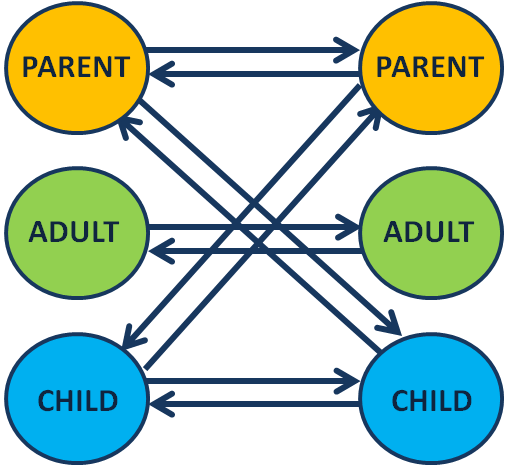
To me, the simplest way to understand the relationship between a metropole and its vassal states is to see it as a parent-child dynamic.

The metropole acts as the responsible authority, making decisions and providing stability, while the vassal behaves like a dependent child—lacking responsibility, struggling to pragmatically assess consequences, and making demands based on emotion rather than a well-thought-out strategy.

We armchair analysts can observe these moves from our Olympian heights, where action and reaction are easy to interpret. But for the "child" vassal, subject to the authority of the parent metropole, the bigger picture is often misunderstood. Instead of strategic reasoning, emotions guide decisions—leading to hissy fits when demands aren’t met or sulking or self-harm, when things don’t go their way.

Wednesday, 26 February 2025

WHERE IS THE GOLD

26 February 2025

WHERE IS THE GOLD?


We all remember when Germany asked for its gold back, in 2013, and was told delivery would take seven years. 

Are the countries asking for repatriation of their gold from the LBMA being told the same thing? 

And if LBMA runs out of gold and goes bankrupt, what happens to the owners of ETFs with unallocated gold? Eg SGLN? SGLN is backed by physical gold, valued at spot prices, held in LBMA and certified by  Blackrock. It is the most convenient and least risky ETF.... But what happens if the LBMA vault turns out to be empty. And it goes bust?

In fact, this hypothecation and rehypothecation is how governments manipulate the price of gold.The paper gold market (COMEX, LBMA) trades maybe 20 times more contracts than there is actual gold. It is done on futures contracts. Means banks can massively short-sell gold futures, artificially suppressing spot prices.

Why do banks do this?

The truth is that their currencies are devaluing all the time. A fiat currency is a currency that is not tied to the value of any asset. So governments* can just borrow all they want, they can print as much as the desire. They can have these mad spending programmes where there's no proper fiscal control, i.e, spend more than they tax. The States is doing two trillion of extra debt every year.

* with their own currency.

So why do these fiat currencies devalue all the time? 

Devalue means that they buy less and less of what people want in the real world. And this is because the governments are constantly expanding the money supply, so more and more money is available for the same amount of goods, which inflates the currency.... more and more currency is needed to buy the same thing.

Fiat currencies are not tied to an asset in the real world, this is the trouble and the blessing, but gold is. If central banks didn't keep shorting the price of gold, then gold would rise in value according to the inflation in the money supply and be worth an absolute bomb, and people would see gold as a reliable store of value - as it has been since the time of stonehenge - and put their money into gold and not into government issue treasuries, which are promises to pay, packed solely on the credibility of the government..

So if gold was only traded in physical form - ie if you buy at the spot price and take delivery of the physical gold itself - prices would without doubt be much higher. And when the day of reckoning comes, this is the day where the government can no longer borrow enough to meet its obligations, which in includes paying interest on it's treasuries, then we'd expect gold to rise to its real price, while paper assets burn.