


Monday, 9 June 2025

AI CAREERS

9 June 2025

 AI Careers

(Salary ranges, career paths - to be added)


1.    Job Title: AI Prompt Engineer

Overview:
As an AI Prompt Engineer, you will design, test, and refine prompts to improve the performance of AI language models. This role sits at the intersection of software engineering, linguistics, and user experience.

Key Responsibilities:

  • Craft and iterate on high-quality prompts for AI models.
  • Analyse model outputs to refine instructions.
  • Collaborate with developers and product teams to implement prompt-based solutions.

Required Skills:

  • Strong communication and analytical thinking.
  • Familiarity with LLM behaviour (e.g., GPT-4, Claude).
  • Basic programming knowledge (e.g., Python, APIs).


2.    Job Title: AI Developer Advocate

Overview:
The AI Developer Advocate bridges the gap between AI tool creators and the developer community. You’ll help others build smarter tools with AI by writing content, hosting tutorials, and gathering feedback.

Key Responsibilities:

  • Educate developers on how to integrate AI tools.
  • Create demos, sample code, and blog posts.
  • Represent the company at meetups and conferences.

Required Skills:

  • Strong public speaking and writing skills.
  • Deep understanding of developer workflows.
  • Experience with modern AI libraries and APIs.


3.    Job Title: AI Integration Engineer

Overview:
This role focuses on embedding AI tools into existing business systems. As an AI Integration Engineer, you’ll ensure smooth, secure, and scalable implementation of AI functionalities in real-world applications.

Key Responsibilities:

  • Integrate APIs from AI providers into enterprise apps.
  • Monitor performance and error handling.
  • Collaborate with cross-functional teams to improve system architecture.

Required Skills:

  • Backend software development (Python, Java, Node.js).
  • Understanding of API protocols and data handling.
  • Cloud deployment and version control systems.


4.    Job Title: AI Solutions Designer

Overview:
As an AI Solutions Designer, you’ll map business problems to AI use cases and design human-in-the-loop workflows. You combine technical acumen with strategic thinking.

Key Responsibilities:

  • Work with clients to scope AI projects.
  • Design system architecture and user journeys.
  • Define evaluation metrics and testing scenarios.

Required Skills:

  • UX/UI awareness.
  • Strategic consulting or product design experience.
  • High-level understanding of AI capabilities.


5.    Job Title: AI Test & QA Analyst

Overview:
This role ensures AI tools work reliably and ethically. You'll test systems for accuracy, fairness, and performance across different scenarios.

Key Responsibilities:

  • Test prompt reliability and LLM outputs.
  • Conduct edge-case scenario analysis.
  • Build test suites and simulate user inputs.

Required Skills:

  • QA methodologies.
  • Familiarity with prompt tuning and LLM limits.
  • Documentation and reporting skills.


6.    Job Title: AI Technical Writer

Overview:
You translate complex AI systems into clear, useful documentation. You’ll work alongside developers and product teams to produce user guides, API docs, and onboarding material.

Key Responsibilities:

  • Write and maintain technical documentation.
  • Organise help centres and chatbot documentation.
  • Ensure clarity, consistency, and accuracy.

Required Skills:

  • Strong writing and editing skills.
  • Technical background or ability to grasp complex systems.
  • Familiarity with markdown, API tooling, and diagrams.
 

Update

Updated Job Descriptions for Emerging AI Roles in 2025

(Post-Prompt Engineering Era - prompt engineering was a stepping Stone in to AI. A couple of years ago, but now anyone who can type is expected to be able to write prompts, it's been operationalized, has become just a part of our daily lives, whether you are an office worker or an individual)


7. Job Title: AI Trainer

Overview:

An AI Trainer develops, tests and refines AI behaviour, ensuring natural, useful, and contextually appropriate responses in conversation-based systems. You’ll play a critical role in improving chatbot understanding, tone, and alignment with user intent.

Key Responsibilities:

Design realistic and varied user interaction scenarios.

Fine-tune chatbot behaviour based on user feedback and performance logs.

Create annotated datasets to improve model alignment.

Collaborate with data scientists and NLP engineers to deploy updated models.


Required Skills:

Linguistic awareness and UX sensitivity.

Familiarity with AI training pipelines and prompt tuning.

Ability to detect bias, hallucinations, or misalignment in model outputs.


Ideal Background:

Former content creators, UX writers, linguists, or prompt engineers transitioning to model behaviour design.


---

8. Job Title: AI Data Specialist

Overview:

The AI Data Specialist ensures AI models are trained on clean, relevant, and well-structured data. You will be responsible for preparing datasets, enforcing data governance, and continuously auditing data pipelines for quality.

Key Responsibilities:

Clean and structure large datasets for model consumption.

Detect anomalies, duplicates, or corrupted entries in training sets.

Collaborate with AI trainers and engineers to ensure data quality and relevance.

Maintain documentation and lineage tracking for data assets.

Required Skills:

Experience with SQL, Python (Pandas), and data labelling tools.

Understanding of machine learning model data needs.

Strong attention to detail, with an eye for statistical anomalies.


Ideal Background:

Data analysts or engineers pivoting into AI infrastructure support.


9. Job Title: AI Security Specialist

Overview:

As an AI Security Specialist, you’ll safeguard AI systems from evolving threats such as prompt injection, data poisoning, and adversarial attacks. You will work at the cutting edge of cybersecurity and machine learning.

Key Responsibilities:

Conduct vulnerability assessments on AI systems.

Design defences against prompt manipulation and misuse.

Ensure safe deployment of models within enterprise environments.

Monitor for suspicious access, misuse patterns, and insider threats.


Required Skills:

Strong grounding in cybersecurity principles and threat modelling.

Familiarity with LLM architecture, sandboxing, and red teaming techniques.

Knowledge of privacy-preserving AI techniques (e.g. differential privacy).


Ideal Background:

Cybersecurity professionals with interest in emerging AI threats; or ML engineers upskilling in security.


Thursday, 5 June 2025

WE ARE DOOMED (WW3)

5 June 2025


The CIA organise the bombing of a strategically, important russian airports. They are focused on breaking up Russia and collateral consequences are out of their scope....that's what POTUS does - but if he won't attend the daily briefings, what is he to know about what's going on? However you look at this, Donald Trump is responsible (and responsible for escalation) and where is Tulsi Gabbard - she is Director of National Intelligence (DNI)? Her responsibilities:

- Oversight of Intelligence Agencies: Gabbard oversees all 18 U.S. intelligence agencies, including the CIA, NSA, and FBI, coordinating their activities to ensure national security
- Principal Intelligence Advisor: She serves as the primary intelligence advisor to the President, the National Security Council, and the Homeland Security Council, providing assessments on global threats and intelligence matters 
- Reforming Intelligence Practices: Gabbard has emphasised the need to depoliticise the intelligence community, aiming to restore public trust and ensure that intelligence operations are conducted without bias...ha ha!
- But the DNI is part of the executive branch, so this is internal oversight, not fully independent.

The whole thing is out of control, and this is what is so frightening. The UN can do its worst, but will just get swatted away. 

There will be a reality check at some point (defeat for the Western powers seems the likely eventual outcome, but why did it do they so confidently persist?). 

It is likely that there will be a military alliance with China, things could reach the top rung if not, 

but it would be so much better if the people could step in first.

For a taste of what's to come, see the Rand Corporation's strategic thinking from 2019, RR_3063, available on the internet. Noone's going to read 200 pages. But there is a chapter specifically on a dozen or so measures to what they call "extend" Russia.

Here is what the people rely on for insuring peace and safety in foreign policy:

1. Congressional Oversight

a. Senate Select Committee on Intelligence (SSCI)
b. House Permanent Select Committee on Intelligence (HPSCI)

These bipartisan bodies are legally empowered to review budgets, operations, and abuses.

They receive classified briefings, hold hearings, and issue reports.

However, they often face delays or restrictions on access and may lack technical expertise.

2. The Executive Branch Inspectors General

Each agency has an Inspector General (IG) – a watchdog office that can audit and investigate misconduct.

The Intelligence Community Inspector General (ICIG) handles issues across agencies.

IGs are supposed to be independent, but they report to agency heads, and have been fired or sidelined in controversial cases.

3. The President and National Security Council (NSC)

The President sets intelligence priorities and can restrain or unleash the agencies.

The NSC (chaired by the President) integrates intelligence into policy decisions.

In practice, the President may use or abuse this power to shield allies or target opponents.

4. The Courts: Limited Role

The Foreign Intelligence Surveillance Court (FISC) approves surveillance requests on U.S. citizens.

It operates in secret, and critics argue it is too compliant (approving over 99% of government requests).

The Supreme Court and federal judiciary can step in when intelligence operations violate laws, but this is rare and reactive.

5. The Press and Whistleblowers

Investigative journalism (e.g. Snowden leaks, CIA torture) plays a crucial external accountability role.

Whistleblowers within the agencies can report abuse, but face legal and professional risks, especially under the Espionage Act.

6. Civil Society and Academia

NGOs (e.g. ACLU, EFF) and university research analyse surveillance trends and push for reform.

They can lobby Congress, sue the government, and raise public awareness, but have no formal authority.

*Conclusion*

The U.S. intelligence community is checked by a patchwork of oversight mechanisms, none of which is fully independent or consistently effective. Power is concentrated in the executive, and accountability often depends on internal discipline, whistleblowers, and public pressure. As DNI, Tulsi Gabbard sits atop this system, but she’s also part of it.

I'm not sure what ended the Vietnam war. I think it was just defeat, although there were lots of public protests. I don't think these had any effect.

We are doomed.

Wednesday, 4 June 2025

HOW THE PEOPLE WILL END THIS WAR

4 June 2025

1. The Approaching Tipping Point in the Ukraine War

A long war eventually burns out its own logic. Whether it's donors withholding funds, voters swinging toward peace candidates, a final catastrophic defeat on the battlefield, or a bankrupt Treasury unable to finance further arms production - there are many pathways that could lead this war to a conclusion.

But how will we know when the tipping point has truly been reached?

2. Signs of the Dialectic Shifting

First, cracks will begin to appear in the mainstream media narrative. Once loyal stenographers to the official war line, journalists will start revealing the bleak reality of the front lines. Articles will mention stalled offensives, morale problems, or whispers of fatigue.

Next, a few brave public figures - politicians, cultural icons, perhaps a military voice - will speak out. Not in favour of defeat, but in defence of truth, morality, and common sense.

The language will subtly change. No longer just “Russian aggression,” but phrases like “security concerns,” “strategic balance,” or even “pathways to dialogue” will enter the mainstream.

Then will come the economic reckoning. Editorials will question the ballooning cost of war - paid by taxpayers enduring service cuts at home. What started as noble resistance may begin to look like unsustainable waste.

Public mood will shift. Social media will amplify the outrage. Protesters will reappear - on high streets, on university campuses, on the steps of parliament.

3. Sensible Adjustments, Not Apologies

When this happens, there will be no formal apology. Instead, we’ll hear of “sensible adjustments to policy,” “reassessments,” or “fresh thinking on strategic objectives.” The dialectic - thesis, antithesis, synthesis - will do its quiet work. What was unthinkable will become inevitable.

And what then of those who staked so much on pride, certainty, and a single narrative? How will they cope when history begins to speak in a different voice?


NEW OPPORTUNITIES FOR SOFTWARE DEVELOPERS

4 June 2025

AI Software Developer with four arms

1. The Changing Role of Software Developers

Less Coding, More Orchestration
Developers are moving from writing code line-by-line to orchestrating AI systems that write, test, and refactor code. The new skill is not typing syntax, but designing systems, crafting smart prompts, and integrating tools like Copilot or Claude Code effectively.

Shift to AI Pair-Programming
Tools like Cursor, GitHub Copilot, and Claude are now “AI teammates.” Developers must learn to collaborate with models, not compete with them. This involves prompt discipline, architectural overview, and validation of AI output — a mix of engineering and critical thinking.

From Builders to Product Thinkers
The edge lies in understanding the problem, not just the solution. Developers are expected to think like product managers, bridging user needs and technical feasibility. Code is no longer king — clarity, coordination, and creativity are.

2. Why Junior Developers Are Most at Risk

Routine Coding Is Automated
AI handles CRUD apps, simple components, and boilerplate with ease — areas where juniors typically cut their teeth.

Training Time Is a Cost
With shrinking teams, firms want contributors from day one. Few can afford long onboarding cycles for juniors anymore.

The Rise of Low-Code/No-Code
Many startups now bypass full-stack teams using tools like Bubble or Retool. This squeezes out entry-level backend or frontend roles.

3. New Opportunities for Displaced Developers

Here are six smart pivots for those under threat:

a. Prompt Engineer / AI Orchestrator
Focus on writing high-precision prompts, evaluating LLM output, and integrating RAG or LangChain pipelines. Many companies need developers who can wrangle AI tools effectively.

b. Developer-Designer Hybrid
UX/UI plus code is a potent combo. Tools like Figma-to-Code and AI design assistants still require a human with taste. Learn product thinking.

c. DevRel & Technical Writing
Explain complex tools to others. If you can teach coding, write tutorials, make docs, or host workshops, you're valuable to DevTools and SaaS companies.

d. Custom AI Solutions for SMEs
Offer AI agents, chatbots, or automation for law firms, accountants, architects, and NGOs. Use off-the-shelf APIs to deliver real value with minimal code.

e. AI Test Automation
Quality assurance is being revolutionised. Learn to use tools like Testim, Playwright with AI, or write robust GPT-driven test plans. This is a niche with rising demand.

f. Build & Monetise Side Projects
With AI co-piloting, a solo dev can now ship full-stack SaaS in days. Learn lean startup methodology and test ideas cheaply. Many developers are doing this already.

4. Strategic Advice

Stay Human-Centric
Lean into what AI can’t do well — empathy, judgment, originality. Use AI to speed up mundane tasks, but don’t become a typist for the machine.

Invest in Your Workflow Stack
Master AI tools: Claude, Copilot, Cursor, GPTs, ChromaDB, Supabase. Understand where they shine and where they break.

Think Like an Architect, Not a Bricklayer
As in construction, the value now lies in systems design, interoperability, and scalability - not just laying the digital bricks.

5. Final Thought

> The developer of the future won’t be the fastest coder - they’ll be the clearest thinker, the best collaborator, and the most creative integrator of AI tools.

If you're junior, don’t just “learn more code.” Learn how code fits into systems, businesses, and people’s lives. That's where the jobs will survive.


AI VIBE CODING STARTUPS

4 June 2025

Vibe Coding Startups Take Off


A wave of AI startups is emerging that turn plain English into executable code. This is known as "vibe coding".

These tools lower the technical barrier for software creation and promise faster, cheaper development.

Major venture capital is flooding in, fuelling sky-high valuations. Vibe coding startups popping up everywhere, founders can now write really buggy code just about good enough to run during a pitch to get funding.

2. Key Players and Valuations

Cursor: AI code startup reportedly valued at $10 billion, with $100M in annualised revenue.

Windsurf (formerly Codeium): In acquisition talks with OpenAI at a $3 billion valuation. Windsurf is now both a code editor with AI assistance (like cursor) and an extension in Vs code.

Cognition: Another major player in the AI coding tools space.

These companies largely run on third-party models like OpenAI’s GPT or Anthropic’s Claude.

3. AI in Coding: Disruption and Opportunity

Tools like GitHub Copilot (Microsoft/OpenAI) now generate over $500M/year.

AI assistants reduce the need for large teams, especially junior developers.

Could lead to shrinking demand for traditional programming roles.

4. Strategic Dilemma: Rent vs Build

Startups must decide whether to keep renting AI models (e.g. via OpenAI API) or build their own.

Building offers better margins and control but demands huge resources.

Proprietary model development is a growing trend among well-funded players.

5. Challenges and Future Outlook

The market is increasingly competitive with both Big Tech and startups offering similar services.

Success depends on deep workflow integration, trust from developers, and technical reliability.

The current hype risks outpacing delivery ie only the most agile firms will survive.

6. Glossary of Key Terms

Vibe Coding: Using AI to write code from plain language prompts.

LLM (Large Language Model): AI model trained on vast data to understand/generate text.

Cursor: Startup building an AI software developer assistant.

Windsurf: AI code tool, rival to Copilot.

Inference: The process of an AI generating responses from its model.

Proprietary Models: In-house AI models giving more control and better cost margins.

GitHub Copilot: Microsoft’s market-leading AI assistant for coders.

Gross Margin: Profit measure after subtracting costs to deliver AI service.

7. Source


Reporter: Anna Tong


---


RAY DALIO'S NEW BOOK, HOW COUNTRIES GO BROKE

4 June 2025

Ray Dalio’s How Countries Go Broke: The Big Cycle is a stark warning from one of the world’s leading investors. Drawing on centuries of economic history, Dalio shows how nations rise through productivity and fall through debt, denial, and decay. His message is clear: when governments prioritise short-term politics over long-term stability, economic collapse is not a question of if—but when.


How Countries Go Broke: The Big Cycle

1. The Big Debt Cycle Explained

  • Early Stage:
  • Mid Stage:
  • Late Stage:
  • Crisis Stage:

2. Indicators of Economic Vulnerability

  • High Debt-to-Income Ratios:
  • Rising Interest Payments:
  • Dependence on Foreign Investors:
  • Currency Depreciation:

3. The Role of Central Banks

4. Historical Context and Case Studies

5. Recommendations for Policymakers

  • Fiscal Discipline:
  • Productive Investment:
  • Transparent Communication:
  • Diversification:


1. HOW COUNTRIES GO BROKE — RAY DALIO’S BIG CYCLE EXPLAINED


Ray Dalio’s latest book, How Countries Go Broke: The Big Cycle, offers a clear and sobering explanation of how great nations rise and fall - not through sudden external shocks, but through predictable internal cycles of debt, excess, and mismanagement. This is not a book of abstract theory - it’s meant for understanding the slow and often self-inflicted collapse of economies, including our own.

2. THE BIG DEBT CYCLE — A PATTERN REPEATED THROUGH HISTORY

Dalio’s central claim is simple: countries go broke in cycles, and these cycles are surprisingly consistent across empires,  centuries and continents. The process begins with healthy borrowing and ends with currency collapse, political instability, and often regime change as a new Order is born.

The Big Cycle has four broad stages:

Early Stage: Borrowing is modest and productive. The economy grows. Confidence builds.

Mid Stage: Debt grows faster than income. Asset prices boom. Politicians avoid austerity.

Late Stage: The country becomes addicted to borrowing. Interest payments soar. Growth slows. Central banks print money to fill the gap.

Crisis Stage: Inflation rises. The currency devalues. Foreign investors flee. Social unrest grows. The debt can no longer be serviced.

At this point, the country is bankrupt—even if it doesn’t admit it.

3. THE ROLE OF CENTRAL BANKS AND POLITICAL SHORT-TERMISM

According to Dalio, the modern central bank doesn’t prevent crises, it delays them. By lowering interest rates and buying government bonds (QE quantitative easing), central banks enable politicians to continue borrowing and spending. But this only shifts the pain and the burden to the future, often worsening the eventual reckoning.

And the political class? Dalio is blunt. They are trapped in the incentives of the election cycle. He could talk more about the lobbies.. Raising taxes or cutting spending is unpopular. So instead, they rely on cheap money and denial ... until the bond market revolts.

4. CASE STUDIES — THIS ISN’T THEORY, IT’S HISTORY

Dalio draws on dozens of real-world examples to show that the Big Cycle plays out again and again:

The Great Depression (1930s USA): Massive debt from the 1920s, deflation, social unrest, and global protectionism.

The 1970s Inflation Crisis: Loose monetary policy, oil shocks, rising interest rates.

The 2008 Financial Crisis: Excessive private debt, cheap credit, systemic fragility.

Modern Emerging Markets: Argentina, Turkey, Sri Lanka—nations that fell into currency collapse and default after foreign capital dried up.

Dalio warns that the U.S. is now in the late stage of its Big Cycle.

5. WHAT SHOULD GOVERNMENTS DO?

Dalio isn’t fatalistic—he offers solutions. But they require political will and economic discipline:

Keep debt below 3% of GDP.

Use borrowing for productive investment, not short-term consumption.

Encourage long-term planning over election-cycle thinking.

Prepare early, because when the crisis arrives, it’s too late.

6. BROADER IMPLICATIONS — THIS IS ABOUT POWER, NOT JUST MONEY

While Dalio is an economist, his conclusions have geopolitical weight. As a country’s finances deteriorate, its power declines. Economic fragility invites external threats. Military ambition becomes increasingly unaffordable. Civil unrest becomes uncontainable. In Dalio’s model, debt is not just a balance sheet item, it is the litmus test of national viability.

As the U.S. faces growing deficits, political paralysis, and monetary overreach, Dalio’s warning is not at all theoretical or abstract, it is immediate and practical.

7. GLOSSARY

Big Debt Cycle: Dalio’s term for the multi-decade pattern of borrowing, overextension, crisis, and reset.

Quantitative Easing: Central bank policy of buying government bonds to lower interest rates and inject liquidity.

Currency Devaluation: When a currency loses value relative to others, often leading to inflation.

Fiscal Discipline: Government policy of managing spending and borrowing within sustainable limits.

Sovereign Default: When a country is unable to repay its national debt.

8. REFERENCES

Dalio, Ray. How Countries Go Broke: The Big Cycle. Bridgewater Associates, 2024.

Dalio, Ray. Principles for Navigating Big Debt Crises. Bridgewater Publishing, 2018.

Reinhart, Carmen & Rogoff, Kenneth. This Time is Different: Eight Centuries of Financial Folly. Princeton University Press, 2009.

BIS Annual Report (2023): www.bis.org

IMF Fiscal Monitor (2024): www.imf.org

Final thought: Countries don’t go broke suddenly. They do so gradually, then all at once. Ray Dalio’s book tells policymakers, investors and rhe public what is really going on and how to correct the system.

If we don't understand the pattern, we will inevitably repeat it.

Monday, 2 June 2025

TWO CENTURIES OF WAR WEST V. RUSSIA

2 June 2025

1. A Long War Against Russia

Russia’s intervention in Ukraine on 24 February 2022 is widely portrayed in Western media as a unilateral act of aggression. But in Moscow - and across much of the Global South - it is viewed as the latest chapter in a two-century-long Western campaign to check, contain, fragment and pillage Russia. This is not a conspiracy theory, it is a matter of documented geopolitical fact.

2. Western Campaigns Against Russia Since 1812

Western states have repeatedly organised themselves into coalitions to confront Russia militarily, often with the stated aim of “balance of power” or “humanitarian intervention”, but consistently resulting in the weakening of Russia’s influence or territory.

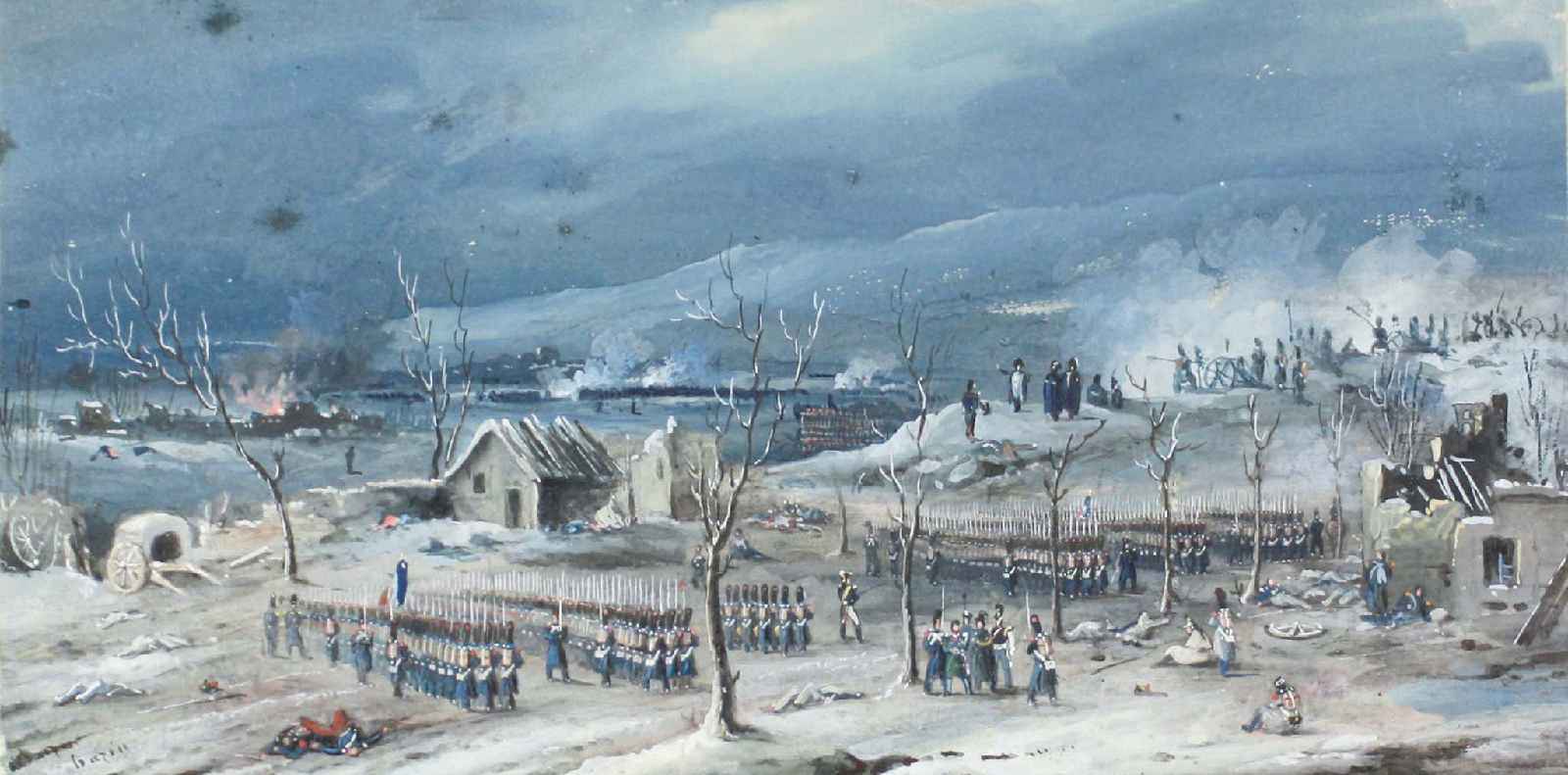
2.1 Napoleon’s Invasion (1812)
France, supported by numerous European nations, launched the largest land invasion in history to crush Russian resistance to continental hegemony. The disastrous failure of this expedition did not however mean the end of Western suspicion of Russian power.


Napoleon had just triumphed over Austria and Prussia and established client states across Europe. He imagined himself the architect of a united continent under French influence. Russia stood as the final major power not fully under his control or aligned with his interests.

Napoleon invaded Russia in 1812 primarily because Tsar Alexander I had broken with the Continental System, Napoleon’s economic blockade against Britain. This system, established in 1806, aimed to cripple Britain’s economy by forbidding European trade with it. Russia initially complied but found it disastrous for its own economy, which depended heavily on British trade, especially exports of grain and imports of manufactured goods. By 1810, Russia resumed trading with Britain.

2.2 Crimean War (1853–56)
Britain, France and the Ottoman Empire sought to halt Russia’s advance towards the Mediterranean.

The Crimean War was triggered largely by fears in Britain and France that Russia’s growing influence over the declining Ottoman Empire would give it control over the Black Sea and eventually allow it to dominate access to the Mediterranean via the Bosporus and Dardanelles straits. 

The war introduced modern media warfare and an early coalition logic that Russia must be contained.


2.3 Allied Intervention in the Russian Civil War (1918–22)
British, American, French and Japanese troops landed on Russian soil under the pretext of stabilising post-revolution chaos. In practice, they attempted to shape the post-Tsarist future...and failed.


2.4 Operation Barbarossa (1941–45)
Although this was Nazi Germany’s war, Hitler’s invasion force was composed of troops from many European countries. Russians remember this as the last total war, an existential invasion that was met with the need for a quite staggering sacrifice on their part.

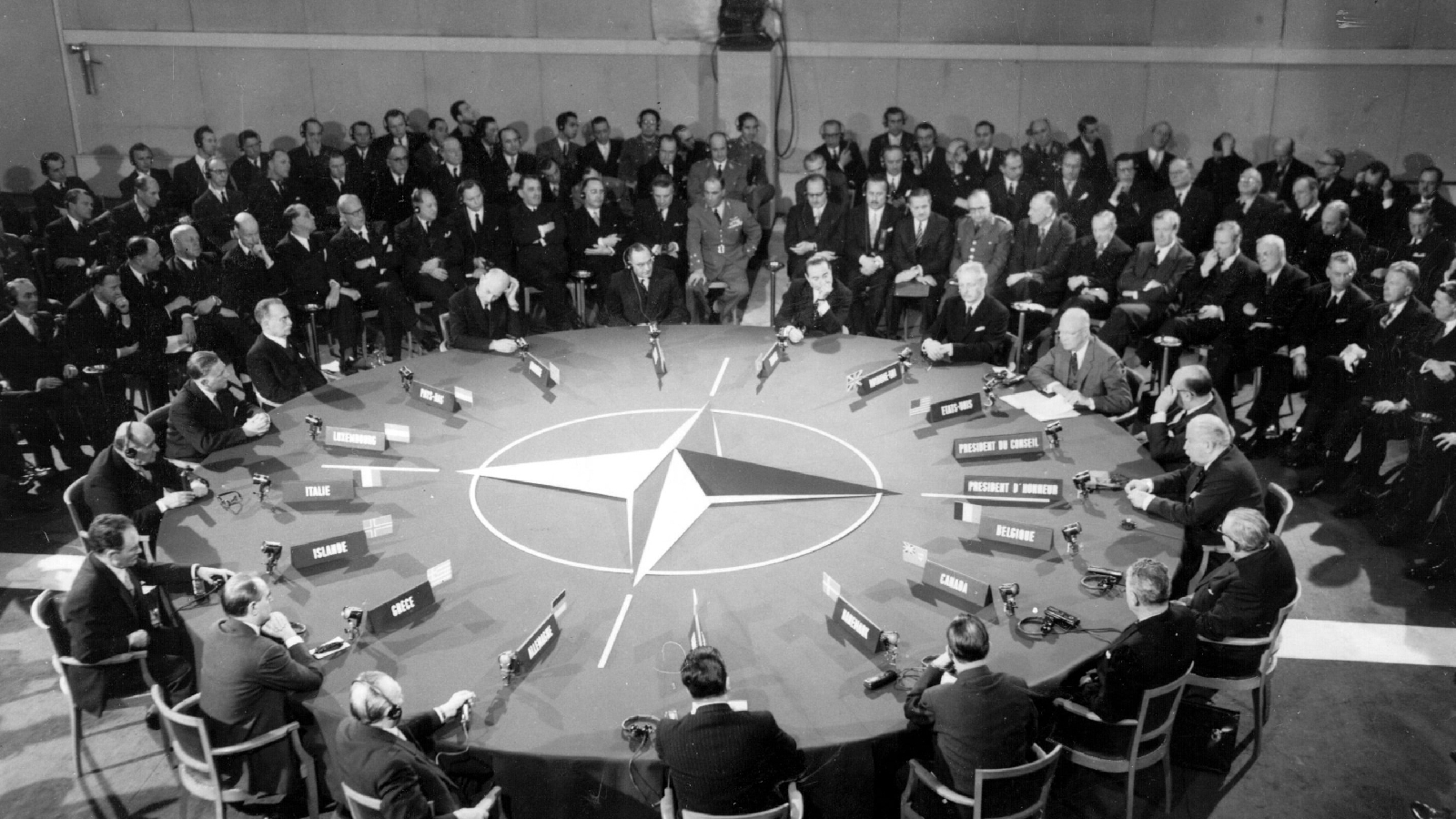
2.5 Cold War and NATO (1947–91)
The containment of the USSR became official Western policy, reinforced by nuclear arms races, proxy wars, and the construction of NATO. From a Russian viewpoint, this was four decades of encirclement, threats and impoverishment.


3. Post-Soviet Wars and the Yugoslavia Precedent

After the USSR collapsed, Russia was promised “not one inch eastward” in NATO expansion. That promise was broken. But before the waves of NATO enlargement reached Russia’s doorstep, the alliance tested its post-Cold War power in Yugoslavia.


3.1 The NATO Bombing of Serbia (1999)
Russia’s historic Slavic and Orthodox ally, Serbia, was bombed by NATO without UN approval. The attack, justified as humanitarian intervention over Kosovo, was a wake-up call for Moscow: if Belgrade can be bombed, so can we. Putin later described it as “a turning point".


3.2 Yugoslavia as Strategic Laboratory
The dismemberment of Yugoslavia, through sanctions, colour revolutions, partition, and airstrikes, was viewed by many Russian analysts as a prototype for later strategies used in Georgia (2008), Ukraine (2014), and beyond. Serbia was the first post-Cold War casualty of unipolar enforcement.

4. 2022: A War With History

The war in Ukraine is not just about NATO or territory. It is not a proxy war. For Russia, it is the culmination of a long pattern of Western encirclement, where every advance of NATO, every "proxy" war, and every economic sanction, echoes all the previous campaigns. The siege of Leningrad. The carpet bombing of Belgrade. The Maidan coup. From Moscow’s viewpoint, these are not separate episodes, they are one war. It is seen as a direct war: Ukraine is doing the fighting on behalf of the Western coalition. 

The war in the theatre of Ukraine can be traced from 22 February 2014 with the Maidan coup in Kiev, back to the Bucharest summit of 2008's decision to include Ukraine in NATO, and further back still to Clinton's fateful decision in 1994 to expand NATO eastward.

It’s about geopolitics. The idea of a Eurasian bloc - Germany, Russia, China - terrifies Anglo-American strategists going back to Halford Mackinder (1904). Preventing such a bloc is a doctrinal imperative of Western grand strategy.

5. Conclusion: Nothing New, Just the Endgame

Seen through Russian eyes, the "unprovoked invasion" of 24 February 2022 is not a beginning. It is the continuation of over two centuries of conflict - sometimes overt, sometimes covert - between Western coalitions and Russian statehood. NATO is not so much a defensive alliance, as the military arm of a geopolitical project - currently, we have "project Ukraine". And so for Russia, this war is simply the latest - and perhaps final - confrontation in that long and bitter story, that it is expected will end in a disastrous and strategic and possibly final defeat for the West.

BREAKFAST IDENTITIES

2 June 2025

BREAKFAST IDENTITIES

1. Introduction: Breakfast as Cultural Expression

Breakfast is more than a functional start to the day; it is a social and cultural event. The way societies structure, value, and consume breakfast reflects broader ideas of time discipline, social structure, national identity, and globalisation. This paper examines four culturally significant breakfast traditions - English, Scottish, Continental, and Indonesian - to explore how the morning meal functions as a ritualised practice revealing values, identities, and lived rhythms.

2. The English Breakfast: Institutional Ritual

The full English breakfast is a legacy of Britain’s industrial and imperial history. Comprising sausages, bacon, eggs, mushrooms, tomatoes, baked beans, toast, and occasionally black pudding, it is calorically dense and symbolically loaded. This meal functions as a ritualistic performance of British identity, evoking notions of respectability, consistency, and social order.

It is often consumed in cafés, hotels, bed-and-breakfast establishments, "greasy spoon" and remains one of the most enduring food practices in modern Britain. In a rapidly transforming society, the full English breakfast endures as a nostalgic assertion of national continuity and personal discipline.

3. The Scottish Breakfast: Landscape and Identity

Scotland's breakfast builds on the English tradition but introduces elements unique to its geography and cultural heritage. The presence of Lorne sausage, tattie scones, black pudding, and haggis ties the meal to the rugged Highlands, where sustenance is linked with survival.

Here, breakfast communicates resilience and authenticity. The ruggedness of the Scottish landscape is encoded in the calorific content and earthy flavours of the meal. It is a culinary reflection of stoicism and a quietly poetic connection to land and labour.

4. The Continental Breakfast: Minimalism and Mobility

By contrast, the Continental breakfast - common in France, Italy, and Spain - is light, rapid, and elegant. It typically includes bread or pastry, butter, jam, and coffee or tea. In hotel and café contexts, this breakfast is a gesture rather than a meal, a social placeholder rather than a nutritional event.

The Continental breakfast reflects a cultural priority on aesthetics, leisure, and rhythm over substance. It implies a mobile, urban life where breakfast is a prelude to productivity rather than a pause in it.

5. The Indonesian Breakfast: Informality and Abundance

In Indonesia, breakfast is practical, warm, and often indistinct from other meals. Dishes such as nasi goreng (fried rice), bubur ayam (chicken porridge), or lontong sayur (rice cakes in coconut curry) are not confined to a breakfast category. Food is often consumed in communal outdoor settings, prepared by street vendors, and flavoured with mild spice.

This breakfast practice prioritises adaptability and shared space over ceremony. It reveals a social orientation toward community, informality, and pragmatism — a form of nourishment that bridges time and place.

6. Glossary and Etymological Notes

Breakfast: From Old English "brecan" (to break) + "fæstan" (to fast), referring to the breaking of the overnight fast.

Tattie scone: A potato-based griddle cake from Scotland.

Lorne sausage: A square sausage made from minced meat and spices, typical in Scottish breakfasts.

Nasi goreng: Indonesian fried rice, often flavoured with sweet soy sauce and topped with egg.

Lontong sayur: Rice cakes served with a spiced coconut vegetable stew.

Continental: Used in contrast with British customs, typically referring to light European breakfasts of French or Italian origin.

Breakfast is deeply embedded in religious and cultural schedules. While European models tend toward formalisation, equatorial and tropical regions maintain flexible, often savoury and portable practices. Fasting traditions, such as Ramadan, Lent, or Buddhist morning abstinence, further shape the experience.

7. Recipes

English Breakfast: Fry sausages, bacon, and eggs. Grill tomatoes and mushrooms. Heat baked beans. Serve with toast and tea.

Scottish Breakfast: Fry Lorne sausage and black pudding. Prepare tattie scones with mashed potato, flour, and butter. Add poached egg and toast.

Continental Breakfast: Warm croissants or bread. Serve with butter, jam, and coffee. Juice optional.

Indonesian Breakfast: Stir-fry cooked rice with garlic, chilli, sweet soy sauce, and egg. Garnish with fried shallots and cucumber. Serve with sweet tea.

8. Typologies of the Breakfast Eater

English: The Loyal Traditionalist — values ritual, order, and cultural heritage.

Scottish: The Rugged Stoic — grounded, self-reliant, closely tied to land and tradition.

Continental: The Elegant Minimalist — prioritises form, discretion, and cultural rhythm.

Indonesian: The Joyful Pragmatist — flexible, sociable, and integrated into communal life.

9. Conclusion: Breakfast as Self-Disclosure

Breakfast reveals more than nutritional preference. It encapsulates rhythms of identity, mobility, and meaning. Whether minimalist or abundant, ceremonial or improvised, breakfast symbolises how we orient ourselves in the world. It asks - and answers - the question: who are you when you wake?