What is Campari? Interesting question - and not so simple! Campari is more than a drink; it’s a cultural signal. The typical Campari drinker varies slightly by country and generation, but let’s build a reliable profile based on consumer studies, brand strategy, and lifestyle signals.
1. Age and Demographic
Balanced gender appeal, though it skews slightly male in traditional markets and female in newer cocktail scenes
2. Geographic Focus
3. Lifestyle and Personality Traits
Prefers classic but stylish experiences — jazz over EDM, gallery openings over sports bars
Enjoys bitterness, suggesting a refined palate (as bitterness is usually acquired, not innate)
4. Taste Preferences
5. Brand Associations
This makes it a drink for someone who feels cosmopolitan, independent, contrarian, and not too worried about following mainstream taste.
6. Archetypal Drinkers
The typical Campari drinker is urban, tasteful, worldly, defiant without being extremist.
They like their flavours like their fashion: bold, slightly bitter, deeply stylish.
=====
1. The psychological profile of Campari and Pastis drinkers
2. A comparative table of identity
3. The manufacturing process for each drink
1. Introduction: Bitterness and the Soul of a Drinker
Some drinks are not just tastes — they are identities.
In the world of aperitifs, few beverages divide and delight like Campari and Pastis.
Both are steeped in tradition, driven by ritual, and rooted in a cultural landscape. Yet, one evokes the elegance of Milanese terraces; the other, the slow, hot late afternoons on the beaches of the côte d'azur.
To understand the true difference, we need to look beyond flavour and into lifestyle, psychology, and process.
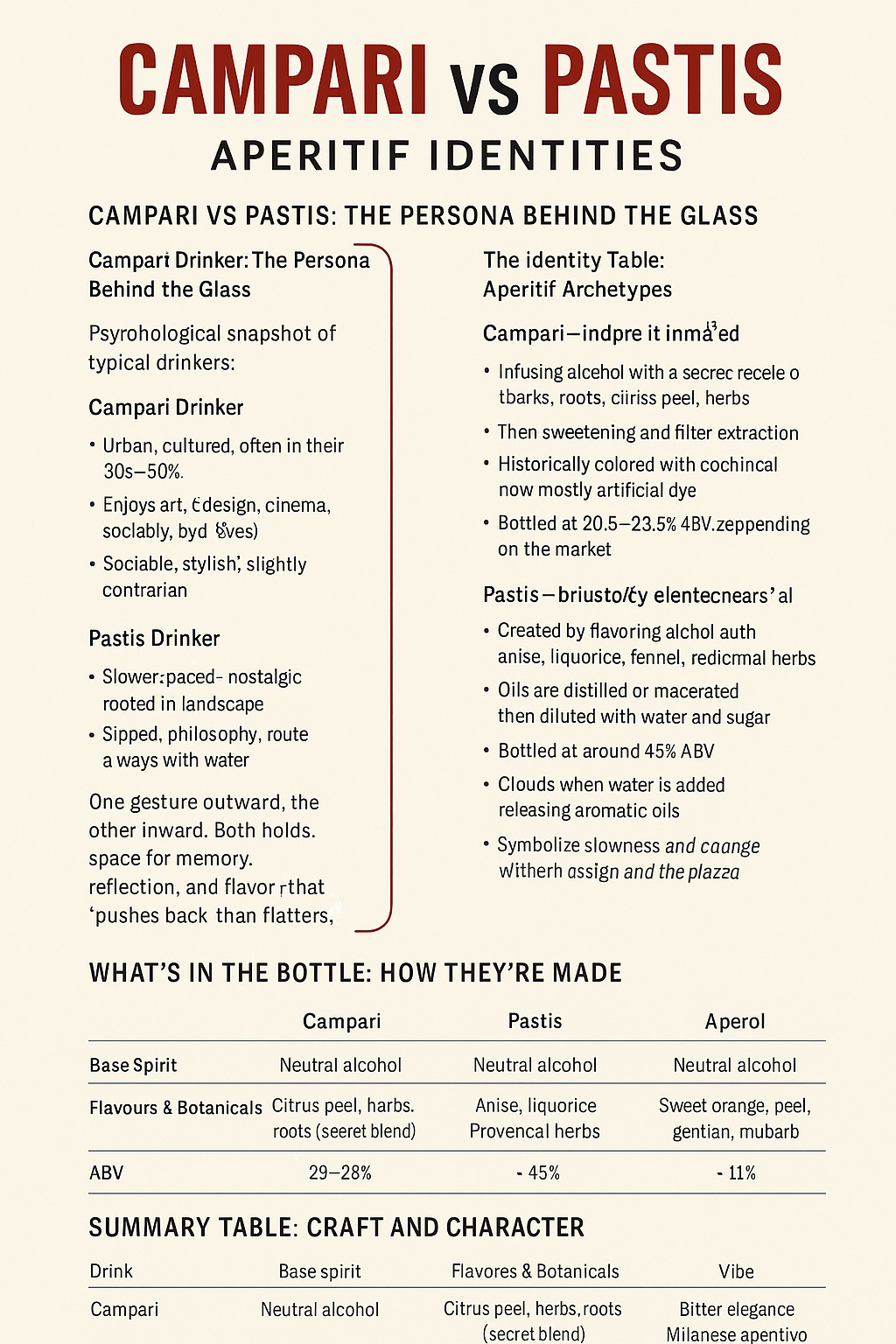
2. Campari vs Pastis: The Persona Behind the Glass
Campari drinkers and Pastis drinkers might both enjoy bitterness — but what they seek from it differs. Here’s a psychological snapshot of the typical drinker:
Campari Drinker
Urban, cultured, often in their 30s–50s
Enjoys art, design, cinema, and conversation
Leans into bold flavours and strong impressions
Sociable, stylish, contrarian
Aperitif time is sacred: a signal of taste, not just habit
Pastis Drinker
Slower-paced, nostalgic, rooted in landscape
Enjoys philosophy, routine, conversation and competition
Sips, never gulps — and always with water
Prefers authenticity to novelty
Evokes the countryside, the sea, the past
One is a gesture outward, the other a gesture inward.
Yet both hold space for memory, reflection, and flavour that pushes back rather than flatters.
3. The Identity Table: Aperitif Archetypes
Trait Campari Pastis
Origin Italy (Milan, 1860s) France (Marseille, 1930s)
Mood Stylish, modern, urban Rustic, nostalgic, meditative
Flavour Bitter, orange, herbal Aniseed, herbal, refreshing
Setting Rooftop bar or aperitivo terrace Village square or seaside petanque
Persona Cultured contrarian, design-forward Bohemian philosopher, regional soul
To like both, as I do, is to enjoy contradiction: bitter angles and soft shadows, espresso and thyme, Milan and Marseille.
4. What’s in the Bottle: How They're Made
These aren't simple drinks — their production reflects the depth of their different identities. Here’s how each is manufactured:
4.1 Campari – Red Bitterness Refined
Made by infusing alcohol with a secret recipe of barks, roots, citrus peel, herbs.
Sweetened and filtered after extraction.
Once coloured with cochineal, now mostly artificial dye.
Bottled between 20.5–28.5% ABV, depending on the market.
Bold, herbal, dry and bittersweet — it's the drink of urban design and ritual contrast.
4.2 Pastis – Provençal Anise in a Glass and Jug
Created by flavouring alcohol with anise, star anniset, liquorice, fennel, and regional herbs.
Oils are distilled or macerated, then diluted with water and sugar.
Bottled at around 45% ABV — strong, but diluted before drinking.
It clouds when water is added, releasing aromatic oils — a symbol of slowness and change.
5. Summary Table: Craft and Character
Drink Base Spirit Flavours & Botanicals ABV Vibe
Campari Neutral alcohol Citrus peel, herbs, roots (secret blend) 20–28% Bitter elegance, Milanese aperitivo
Pastis Neutral alcohol Anise, liquorice, Provençal herbs ~45% Rustic, reflective, Mediterranean soul
6. Conclusion: A Matter of Palate and Personality
To drink Campari is to say yes to edge, bitterness, style — to take pleasure in resistance.
To drink Pastis is to say yes to memory, ritual, and the taste of timelessness.
To drink both? That’s not contradiction, it’s character.
Whether you stand under the neon of a Milanese bar, or sit beneath the shadow of a Provençal plane tree, you’ll know which drink is yours.
Or if you’re like me, maybe on different days, they are both yours, two mistresses.