








28 November 2024
A line


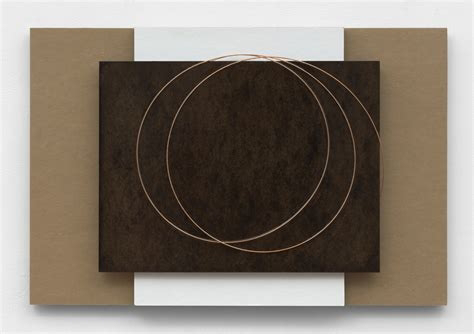 This show highlights Rockburne’s ability to balance intellectual rigour with emotional impact, offering viewers an engaging and meditative experience. It underscores her status as a groundbreaking artist whose works continue to resonate deeply.
 Dorothea Rockburne’s graphite line is being heralded as a profound artistic statement, yet to any world-weary discerning gallery groupie, it seems more like overthinking a scribble. The line piddles dutifully like a dog on a lead, sniffing round the walls of the gallery, stopping at every corner and door, before moving on. Actually, I'd like to tell this story from the point of view of the little doggy.
Review of Dorothea Rockburne's
Dorothea Rockburne is a renowned New York-based artist, celebrated for her multidisciplinary approach, blending mathematics, art, and philosophy. Known for her minimalist yet conceptually rich work, she is part of the modernist tradition that engages with geometry and structure. Rockburne studied at Black Mountain College, an experimental art school, and her career has been marked by her unique ability to translate mathematical principles into visual forms.
This exhibition at the Bernheim Gallery in London marks the first major UK showcase of her work, an extraordinary milestone considering she is now 95 years old. Despite logistical challenges—such as sourcing the right chipboard in Britain—the exhibition reflects Rockburne's enduring ability to create art that is both simple and profound.
The standout piece described is a continuous graphite line running through the gallery's walls, forming an uninterrupted, waist-height pathway around the space. This single, mesmerizing line interacts with the architecture of the gallery, negotiating corners, recesses, and interruptions like doors and windows. Its subtle details, such as the graphite dust left behind, emphasize texture and presence, transforming the space into an active participant in the work.
MY TAKE
Critics are waxing lyrical about its “continuity” and “engagement with space,” but honestly, it feels more like the product of a rather dull geometry lesson. Be sure to visit in the morning.
Then there is the poetic waxing on about the “faint residue of graphite dust” and the “whisper of effort” which could just as easily describe a boy’s afternoon mischief, marking a wall with chalk or – let’s be real – seeing who can wee the longest line against a fence. At least that competition had stakes - here though, we’re left wondering why a simple line demands our meditative reverence. Yes, it’s unbroken, but so is the queue at the post office.
The exhibition supposedly transforms fundamental and mathematical spatial awareness into whole metaphors for life, thought and history. But can a line really say that much? Really? Or are we all just nodding earnestly at the emperor’s new pencil?
Perhaps Rockburne’s greatest feat is her mastery of minimalism: who else could weave together a lifetime's strands of experience into a single cord meandering around a room, connecting and convincing so many of us it holds the secrets of the universe?


